Syzygy alignment
During new and full moons, the sun, Earth, and moon form a straight line. Their gravitational pulls combine to create higher high tides and lower low tides.
We use cookies for essential site functions and, with your permission, for analytics and advertising. California residents can opt out of the sale or sharing of personal information at any time. See our Privacy Policy, Cookie Policy, and Do Not Sell or Share My Personal Information.
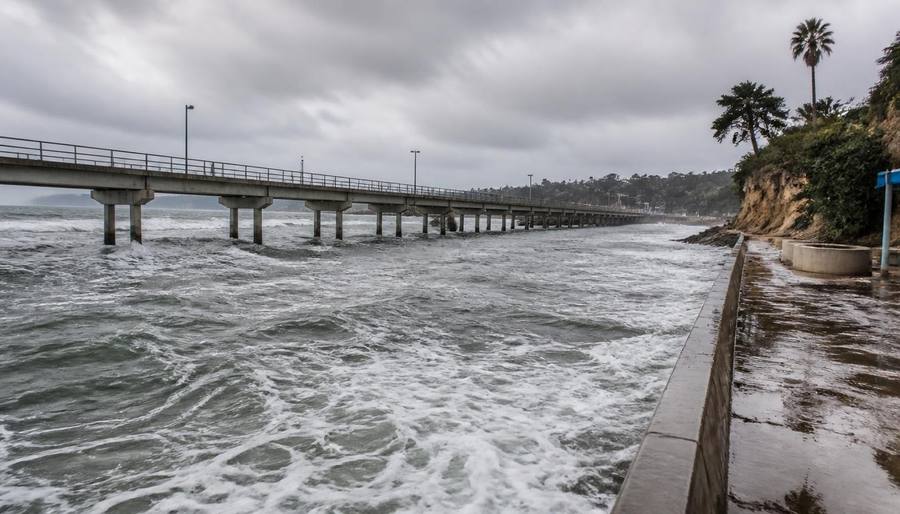
The highest tides of the year transform the coastline. Here is where to watch — and where not to get trapped.
Last updated
King tides are the highest high tides of the year, caused by the gravitational pull of the sun and moon when they align with Earth. In San Diego, they typically occur from November through February, with the biggest tides around the new and full moons in December and January. During a king tide, water levels can be one to three feet above normal high tide, flooding low-lying beaches, trails, and parking lots. Popular viewing spots include La Jolla Shores, Scripps Pier, Imperial Beach, and the Silver Strand. King tides are also a preview of future sea-level rise. They are beautiful but dangerous: waves can wash over normally dry rocks, and it is easy to get trapped by a rapidly rising tide. Check tide charts, wear shoes with grip, and never turn your back on the ocean.
| Spot | What to expect | Best tide | Safety note |
|---|---|---|---|
| La Jolla Shores | Beach narrows dramatically | Morning high tide | Waves can overtake the boardwalk |
| Scripps Pier | Waves surge under the pier | High tide near sunrise/sunset | Slippery rocks, strong currents |
| Imperial Beach | Flooding on Seacoast Drive | Highest tides of the year | Road closures possible |
| Silver Strand | Beach becomes very narrow | High tide | Do not park close to the water |
| Sunset Cliffs | Waves crash over lower shelves | High tide at sunset | Cliff edges unstable; stay back |
| Mission Bay | Water reaches higher into marshes | High tide | Kayak access changes; check launch points |
Rates and availability change daily, so we link the guide rather than quote a price. Each page compares walkable, short-drive and budget options with parking and resort fees called out.
King tides are astronomy, not weather. They happen when the sun, moon, and Earth line up and the moon is at its closest point to Earth.
During new and full moons, the sun, Earth, and moon form a straight line. Their gravitational pulls combine to create higher high tides and lower low tides.
When the moon is at perigee — its closest orbital point to Earth — its gravitational pull is stronger, adding extra height to the tide.
In winter, Earth is closer to the sun, slightly amplifying solar gravity. That is why the biggest king tides in San Diego tend to come in December and January.
Wide, shallow beaches like La Jolla Shores and Imperial Beach show king tides more dramatically than steep cliff beaches like Torrey Pines.
A king tide combined with high surf or storm surge can produce coastal flooding even in areas that normally stay dry.
Scientists and planners use king tides to model what daily high tides could look like with several more feet of sea-level rise.
The same conditions that make king tides photogenic also make them hazardous. Plan ahead and watch from a safe distance.
King tides happen at predictable times, but the exact height varies. Use NOAA or a local tide app to find the peak high tide for your spot.
The most dramatic flooding happens as the tide rises toward its peak, not after. Give yourself time to set up and scout.
Rocks and seawalls are slick with algae and spray. Flip-flops are a bad idea anywhere near the water line.
Sneaker waves are real, especially during high-surf periods. Stay off low rocks and keep children close.
At spots like Sunset Cliffs and Scripps Pier, a rising tide can cut off access. Know how to get to higher ground quickly.
If a beach or road is closed due to flooding, do not drive or walk around barriers. Flooded roads can hide deeper water and damage.
King tides are one of the most dramatic natural events for San Diego coastal photography. Here is how to get the shot without getting wet.
The classic shot: waves rolling under the pier at sunrise or sunset. Use a tripod and a slow shutter for silky water.
The flooded street and wide beach make for strong documentary-style images showing the reach of the tide.
Water splashing over the boardwalk at peak tide captures the power and scale of the event.
From the safe clifftop, a long exposure of waves surging over the lower shelves shows motion and drama.
A person standing on a normally dry spot that is now underwater makes the tide height instantly understandable.
King tide cycles also produce very low tides, exposing tide pools and reef structures that are usually hidden.
King tides typically occur from November through February, with the highest tides around the new and full moons in December and January. Exact dates change each year.
King tides can raise high tide one to three feet above normal. Combined with high surf or storm surge, the water can reach areas that stay dry during typical high tides.
La Jolla Shores, Scripps Pier, Imperial Beach, the Silver Strand, and Sunset Cliffs are the most dramatic spots. Each shows the tide differently.
They can be. Waves can wash over normally dry rocks and roads, and it is easy to get trapped by a rising tide. Check tide charts, wear grip shoes, and never turn your back on the ocean.
King tides happen when the gravitational pulls of the sun and moon align during new or full moons, especially when the moon is also closest to Earth.
Yes. King tide cycles include very low tides that expose more tide pools than usual. Check a tide chart and visit at the lowest point for the best tide-pooling.
The hub for understanding San Diego's seasonal quirks, from marine layer to Santa Ana winds.
Why the coast goes gray for weeks and how to plan around it.
The hot, dry winds that reshape fire risk, allergies, and beach days.
What to stock, secure, and know before the next shaker.
How to read the coastal cloud forecast and pick the sunny side of town.
Where to explore tide pools at low tide.
Coastal viewpoints for golden-hour photography.
The Sandi Spots Newsletter
New beach finds, hidden taco shops, weekend events, and seasonal guides — once a week from a local. No spam, ever.
One email a week. Unsubscribe anytime.
Published by the Sandi Spots Editorial team at Sleep Coast LLC. Guides combine local perspective and source research. Check the individual guide for firsthand observations and follow official links to confirm current details.