The 8 best spots, when to go, and exactly what you'll see when the reef comes out of the ocean.
Last updated
Quick answer
The best tide pools in San Diego are at Cabrillo National Monument (Point Loma). Go on a minus tide — anything below +1.0 ft, ideally –0.5 ft or lower — which happens most mornings from November through March. Arrive 30–60 minutes before the predicted low, wear grippy closed-toe shoes, and never turn your back on the ocean. Check the NOAA La Jolla tide chart before you go.
Point Loma · Access: Moderate · The best pools in the county — hands down
Protected inside a national monument, so the marine life is dense: sea hares, anemones, hermit crabs, octopus if you're patient, and the occasional sea star. Rocky, uneven reef — grippy shoes are non-negotiable.
Parking: $20 per vehicle (America the Beautiful pass works). Gates close at 5 PM sharp — plan your low tide window around it.
Local tip: Enter the park early during a minus tide, then drive up to the lighthouse for the view after. Rangers give free tide-pool talks on weekends.
La Jolla · Access: Easy · Quick stop combined with seal-watching
Small but accessible pools right below Ellen Browning Scripps Park. You share the reef with sea lions and pelicans, so the wildlife show is bigger than the pools themselves. Kid-friendly if the surf is small.
Parking: Free 2-hour street parking on Coast Blvd — competitive on weekends. Paid lots at La Jolla Village.
Local tip: Come at low tide before 10 AM. After that, the crowd along the sea wall makes it hard to move around.
La Jolla (south) · Access: Moderate · Locals' pick, fewer tourists
Named for the offshore rock covered in cormorants. The pools sprawl across a wide reef shelf that only fully exposes at minus tides. Quieter than the Cove and generally better preserved.
Parking: Free street parking on Bird Rock Ave and side streets. Walk down the stairs at the end of Bird Rock Ave.
Local tip: The tide window is short here — the reef floods fast on the incoming tide. Set a phone timer for 30 min before predicted low.
La Jolla Shores · Access: Easy · Families with young kids
Just north of Scripps Pier. A shallow reef with calm water most of the year — the safest pools in the county for toddlers. Part of a marine reserve, so no collecting.
Parking: Metered lot at Kellogg Park (La Jolla Shores) — arrive by 9 AM. Free spots on La Jolla Shores Dr fill fast.
Local tip: Walk north from Scripps Pier at low tide. The rocks nearest the pier are the tide pools; the further reef is for divers.
Point Loma / Sunset Cliffs · Access: Hard · Dramatic scenery, moody photography
The cliffs south of Ladera St hide small reef shelves at their base. Access is via steep sandstone paths — sketchy in wet conditions and a hard no for young kids. When you get down, the pools are wild and photogenic.
Parking: Free street parking on Sunset Cliffs Blvd. Ladera St and Osprey St are the usual descent points.
Local tip: Never go at incoming tide. People get cliffed out here every winter. Check the tide chart twice.
Encinitas · Access: Moderate · North County day trip, surf-check combo
Reef shelf at the base of the Swami's stairs, extending north toward Boneyards Beach. Sea hares, urchins, and small anemones. Best at a minus tide when the whole reef pops out.
Parking: Free lot at Swami's on 101 (fills by 8 AM on weekends). Overflow street parking.
Local tip: Combine with breakfast at Swami's Café across the street — the classic North County morning.
A broad, gentle reef right off the PCH — one of the easiest walk-ins in the county. Not as biodiverse as Cabrillo but big enough that families can spread out.
Parking: Paid state beach lots on Coast Highway 101 (Cardiff State Beach).
Local tip: Great pick if you're driving 101 and see a low tide on your phone — no hike required.
Solana Beach · Access: Moderate · Uncrowded, locals only
Named for its flat top. Accessed via Tide Beach Park stairs. Smaller pools but consistently uncrowded — a good backup when Cabrillo or La Jolla parking is a nightmare.
Parking: Free street parking at Tide Beach Park (Solana Vista Dr).
Local tip: The stairs close at sunset. Time your low tide accordingly.
Best tide pool for your day
Best for families with young kids
Dike Rock (Scripps Beach)
La Jolla Cove & Shell Beach
Cardiff Reef
Most biodiverse — biology-class-level
Cabrillo National Monument Tide Pools
Bird Rock
Swami's / Boneyards
Best for photography
Sunset Cliffs Tide Pools
Cabrillo National Monument Tide Pools
Bird Rock
Quickest, easiest walk-in
Cardiff Reef
La Jolla Cove & Shell Beach
Dike Rock (Scripps Beach)
Safety, in three lines
• Know when the tide turns. The pools that were dry an hour ago will be underwater.
• Never turn your back on the ocean. Sneaker waves on the reef are how people get hurt.
• Grippy shoes. Wet reef is slicker than ice; barnacles cut like glass.
What you'll actually see
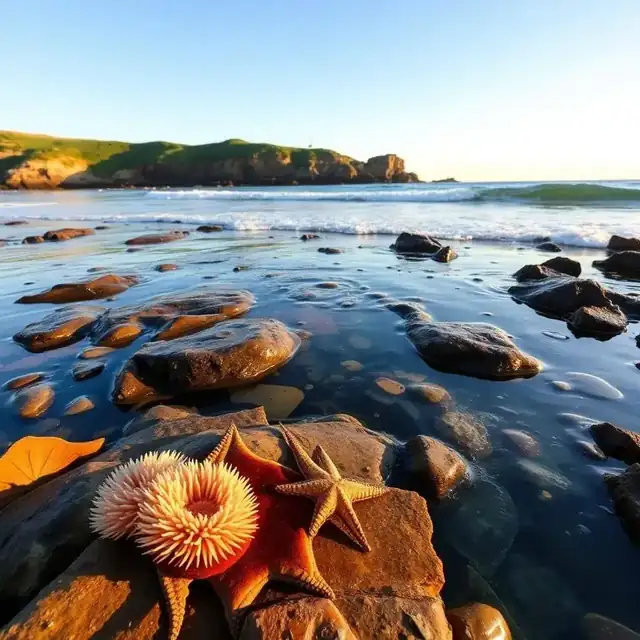
San Diego tide pools sit in the middle intertidal zone, which is where the highest species density lives. On a good minus tide at Cabrillo or Bird Rock, expect to see green and giant green anemones (bright emerald, sticky when you touch them), sea hares (blobby purple sea slugs, harmless), hermit crabs in every pool, sculpin fish darting between rocks, chitons clamped to the reef, and mussels and gooseneck barnacles carpeting the vertical faces.
Sea stars (mostly ochre stars) are still recovering from a wasting disease that nearly wiped them out. Seeing one is a treat, not a guarantee. Octopus hide in cracks — stand still and look into pools for 30 seconds and you'll occasionally spot one. Nudibranchs (colorful tiny sea slugs) are the photographer's prize — bring a macro lens or your phone with a clip-on macro.
Do not pry animals off rocks. Do not stack rocks (it kills the microhabitat underneath). Do not collect shells. Every spot in this guide is either a national park, a state marine reserve, or an ecological reserve — take photos, leave everything else.
Frequently asked
When is the best time to see tide pools in San Diego?
You need a low tide of +1.0 ft or lower, and a minus tide (–0.5 ft or lower) is ideal. The best minus tides happen November through March, typically in the mornings. Check tides.mobilegeographics.com or the NOAA tide chart for La Jolla or Point Loma, then arrive 30–60 minutes before the predicted low.
What are the best tide pools in San Diego?
Cabrillo National Monument (Point Loma) is the clear #1 for biodiversity — it's protected as a national park, so wildlife is dense. La Jolla (Cove, Shell Beach, Bird Rock, Dike Rock) is easiest to access and best paired with seal-watching. Sunset Cliffs is the most dramatic but hardest to reach.
Are San Diego tide pools free?
Most are free, including all of the La Jolla, Sunset Cliffs, and North County spots. Cabrillo National Monument charges $20 per vehicle (or free with an America the Beautiful pass).
Is it legal to touch or collect things in San Diego tide pools?
You can gently touch anemones and non-mobile creatures, but do not remove anything — every tide pool in this guide is inside a marine reserve or protected area. Collecting shells, rocks, sea stars, or animals is illegal. Fines run into the hundreds of dollars.
What should I wear to San Diego tide pools?
Closed-toe shoes with grippy rubber soles — the reef is sharp and slippery. Old sneakers or water shoes work; flip-flops don't. Bring layers (mornings are foggy year-round), sun protection, and a small towel.
Can kids handle San Diego tide pools?
Yes, but pick the right spot. Dike Rock at Scripps and Cardiff Reef are the safest for toddlers — flat, shallow, easy walk-in. Sunset Cliffs is a hard no for kids. Cabrillo is fine for kids 5+ who can navigate uneven rocks.
Are tide pools safe? What should I watch out for?
Two things kill people at San Diego tide pools every few years: incoming tides that strand you against a cliff (especially at Sunset Cliffs) and slippery reef falls. Always know when the tide turns, never turn your back on the ocean, and never climb wet rocks.
What animals will I see in San Diego tide pools?
Sea anemones (green and giant), hermit crabs, sculpin fish, sea hares, chitons, limpets, mussels, small crabs, and occasionally octopus or sea stars. Cabrillo has the most variety. Sea stars are still recovering from a die-off, so seeing one is a treat.
How long should I plan for a tide pool visit?
The tide window is 60–90 minutes on either side of the predicted low. Plan for 1.5–2 hours total including parking and walking. At Cabrillo, add another hour if you want to see the lighthouse and viewpoint.
Are dogs allowed at San Diego tide pools?
No at Cabrillo (national park rule) and no at Scripps/Dike Rock (marine reserve). Yes on leash at Sunset Cliffs and most North County beaches outside seal pupping season. La Jolla Cove area has restrictions — check current signage.
Do I need a wetsuit or to get in the water?
No. Tide pooling is a walking activity — you're on exposed reef, not swimming. Your feet may get wet in ankle-deep pools; that's it. Save the wetsuit for snorkeling La Jolla Cove separately.
Where can I check the tide chart for San Diego?
Use NOAA's La Jolla station (or Point Loma / Scripps Pier) at tidesandcurrents.noaa.gov. Free apps like Tide Charts and Tides Near Me pull the same data. Look for a low tide below +1.0 ft during daylight hours.
Published by the Sandi Spots Editorial team at Sleep Coast LLC. Guides combine local perspective and source research. Check the individual guide for firsthand observations and follow official links to confirm current details.
San Diego focused. Places and practical planning across the county.
Kept current. Confirm prices, hours, and closures with the venue.
Independent. Affiliate links never influence rankings.