The California Current cools the ocean
Water temperatures off San Diego hover in the low to mid 60s in late spring. That chills the air directly above the water.
We use cookies for essential site functions and, with your permission, for analytics and advertising. California residents can opt out of the sale or sharing of personal information at any time. See our Privacy Policy, Cookie Policy, and Do Not Sell or Share My Personal Information.
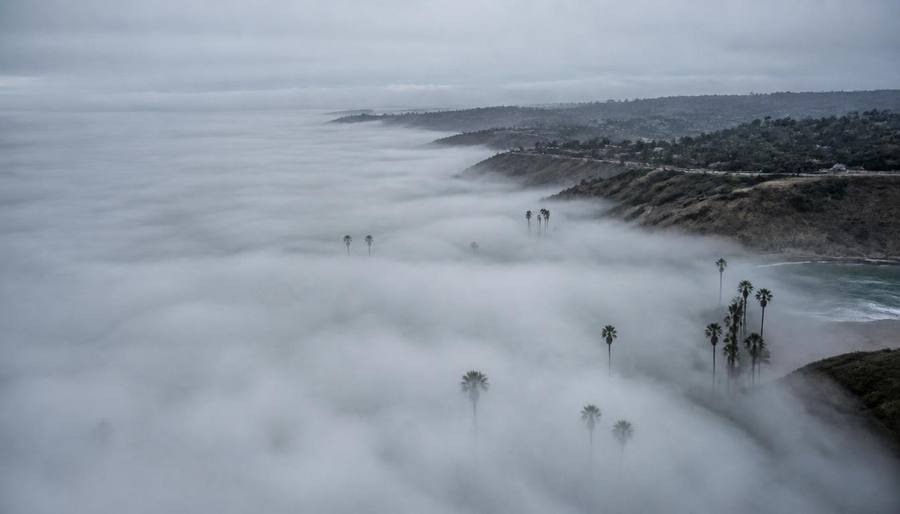
The real reason the beach disappears under a gray blanket for weeks every spring — and where to find the sun instead.
Last updated
May Gray and June Gloom are San Diego's nickname for the persistent marine layer — a shallow deck of low clouds and fog — that hugs the coast from late May through June. It forms when cool, moist Pacific air meets warmer inland air, and a temperature inversion traps the clouds below about 2,000 feet. The result: the beach can be 60°F and overcast while inland neighborhoods like Poway or Escondido are 80°F and sunny. The gloom usually burns off by late morning or early afternoon on the coast, but some days it stays all day. July is the transition month; by August, full coastal sunshine is the norm. If you want guaranteed sun in May or June, head inland or east.
| Area | Typical sky | Burn-off time | Best workaround |
|---|---|---|---|
| La Jolla / Pacific Beach | Gray mornings, often afternoon sun | 11am–2pm | Wait until afternoon or go inland |
| Ocean Beach / Point Loma | Gray, windy, cool | 12pm–3pm or never | Sunset Cliffs clears later than La Jolla |
| Mission Bay / Mission Beach | Gray mornings, patchy afternoon | 11am–1pm | East side of the bay clears first |
| Downtown / Coronado | Gray mornings, variable afternoon | 10am–1pm | Coronado can stay clearer than downtown |
| North County coast | Gray mornings, often sunny afternoon | 11am–2pm | Encinitas hills and inland Carlsbad |
| Inland / East County | Mostly sunny | Already sunny | Poway, Escondido, Ramona, Julian |
Rates and availability change daily, so we link the guide rather than quote a price. Each page compares walkable, short-drive and budget options with parking and resort fees called out.
The marine layer is not random bad luck. It is a reliable weather pattern driven by the cold California Current and the spring sun angle.
Water temperatures off San Diego hover in the low to mid 60s in late spring. That chills the air directly above the water.
As inland valleys heat up, a cap of warm air forms above the cooler coastal air. The cool, moist air has nowhere to rise, so it spreads out as a low cloud deck.
After sunset, west winds push the marine layer a few miles inland. That is why you can wake up to fog in Mission Valley even when the beach clears first.
In late spring the sun is high enough to heat inland but not yet strong enough to break the inversion quickly. By July, solar heating is strong enough to burn it off earlier.
The pattern is most persistent from about May 20 through June 25. Locals call the two months May Gray and June Gloom.
The marine layer is natural cloud and fog, not pollution. It can feel gloomy, but air quality is usually good underneath it.
The worst May Gray mistake is booking a beach vacation and spending the week in a gray drizzle. Here is how locals adapt.
If the coast is gray, drive 15 to 30 minutes inland. Poway, Escondido, and San Diego's inland valleys are often 15 to 20 degrees warmer and fully sunny.
The marine layer usually burns off between 11am and 2pm. Plan beach walks, surfing, and photos for the afternoon window.
Sunrise is the grayest time of day in May and June. If you want a sunrise photo, check the satellite layer first or head inland.
Outdoor coastal ceremonies between 4pm and 7pm in May or June have a real risk of gray skies and cool temperatures. Venues with indoor options or inland locations are safer.
A 65°F gray beach with wind feels colder than it sounds. Bring a windbreaker or hoodie even if the forecast says mid-60s.
A temperature forecast of 65°F at the coast does not tell you if it is sunny or gray. Look at visible satellite or webcams for the real-time cloud deck.
If the coast is socked in, you do not have to cancel the day. These spots usually sit above or east of the cloud deck.
Slightly inland and often above the marine layer, Balboa Park can be sunny when the beaches are gray. Museums work regardless of the weather.
Escondido, San Marcos, and Vista are typically sunny in late spring and have wineries, breweries, and hiking.
Julian and the Laguna Mountains are far enough east to escape the marine layer entirely. Expect sunshine and cooler mountain air.
Anza-Borrego Desert is almost always sunny. It is a dramatic contrast to a gray San Diego coast.
Ramona Valley sits inland and above the marine layer, making it a reliable sunny afternoon escape in May and June.
The summit can be above the cloud deck, giving you a view of the gray blanket below while you stand in sunshine.
A cool California Current chills the air near the ocean, while inland warming creates a temperature inversion that traps low clouds against the coast. The result is a persistent marine layer from late May through June.
It usually weakens in July and is mostly gone by August. Some years a 'No-Sky July' pattern keeps clouds around longer, but August through October is generally the sunniest stretch at the coast.
Close. May Gray is mostly a low stratus cloud deck, while fog is the same moisture at ground level where visibility drops below one kilometer. From the beach, they feel similar.
Inland valleys and higher elevations: Poway, Escondido, Ramona, Julian, and the inland North County wine country usually clear first and stay sunny longest.
It can surprise visitors who expect beach sun every day. Early mornings and late afternoons in May and June are the grayest; plan indoor or inland activities for those windows.
Research is mixed. Warmer ocean temperatures could reduce marine layer frequency, but changes in atmospheric circulation could also reinforce it. For now, May Gray and June Gloom remain reliable spring features.
The hub for understanding San Diego's seasonal quirks, from marine layer to Santa Ana winds.
The hot, dry winds that reshape fire risk, allergies, and beach days.
What to stock, secure, and know before the next shaker.
When the highest tides of the year flood beaches, piers, and roads.
How to read the coastal cloud forecast and pick the sunny side of town.
How to read the forecast and find the sunny side of town.
Where to catch color once the clouds clear.
The Sandi Spots Newsletter
New beach finds, hidden taco shops, weekend events, and seasonal guides — once a week from a local. No spam, ever.
One email a week. Unsubscribe anytime.
Published by the Sandi Spots Editorial team at Sleep Coast LLC. Guides combine local perspective and source research. Check the individual guide for firsthand observations and follow official links to confirm current details.