Sandi Spots
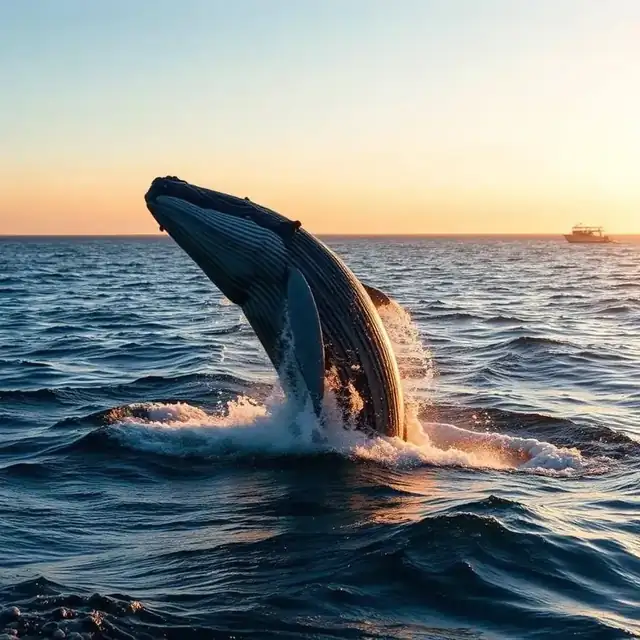
    Gray whale breaching off the San Diego coast at sunset with a whale-watching boat in the distance

    San Diego Whale Watching

    Gray whales Dec–April, blue whales May–September, dolphins year-round. Best tours, free land-based spots, and exactly when to book.

    Last updated

    Quick answer

    San Diego is one of the world's best whale-watching cities. December–April, roughly 20,000 gray whales migrate past the coast — peak is mid-January. May–September, blue whales (the largest animal on Earth) feed 6–15 miles offshore — peak is July–August. Standard 3–4 hour trips run $45–65 (Hornblower, Flagship) or $65–105 for small-boat or sailing tours. For free viewing, Cabrillo National Monument in Point Loma is the best land-based whale-watching site on the West Coast.

    When to go: whale calendar

    Gray whale migration (southbound)

    Mid-December – February

    Species: Pacific gray whales heading to Baja lagoons

    Sighting odds: Very high — 90%+ sighting rate in Jan

    The biggest show of the year. An estimated 20,000+ gray whales pass within a few miles of the San Diego coast on their 12,000-mile round trip from Alaska to Baja. Peak is mid-January. Cabrillo National Monument runs its annual Whale Watch Weekend the last weekend of January.

    Gray whale migration (northbound)

    March – April

    Species: Gray whales returning to Alaska, often mothers with calves

    Sighting odds: High — closer to shore than southbound

    Northbound grays hug the coast, sometimes visible from the cliffs at Cabrillo and Torrey Pines without a boat. Mothers and calves travel slowly, giving better looks. Late March and early April are peak.

    Blue whale season

    Mid-May – September

    Species: Blue whales (the largest animal on Earth), fin whales, minkes

    Sighting odds: High in July–August — 70%+ sighting rate

    San Diego is one of the best places in the world to see blue whales. They feed on krill blooms 6–15 miles offshore. Fin whales (the second-largest whale) are common on the same trips. Peak is July and August.

    Year-round: dolphins + more

    January – December

    Species: Common dolphins (mega-pods), bottlenose, Risso's, pilot whales

    Sighting odds: Near-guaranteed

    Common dolphin super-pods numbering 1,000–2,000 are a near-guarantee on any San Diego whale-watching trip. Bottlenose dolphins ride the wake close to shore. Occasional orca (killer whale) sightings happen a few times a year — usually spring.

    Best whale-watching tours in San Diego

    OperatorDockPriceLengthGuarantee
    Hornblower CruisesDowntown / Embarcadero$45–65 adult3.5 hoursFree return trip if no whales spotted
    Flagship CruisesDowntown / Broadway Pier$45–60 adult3.5 hours (winter) / 4 hours (summer blue)Free re-boarding voucher if no whale
    San Diego Whale Watch (Adventure R.I.B. Rides)Point Loma / Shelter Island$65–95 adult3 hours (winter) / 4–5 hours (summer)Sighting guarantee — free trip if you strike out
    Next Level SailingDowntown / Harbor Island$80–105 adult4 hoursFree re-boarding pass
    H&M Landing / Point Loma SportfishingPoint Loma$45–75 adult3–4 hoursReturn trip if no whales
    City Cruises (formerly Hornblower)Downtown / N Harbor Dr$45–60 adult3.5 hoursFree return trip if no whale

    Hornblower Cruises

    Downtown / Embarcadero · $45–65 adult · 3.5 hours

    Large catamaran (200+ passengers), full bar, indoor cabin. Good for families and anyone worried about seasickness.

    Flagship Cruises

    Downtown / Broadway Pier · $45–60 adult · 3.5 hours (winter) / 4 hours (summer blue)

    Similar to Hornblower — large boats, narrator on PA, snack bar. Downtown-convenient.

    San Diego Whale Watch (Adventure R.I.B. Rides)

    Point Loma / Shelter Island · $65–95 adult · 3 hours (winter) / 4–5 hours (summer)

    Smaller boats (25–45 passengers), naturalist onboard. Closer to the animals, more informative, less crowded.

    Next Level Sailing

    Downtown / Harbor Island · $80–105 adult · 4 hours

    America's Cup racing sailboat under sail — the quiet, wind-only option. Small groups (~30). Whales don't hear an engine, so approaches can be closer.

    H&M Landing / Point Loma Sportfishing

    Point Loma · $45–75 adult · 3–4 hours

    Old-school sportfishing operators that run winter/summer whale trips. Bring a jacket — open decks, no bar.

    City Cruises (formerly Hornblower)

    Downtown / N Harbor Dr · $45–60 adult · 3.5 hours

    Big-boat, narrated, family-friendly. Frequent daily departures Dec–April and Jun–Sep.

    Free: watch whales from land

    Cabrillo National Monument

    Point Loma tip

    Best for: The single best land-based whale watch on the West Coast during Dec–Apr gray migration

    Tip: Whale Overlook has interpretive panels and volunteers with spotting scopes. $20 entry per vehicle (free with America the Beautiful pass). Whale Watch Weekend is late January.

    Torrey Pines State Reserve (Cliffs)

    La Jolla / Del Mar

    Best for: Northbound grays and calves hugging the coast in March–April

    Tip: Razor Point and Yucca Point trails deliver the best angles. Bring binoculars — whales are typically 1–2 miles offshore here.

    Birch Aquarium (Tide Pool Plaza)

    La Jolla

    Best for: Winter grays, casual viewing with kids after an aquarium visit

    Tip: The outdoor plaza sits 300 ft above the water. Docents often set up scopes on migration weekends.

    Sunset Cliffs Natural Park

    Point Loma

    Best for: Sunset gray-whale spotting during migration

    Tip: Free, and the light is unbeatable in the last hour of daylight. Ladera St and Osprey St have the widest ocean views.

    Ellen Browning Scripps Park

    La Jolla Cove

    Best for: Kid-friendly casual scanning, easy parking-lot-to-view

    Tip: Pair with the seals at Children's Pool and the sea lions at La Jolla Cove for a marine-mammal trifecta.

    Best trip for your situation

    Best for gray whales

    • Book Dec 20 – Feb 15 (peak southbound)
    • Point Loma docks put you 20 min closer to migration corridor
    • Weekends fill up — book at least 3–5 days ahead

    Best for blue whales

    • Book July or August — highest krill concentrations
    • Longer 4–5 hour trips reach the offshore feeding zones
    • Small-boat operators (San Diego Whale Watch) get you closer

    Best if you get seasick

    • Large catamarans (Hornblower, Flagship) — most stable ride
    • Morning trips before afternoon winds pick up
    • Take Bonine the night before + morning of, not after boarding

    Best for photographers

    • Small-boat operators (bow access, no top-deck crowds)
    • Overcast days for soft light on blows and flukes
    • 300mm+ lens on a mirrorless body — image stabilization is essential

    Best for kids

    • Hornblower and Flagship (indoor cabin, bathrooms, snack bar)
    • Skip 4+ hour blue-whale trips with kids under 8
    • Pair a shorter trip with Birch Aquarium the same day

    Best for free (no boat)

    • Cabrillo National Monument during gray-whale migration
    • Torrey Pines cliffs for northbound calves in March–April
    • Sunset Cliffs at golden hour Dec–April

    Before you book

    • • The ocean is 10–15°F colder than land, year-round. Bring a real jacket, even in July.
    • • Morning trips are almost always calmer than afternoon (wind picks up after 11 AM).
    • • Take motion-sickness meds the night before and morning of — after you feel sick is too late.
    • • "Sighting guarantee" usually means a free return trip within a set window (often 12 months), not a refund. Confirm terms.
    • • Never approach a whale in a personal watercraft — federal law requires 100 yards of distance.

    Frequently asked

    When is the best time to see whales in San Diego?

    Mid-January for southbound gray whales (peak migration), mid-March for northbound mothers and calves, and July–August for blue whales. December–April is the biggest tourist window because grays pass by the tens of thousands within a few miles of shore.

    What kinds of whales can you see in San Diego?

    Gray whales (Dec–April, ~20,000 pass through), blue whales (May–Sep, the largest animal ever to live), fin whales (May–Sep), minke whales, humpbacks (occasional), pilot whales, and orcas (rare — a few sightings a year). Common and bottlenose dolphins are on nearly every trip.

    How much does a whale-watching trip cost in San Diego?

    Adult tickets run $45–65 on large catamarans (Hornblower, Flagship) and $65–105 on small-boat or sailing tours (San Diego Whale Watch, Next Level Sailing). Kids are typically half price. Most operators guarantee a free return trip if you don't see a whale.

    Can you see whales from land in San Diego?

    Yes — during gray-whale migration (Dec–Apr), Cabrillo National Monument in Point Loma is the best land-based whale-watching site on the West Coast. Torrey Pines cliffs, Sunset Cliffs, and Birch Aquarium's plaza also work. Bring binoculars; whales are typically 1–2 miles offshore.

    How likely am I to see a whale?

    In peak gray-whale season (Jan) or peak blue-whale season (Jul–Aug), sighting rates are 85–95% on 3–4 hour trips. Shoulder months (Nov, May, Oct) drop closer to 50–70%. Nearly every operator offers a free return trip if you don't see a whale — read the fine print for the timeline.

    Which whale-watching tour is best?

    For most people, Hornblower or Flagship (downtown, large stable boats, family-friendly, $45–60). For a better experience, San Diego Whale Watch's small-boat trips from Point Loma get closer to animals with a naturalist on board. For a unique trip, Next Level Sailing runs whale watches on an America's Cup racing sailboat.

    How long is a San Diego whale-watching trip?

    Standard winter (gray whale) trips are 3–3.5 hours. Summer (blue whale) trips are 4–5 hours because blues feed farther offshore. Plan for a half-day; check in 30 minutes before departure.

    Will I get seasick whale watching in San Diego?

    Some people do, especially on smaller boats or windy afternoons. Take Bonine (meclizine) the night before and the morning of. Sit mid-ship where motion is lowest, stay outside in fresh air, and look at the horizon. Morning trips are almost always calmer than afternoon.

    What should I bring on a whale-watching trip?

    Layers (the ocean is 10–15°F colder than land — even in July), closed-toe shoes with grip, sunglasses with polarized lenses (to see through glare), sunscreen, a hat with a chin strap, binoculars, and a camera with a zoom lens. Motion-sickness meds if you're prone.

    Are whale-watching tours ethical?

    In the US, operators must follow NOAA guidelines: stay 100 yards away, no chasing, no intercepting the whale's path. Reputable San Diego operators (all listed here) follow these rules and often carry naturalists. Compared to swim-with-whales tourism elsewhere, viewing-only from a boat is low-impact.

    Can I see whales while surfing or kayaking in San Diego?

    It happens — kayakers off La Jolla occasionally have gray whales pass within 100 feet during migration, and surfers at Blacks and Sunset Cliffs have close encounters. Never paddle toward a whale; give it space and let it choose the distance. La Jolla Kayak and Bike Bull run guided kayak trips that time out with migration.

    Is Cabrillo National Monument free?

    No — entry is $20 per vehicle, $15 motorcycle, $10 individual (on foot/bike), valid for 7 days. Free with an America the Beautiful annual pass. The Whale Overlook viewing area is included with entry, and volunteers with scopes are usually there mid-morning during migration.
    Pair whale watching with…

    The Sandi Spots Newsletter

    San Diego, in your inbox.

    New beach finds, hidden taco shops, weekend events, and seasonal guides — once a week from a local. No spam, ever.

    One email a week. Unsubscribe anytime.

    Watch: video guide

    Giant Whale Plays Peek-a-Boo with a Lucky Girl in San Diego! — Domenic Biagini · 6:12

    Third-party video, embedded for reference. Watch on YouTube

    About this guide

    Written and fact-checked by the Sandi Spots Editorial team — San Diego residents publishing under Sleep Coast LLC. Every place we recommend has been visited in person or verified against an official source, and no business can pay for inclusion or a higher ranking. Last updated .

    Local, first-hand. Reported on the ground in San Diego County.
    Kept current. Prices, hours, and closures reviewed on a rolling basis.
    Independent. Affiliate links never influence rankings.

    Editorial policy · About us · Suggest a correction