Wait for real darkness
Give your eyes 15 to 20 minutes to adjust and stay off your phone screen. The glow is far dimmer in person than in long-exposure photos.
We use cookies for essential site functions and, with your permission, for analytics and advertising. California residents can opt out of the sale or sharing of personal information at any time. See our Privacy Policy, Cookie Policy, and Do Not Sell or Share My Personal Information.
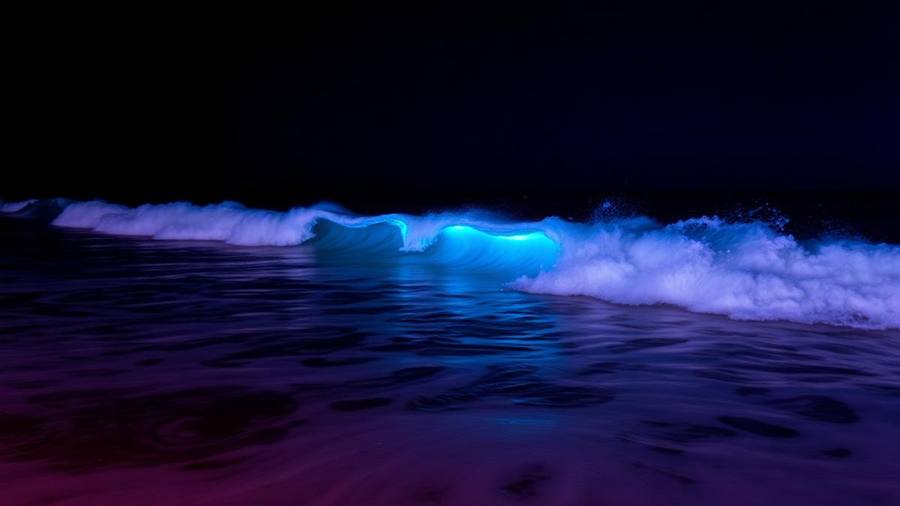
How to check current conditions, where the glow shows up, and whether the water is safe.
Last updated
No confirmed current status — check the sources below. Scripps and regional observing programs can document blooms, while San Diego County posts current water-contact advisories. A recent, location-specific nighttime report can help confirm visible glow, but an old social post is not evidence of tonight's conditions.
Sources checked
A San Diego red tide is a dense algae bloom, often involving the dinoflagellate Lingulodinium polyedra, that can tint the water rust-brown by day and make breaking waves glow blue at night. Blooms are unpredictable and this page does not infer a current event from old photos. Check the status panel and official sources before driving to the coast. Bioluminescence, harmful algal blooms and bacterial water-quality advisories are separate conditions; glowing water does not automatically mean the water is safe or unsafe.
| Beach | Darkness | Wave Action | Parking at Night | Best When |
|---|---|---|---|---|
| Torrey Pines State Beach | Very dark | Open-coast break | Lots may close; verify legal street access | Confirmed bloom with moderate surf |
| La Jolla Shores | Moderate | Usually gentler | Large lot; posted hours apply | Glow is strong enough to overcome nearby light |
| Blacks Beach | Very dark | Stronger surf | Difficult night access; avoid bluff trails | Experienced visitors with safe access |
| Del Mar | Dark away from village | Open-coast break | Street rules vary by block | Reports cluster along the north beach |
| Moonlight Beach | Moderate | Consistent shorebreak | Public lots and posted hours | North County reports are current |
| Coronado Beach | Dark south of the resort | Variable | Use legal public access | A confirmed bloom reaches the central coast |
Give your eyes 15 to 20 minutes to adjust and stay off your phone screen. The glow is far dimmer in person than in long-exposure photos.
A bright moon washes out the effect entirely. New moon nights during an active bloom are the payoff window.
The organisms light up under agitation, so a beach with punchy shorebreak beats a calm cove. Kicking wet sand at the waterline also sparks.
Torrey Pines State Beach, Blacks, and the north end of Del Mar are darker than the boardwalk beaches in PB and Mission Beach.
Bring a red-filter headlamp, go with someone, watch the tide so you don't get cut off against a bluff, and don't swim at night in unknown surf.
Tripod, wide fast lens, ISO 1600 to 6400, 2 to 8 seconds. Focus manually on a distant light before it gets dark.
Lingulodinium polyedra is different from the toxic organisms behind some other red tides, but irritation and unrelated water-quality advisories can still make contact a bad idea.
As a bloom collapses it consumes oxygen and produces a strong sulfur smell. That's when respiratory and skin irritation reports spike.
Domoic acid events from Pseudo-nitzschia affect shellfish and marine mammals. Never harvest shellfish without checking the state advisory.
sdbeachinfo.com posts closures and advisories, including rain-related bacteria warnings that are far more common than algae closures.
People with asthma, young children, and anyone with open wounds should stay out of a visibly discolored or foul-smelling bloom.
A freshwater rinse and a wetsuit wash cut down on the itch some swimmers report after time in a dense bloom.
Spring upwelling pushes cold, nutrient-rich water toward the coast, feeding the dinoflagellates that drive local blooms.
Stratified, still conditions let the organisms concentrate near the surface, which is when the brown daytime color appears.
Storm runoff adds nutrients. It also brings bacteria — the 72-hour post-rain swim advisory is separate from and more restrictive than algae guidance.
Scientists can track a bloom in progress but cannot reliably forecast one. Plan opportunistically rather than booking a trip around it.
San Diego's most widely photographed event lasted weeks and drew nightly crowds. Most blooms are shorter and patchier than that one.
Treat bioluminescence as a possible bonus, not a reservation promise. Choose a daytime plan you would enjoy on its own, then check fresh reports and posted beach access before deciding whether to stay after dark.
Compare beach time, nearby sights, and places to eat before your evening check. Choose a convenient meeting point and a return plan so the outing still works if there is no visible glow.
Read the tour guide before booking and check the operator's conditions, age limits, and cancellation terms. A daytime kayak booking is not a bioluminescence tour or a guarantee of cave access.
Use the sunset guide to choose a backup photo stop. Check the location's access hours and plan to leave while you can safely see the route back.
Check the Scripps Institution of Oceanography coastal observations and the county's beach advisory page at sdbeachinfo.com, then look at recent nighttime surf photos from Torrey Pines and La Jolla for confirmation.
No confirmed current status — check the sources above. Bioluminescence is patchy and can change nightly, so use current Scripps or regional observations plus recent location-specific reports rather than older photos.
Torrey Pines State Beach, Blacks Beach, La Jolla Shores, Del Mar, and Moonlight Beach in Encinitas — all dark enough to see the glow, with waves that break hard enough to trigger it.
One to three hours after sunset on a moonless night, once your eyes have fully adjusted. The glow fades in moonlight or near boardwalk lighting.
Do not decide from the glow alone. The common local species is not known to produce a toxin harmful to humans, but blooms can irritate skin, eyes and airways, and bacterial advisories are separate. Check San Diego County's current posting before entering the water.
Anywhere from a few days to several weeks. Blooms move along the coast, so one beach can glow while another a few miles away shows nothing.
Most often late winter through early fall, with spring the historically most likely window. There's no reliable forecast — it's opportunistic.
Don't harvest recreational shellfish without checking the California Department of Public Health biotoxin advisory. Commercial shellfish are tested separately and remain safe.
Go-bags, alerts, and earthquake, fire, and outage readiness in one place.
Month-by-month conditions, marine layer, and Santa Ana season.
Setting up service, reading your bill, and solar rules.
Where to go by vibe, surf, and parking.
Where to shoot when the water isn't glowing.
The Sandi Spots Newsletter
New beach finds, hidden taco shops, weekend events, and seasonal guides — once a week from a local. No spam, ever.
One email a week. Unsubscribe anytime.
Published by the Sandi Spots Editorial team at Sleep Coast LLC. Guides combine local perspective and source research. Check the individual guide for firsthand observations and follow official links to confirm current details.