Check the exact block first
Use the City's residential permit district map for the address, not a neighborhood name or a listing description. District boundaries can stop at one side of a street.
We use cookies for essential site functions and, with your permission, for analytics and advertising. California residents can opt out of the sale or sharing of personal information at any time. See our Privacy Policy, Cookie Policy, and Do Not Sell or Share My Personal Information.
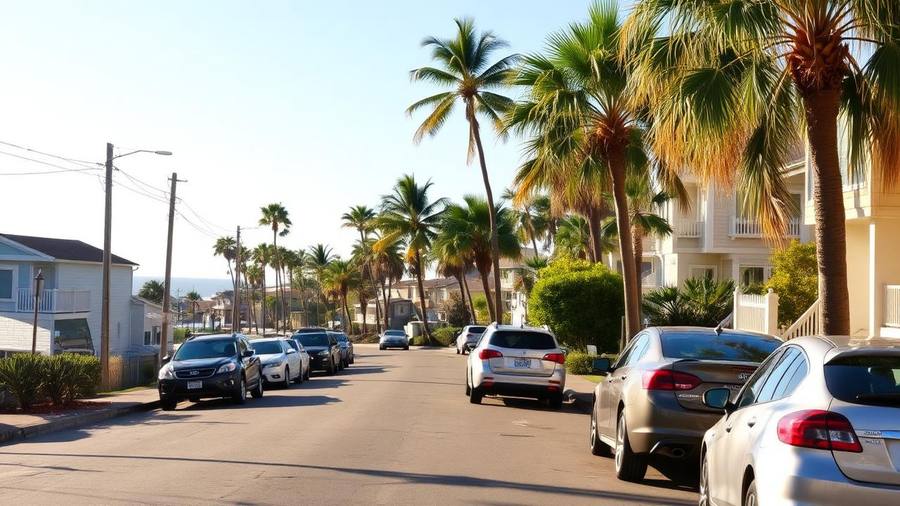
Which neighborhoods have permit districts, what visitors do, and the overnight rules nobody reads until they're towed.
Last updated
San Diego's residential permit parking districts are concentrated around the areas where non-residents compete hardest for curb space: Mission Beach, Pacific Beach, parts of Ocean Beach, Hillcrest, Bankers Hill, University Heights, Golden Hill, and the blocks around SDSU and UCSD. Permits are issued by the City of San Diego per address, typically cost a modest annual fee, and come with a limited number of visitor or guest passes. Coronado, Del Mar, and other incorporated cities run entirely separate programs with their own rules and prices — a City of San Diego permit is worthless there. The most common expensive mistake is assuming a permit guarantees a space; it does not. It exempts you from the posted time limit in your district, nothing more. The second most common is the 72-hour rule: any vehicle parked on a public street for more than 72 hours without moving can be cited and towed anywhere in the city, permit or not.
| Area | Program | Visitor / guest reality | Watch for |
|---|---|---|---|
| Mission Beach / Pacific Beach | City of SD RPP | Request guest passes from the address | Mixed permit blocks; strict summer enforcement |
| Ocean Beach (partial) | City of SD RPP | Only the household in the district can issue passes | Not every block is in a district — check the map |
| Hillcrest / Bankers Hill | City of SD RPP | Guests need a pass or must follow the posted limit | Hospital and nightlife spillover |
| University Heights / Normal Heights | City of SD RPP | District rules change by block | Business-district spillover blocks |
| Golden Hill / Sherman Heights | City of SD RPP | Visitor passes do not override event restrictions | Balboa Park event spillover |
| Near SDSU / College Area | City of SD RPP | Address-linked permits; weekday demand is highest | Student parking pressure during the academic year |
| La Jolla village core | Time limits and meters | No citywide residential pass to rely on | Mostly metered/time-limited rather than permit |
| Coronado / Del Mar | Separate city programs | Apply to the city where the address sits | A City of San Diego permit does not transfer |
| Downtown | Meters, garages, and private lots | Building or neighborhood rules vary | No general residential permit; read every sign |
Rates and availability change daily, so we link the guide rather than quote a price. Each page compares walkable, short-drive and budget options with parking and resort fees called out.
A permit is an address-and-district question before it is a fee question.
Use the City's residential permit district map for the address, not a neighborhood name or a listing description. District boundaries can stop at one side of a street.
Have the current registration and proof that you live at the address ready. A lease, utility bill, or other accepted residency document may be needed when the registration has not caught up.
The resident permit covers the vehicle and district rules shown on the application. Check the expiration date and the plate number before leaving the confirmation screen.
Guest capacity is limited and varies by program. Do not assume a friend, contractor, or short-term guest can use your resident permit; issue the appropriate visitor credential.
A permit does not erase curb colors, sweeping windows, temporary event signs, or construction restrictions. A quick photo of the block face gives you a record if signage is unclear.
Permits only apply inside the specific district drawn around your block. Verify your exact address on the city's permit district map before you pay — neighboring streets are often excluded.
It exempts you from the posted time limit within your district. It never reserves a space, and it does not override street sweeping, red curbs, driveway clearances, or the 72-hour rule.
Expect to show a current registration listing the address plus a utility bill or lease. Cars registered out of state or at a parent's address are the usual reason applications get bounced.
Districts issue a limited number of guest or visitor permits per household, sometimes as scratch-off day passes. Request them when you apply — adding them later is slower.
Annual and not automatic in every district. Calendar the expiration; enforcement resumes the day after with no grace period.
If you just moved, a lease plus a change-of-address confirmation usually suffices while your registration catches up. Ask before assuming — rules differ by district.
The hardest parking in the county from Memorial Day through Labor Day. A permit helps with time limits; it does nothing about 15,000 beachgoers. Many residents pay for a private space.
Mixed permit blocks, metered corridors along Garnet and Grand, and heavy weekend nightlife turnover. Read every sign on the block you park on — rules change mid-street.
Hospital shift changes and restaurant traffic fill the curb. Permit blocks are interleaved with two-hour zones, and enforcement is consistent on weekdays.
SDSU commuter overflow is the entire reason the district exists. Weekday enforcement is aggressive during the academic year and light in summer.
Its own program, its own fees, and heavy summer enforcement near the beach and the Hotel del. Do not assume anything from the city carries over.
Golden Hill and Bankers Hill blocks absorb event parking for the park and the zoo. Permit districts here exist specifically to keep event traffic off residential streets.
Posted sweeping hours override your permit, every time. The signs are per-block and per-day; the ticket is routine and unappealable.
A vehicle that has not moved in 72 hours can be marked, cited, and towed anywhere in the city. Moving it around the corner and back resets the clock.
RVs, trailers, and vehicles over the posted length face additional overnight restrictions in coastal areas, with separate permits required in some zones.
Color rules apply regardless of permit status. Green is short-term, white is passenger loading, yellow is commercial loading during posted hours, red is never.
Blocking any part of a driveway apron, or parking within 15 feet of a fire hydrant, is a tow risk in dense beach blocks where neighbors call it in.
San Diego offers an initial administrative review online before any hearing. If the signage was missing, obscured, or contradictory, photograph it the same day — that evidence wins reviews.
Residential permit districts exist in Mission Beach, parts of Pacific Beach and Ocean Beach, Hillcrest, Bankers Hill, University Heights, Golden Hill, and the College Area near SDSU, among others. Districts are drawn block by block, so check your exact address on the city's district map.
Start by checking whether the exact address is inside a City of San Diego residential permit district. Then prepare vehicle registration and residency documents, apply through the city's current parking-permit process, and request visitor credentials with the resident permit if your household needs them.
The City of San Diego charges a modest annual per-vehicle fee, with a limited number of visitor permits available per household. Fees and guest limits can change, and Coronado, Del Mar, and other incorporated cities run separate programs with their own pricing.
No. It only exempts you from the posted time limit inside your district. Street sweeping, colored curbs, the 72-hour rule, and hydrant and driveway clearances all still apply.
Yes, with a visitor or guest permit issued to the household, or within the posted time limit without one. Guest capacity is limited, so request visitor credentials when you first apply rather than after a guest receives a citation.
Any vehicle parked on a public street for more than 72 consecutive hours can be cited and towed, permit or not. Enforcement is typically complaint-driven and common in dense beach neighborhoods.
Coronado runs its own residential permit program separate from the City of San Diego, with its own application, fees, and beach-season enforcement. A San Diego permit does not work there.
The Sandi Spots Newsletter
New beach finds, hidden taco shops, weekend events, and seasonal guides — once a week from a local. No spam, ever.
One email a week. Unsubscribe anytime.
Published by the Sandi Spots Editorial team at Sleep Coast LLC. Guides combine local perspective and source research. Check the individual guide for firsthand observations and follow official links to confirm current details.