Nature
San Elijo Lagoon in Winter: An Easy Birdwatching Walk for Beginners
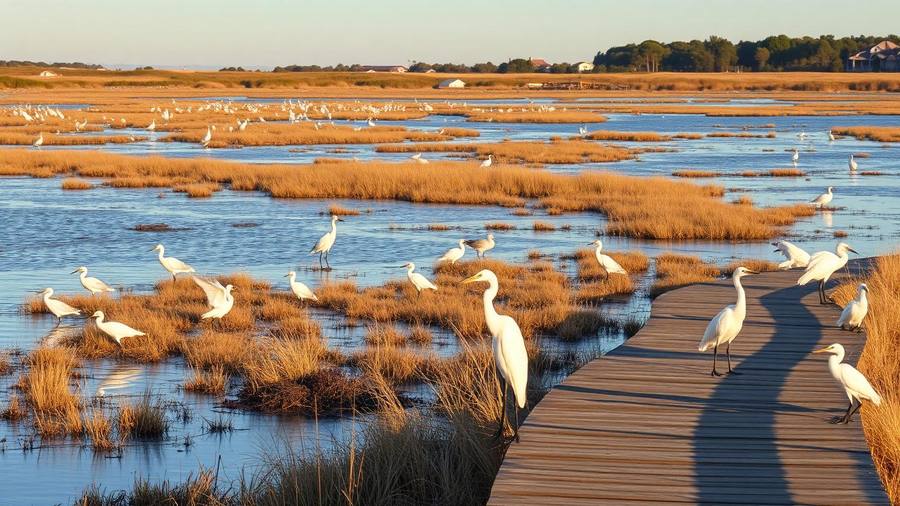
Your first lagoon visit
Suggested timing, not a guided program. Conditions, accessibility and parking availability should be checked before departure.
| Decision | Suggested plan |
|---|---|
| Starting point | 2710 Manchester Avenue, Cardiff-by-the-Sea |
| Parking / nature center | Usually 9 a.m.–5 p.m.; limited lot |
| Trail | Nature Center's flat, accessible loop options |
| Duration | 45–90 minutes, including observation stops |
| Bring | Water, sun protection, binoculars if available |
| Best activity | Watch birds from public paths and overlooks |
Why this is an unusually approachable birding outing
Birdwatching does not have to mean hiking before dawn with expensive equipment. San Elijo Lagoon is an estuary in coastal North County, where freshwater streams meet the ocean. The habitat supports a variety of birds using open water, marsh vegetation and mudflats. The Nature Center in Cardiff provides an especially manageable introduction because you can explore a short, relatively level route and stop whenever something interesting happens.
Winter is appealing because the lagoon can attract migratory birds using coastal wetlands for feeding and rest, while cooler days can make a slow walk comfortable. That does not mean a particular species or a spectacular flock will appear on command. The goal of this guide is to help you notice more on any visit rather than turn a wildlife outing into a checklist of promised sightings.
Start at the Nature Center, not Annie's Canyon
Enter at 2710 Manchester Avenue. Nature Collective describes two concentric loop options on flat, broad terrain suitable for strollers and wheelchairs. The center has an observation deck and interpretive facilities; check access arrangements and current conditions if an accessible route is essential. The paved parking lot is small, with 19 spaces including designated accessible and other marked spaces. Normal lot hours are 9 a.m. to 5 p.m. Do not assume a parking space is available at a particular time.
County information identifies seven miles of easy-to-moderate trails across the larger reserve, as well as the more challenging Annie's Canyon Trail. Annie's Canyon is not required for this itinerary and is not a substitute for the Nature Center loop. It serves a different kind of outing. Stay with the short route if you are bringing children, want a low-effort walk, or are learning to watch wildlife. Some trails may close with high tides or storms, so consult the county's notices.
Make your first ten minutes a stationary observation
Before walking the loop, spend several minutes at a permitted viewpoint. Scan the open water without binoculars and notice movement. Large birds are easier to spot than small birds hidden among shrubs. Look at the water's edge for waders and the air above the lagoon for birds in flight. Do not be discouraged if the first view seems empty; a stationary observer often sees activity that a person walking quickly misses.
If you bring binoculars, first locate the bird with your unaided eyes, keep your gaze fixed on it, then lift the binoculars. Choose a fixed feature nearby to help find it again if you lose the view. A phone's camera can be useful for documenting what you saw, but a distant image may not be sharp enough for a confident species identification. The walk remains worthwhile without any optical equipment.
Learn three kinds of birds instead of memorizing dozens
Start with waterfowl: birds sitting or moving on the water, sometimes dipping their heads or diving. Watch whether they feed at the surface, tip forward or disappear below it. Next, look for wading birds: longer legs, often a long neck or bill, and careful movement at the edge of water. Finally, notice smaller shorebirds using exposed sediment, especially if they are moving quickly and probing for food.
Within each group, note body proportions and what the bird does. A long curved bill suggests a different feeding strategy from a short straight bill; a bird standing motionless at the water's edge behaves differently from one repeatedly running and stopping. Cornell's bird-identification guidance emphasizes appearance, size, behavior and habitat. Use those clues to narrow your choices rather than expecting color alone to identify every bird.
Bring a bird identification app or field guide if you have one, but let it support observation rather than replace it. Write down a description when uncertain. If the app gives several plausible species, you can leave the identification unresolved. An accurate observation of an unidentified shorebird is more useful than a confident but incorrect species name.
Use tide and weather as context, not as a guarantee
As water levels change, parts of the lagoon become submerged or exposed. Different birds use different conditions: shallow water and exposed mud can reveal feeding activity, while other birds may rest in deeper water or away from the visible shore. This is why a second visit at another time can look different from the first. County information also notes that high water can affect trail access.
For your first trip, prioritize dry weather, daylight, and an open trail. Morning can offer comfortable temperatures and relatively quiet surroundings, but do not assume it always provides the best bird activity. Check the current reserve notice and weather. Ocean tide predictions are a useful clue to regional conditions, not an exact promise about water level or timing at every point inside the lagoon. Avoid crossing a flooded path or entering mudflats to get a better photograph.
A field checklist for a family visit
Give children four simple tasks: spot a bird floating, spot one walking, spot one flying and find a plant that looks adapted to wet or salty conditions. Ask them to describe a bill or a foot rather than name the species. Stop when the group is losing interest; a successful 40-minute outing is better than a forced multi-hour hike. The center's exhibits can provide context when open.
Stay on designated paths, keep noise moderate around wildlife and never feed, chase or approach birds for a picture. If you bring a dog, follow the reserve's leash rules and keep it away from wildlife. Bring a warm layer in winter, sun protection for exposed areas, water and shoes suitable for the trail surface. Pack out your rubbish. The reserve is a protected natural area first and a recreational destination second.
FAQ: when to go, how long to stay, and what comes next
A short first visit of 45–90 minutes leaves plenty of time to observe instead of hurrying. The center normally operates during the day and the trails are available during daylight subject to closures; the parking lot and facilities have their own restrictions. Christmas Day has different facility arrangements, so check the county notice before a holiday outing. If you arrive to a full lot or a closed trail, choose another legal access point only after verifying its route and suitability.
If you enjoy the experience, return to the same viewpoint in a different season or explore another county wetland using our birding guide. For an ocean wildlife experience in winter, try the shore-based gray whale watch at Cabrillo. Both trips reward patience and attention rather than a long list of destinations. A good first day at the lagoon is one where you leave knowing something new about how birds use the water.