Maintenance is not optional
Budget about 1 percent of the home's value per year — on a $900K house that is $9,000 annually. It arrives lumpy: nothing for two years, then a $14,000 roof. Coastal homes run higher because salt air eats everything.
We use cookies for essential site functions and, with your permission, for analytics and advertising. California residents can opt out of the sale or sharing of personal information at any time. See our Privacy Policy, Cookie Policy, and Do Not Sell or Share My Personal Information.
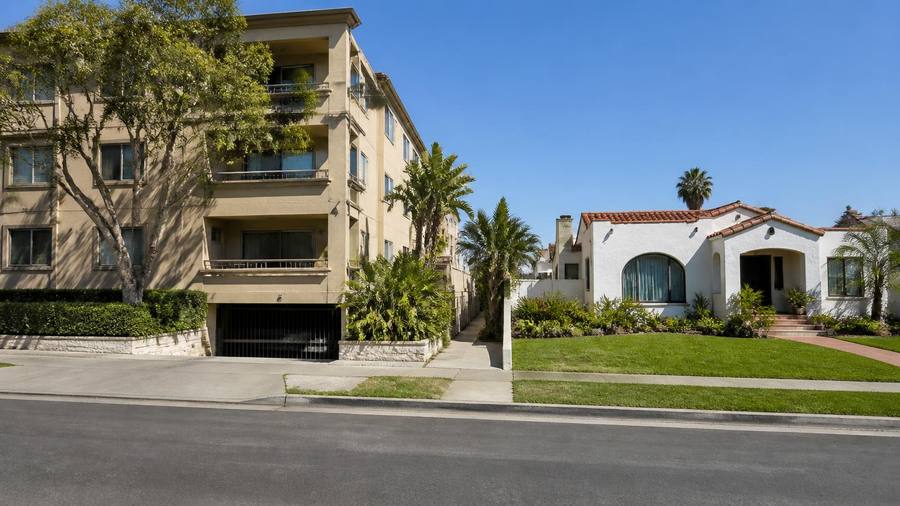
The full monthly cost of owning here, the break-even year, and the situations where renting is obviously the smarter move.
Last updated
San Diego is one of the widest rent-versus-own gaps in the country: a home near the $900K median costs roughly $5,800 to $6,500 a month all-in with a typical down payment, while renting a comparable house runs closer to $4,000 to $4,800. That spread means buying is not automatically the winning move — the math turns on how long you stay. Transaction costs are the reason: about 2 to 3 percent to buy and 6 to 8 percent to sell, which is $70,000 to $90,000 of round-trip friction on a median home that appreciation has to erase before you break even. At historically typical appreciation, that puts the break-even somewhere around year five to seven for most San Diego buyers, and longer if you bought at a market peak. What tilts it toward buying: staying seven-plus years, a VA loan with no down payment and no mortgage insurance, an ADU or a rentable room, a low fixed rate, and the fact that your housing cost stops rising while San Diego rents historically have not. What tilts it toward renting: a job or relationship that might move you, a thin emergency fund, a high-HOA condo, or needing every dollar of the down payment for something with better returns.
| Line item | Rent | Buy (20% down) |
|---|---|---|
| Base monthly housing | $4,400 | $4,600 principal & interest |
| Property tax | $0 | ~$940 (about 1.25% annually) |
| Insurance | $25 renters | $180 homeowners |
| HOA or association dues | $0 | $0–$500 depending on property |
| Maintenance and repairs | $0 | ~$600 (1% of value per year) |
| Total monthly | ~$4,425 | ~$6,320 before dues |
| Upfront cost | ~$8,800 deposit and first | ~$180,000 down plus $20K closing |
| Cost to exit | Notice period | 6–8% of sale price |
| Typical break-even | n/a | Year 5–7 |
Budget about 1 percent of the home's value per year — on a $900K house that is $9,000 annually. It arrives lumpy: nothing for two years, then a $14,000 roof. Coastal homes run higher because salt air eats everything.
The base rate plus voter-approved bonds and district assessments generally lands around 1.15 to 1.30 percent in San Diego County, and Mello-Roos areas add thousands more on top.
California's homeowner insurance market has hardened badly. Inland and canyon-adjacent properties are seeing multiples of old rates, and some buyers are landing on the FAIR Plan. Quote it before you remove contingencies.
Roughly 2 to 3 percent to buy and 6 to 8 percent to sell. That round trip is the single biggest reason short holds lose money even in an appreciating market.
$180,000 sitting in a house is $180,000 not compounding elsewhere. Any honest comparison has to credit the renter with investing the difference — most online calculators quietly do not.
On a condo, $450 a month is $162,000 over thirty years and it rises with inflation. It belongs in the comparison.
The dominant variable, and it is not close. Under five years, renting usually wins in San Diego. Past seven, owning usually does. Be honest about your job and your relationships rather than optimistic.
Zero down and no mortgage insurance removes both the opportunity cost of the down payment and a monthly expense. In a military town this is the most common reason the math flips early.
An ADU, a converted garage, or a rented room can cover a large slice of the payment. San Diego's ADU rules are among the most permissive in the state, which is why alley-access lots trade at a premium.
Compare a fixed mortgage against rent that has historically risen here over time. Ten years out, the fixed payment is the whole argument for buying — but only if you are still in it.
Buying with nothing left over is how people end up putting a water heater on a credit card. Keep three to six months of expenses after closing or you are not actually ready.
The standard deduction and the SALT cap mean many San Diego buyers get far less mortgage-interest benefit than the folk wisdom suggests. Run your actual numbers with a CPA instead of assuming.
Rent caps, just-cause rules, and deposit law — most San Diego renters do not know what applies to their unit.
Where to look, what to expect on applications, and how to win a competitive unit.
Renting is the cheapest way to test a neighborhood before you commit six figures to it.
Where San Diego housing sits against LA, Phoenix, and Austin on the whole budget.
SDG&E, water, and internet costs that apply either way.
Start with the agent interview, not with open houses.
Month to month, renting is clearly cheaper in 2026 — roughly $4,400 versus about $6,300 all-in for a comparable median home. Buying wins over a long enough hold, because part of the payment builds equity and the payment stops rising, but on a pure monthly basis the gap here is one of the widest in the country.
For most San Diego buyers, five to seven years is the realistic break-even once you account for 2 to 3 percent to buy and 6 to 8 percent to sell. Buying near a market peak or with a high HOA pushes it longer; a VA loan with no down payment or a property with rental income pulls it shorter.
With 20 percent down at 2026 rates: roughly $4,600 principal and interest, about $940 in property tax, around $180 in insurance, and about $600 a month set aside for maintenance — call it $6,300 before any HOA dues. Less down means a bigger payment plus mortgage insurance.
Less than most people expect. With the current standard deduction and the cap on state and local tax deductions, a lot of San Diego buyers see only a modest benefit, and some see none at all. Treat any tax savings as a bonus in your math rather than a load-bearing assumption, and confirm with a CPA.
Nobody can time it, and the two tend to move against each other — when rates fall, San Diego buyers flood back in and prices firm up. The defensible framing is not 'is this the bottom' but 'can I comfortably hold this payment for seven years.' If yes, timing matters much less than you think.
Only sometimes. Condos have the smallest price gap over renting but carry HOA dues that never build equity, are more sensitive to association health, and historically appreciate more slowly than detached homes in San Diego. If it is your entry point into a neighborhood you will stay in for years, it can work; as a short-term stopgap, it usually does not.
The Sandi Spots Newsletter
New beach finds, hidden taco shops, weekend events, and seasonal guides — once a week from a local. No spam, ever.
One email a week. Unsubscribe anytime.
Published by the Sandi Spots Editorial team at Sleep Coast LLC. Guides combine local perspective and source research. Check the individual guide for firsthand observations and follow official links to confirm current details.