Sandi Spots
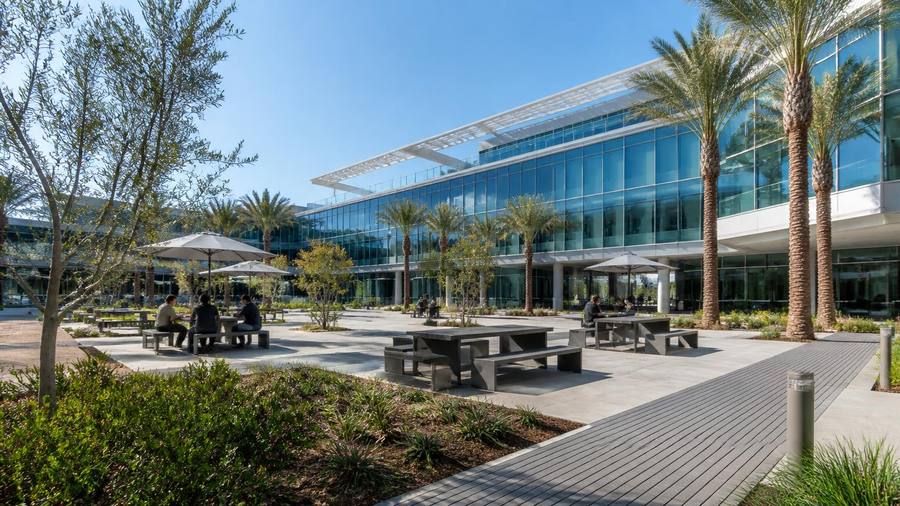
    Sunny outdoor courtyard of a modern San Diego tech office campus with palm trees and glass office buildings

    Tech Jobs in San Diego

    A hardware-rooted market that pays less than the Bay Area and costs less to live in — here is what that trade actually looks like.

    Last updated

    Quick answer

    San Diego's tech scene is not a smaller Silicon Valley — it has a different center of gravity. The region grew up around wireless, semiconductors, and connected devices rather than consumer software, which means a disproportionate share of local engineering jobs are embedded, firmware, RF, hardware, and systems roles, plus the software that surrounds medical devices, defense systems, and genomics instruments. Qualcomm is the anchor and functions as the region's talent pump; a large fraction of local senior engineers passed through it. Beyond that, the market splits between satellite offices of national companies (which pay closer to national bands), local product companies, defense-adjacent software, biotech informatics, and a genuine but modest startup layer concentrated downtown and in UTC. On pay, expect San Diego software salaries to run roughly 10–25% below San Francisco or Seattle for the same level, while housing costs meaningfully less than the Bay Area — the trade is usually favorable but narrower than people assume, because San Diego is still an expensive coastal city on a lower base. Remote-first roles at out-of-state companies are the highest-paying option available locally and are the reason many engineers move here at all.

    San Diego tech roles and typical total-comp ranges, mid-2026 snapshot

    RoleTypical rangeNotes
    Software engineer, entry$85k–$120kLocal product companies; satellite offices pay at the top of this
    Software engineer, senior$150k–$210k total compWide spread depending on equity and whether the HQ is elsewhere
    Embedded / firmware engineer$110k–$180kThe region's real specialty; demand consistently outruns supply
    RF / wireless engineer$120k–$190kDeep local ecosystem, few competing metros
    Data engineer / analyst$95k–$160kStrong demand in biotech informatics and health systems
    DevOps / platform engineer$120k–$180kPortable skills; strong remote leverage
    Product manager$120k–$190kHardware and regulated-product PM experience is prized
    UX designer$95k–$150kThinner market than engineering; agencies fill the gap
    IT / help desk / sysadmin$55k–$100kHealth systems, universities, and defense contractors hire steadily

    What kind of tech this actually is

    Targeting the wrong segment is the most common mistake transplants make. The consumer-software job you had in Austin may not have a large local equivalent.

    Wireless, semiconductor, and embedded

    The backbone. Modems, chipsets, connectivity, and the firmware and test infrastructure around them. If your background is C, RTOS, drivers, DSP, or RF, San Diego is one of the best markets in the country for you.

    Medical device and health tech

    Continuous monitoring, diagnostics, and imaging companies need software that ships under FDA regulation. The pace is slower and the documentation heavier, and the job security is correspondingly better.

    Genomics and scientific software

    Sequencing and lab-instrument companies employ large bioinformatics, cloud, and data-pipeline teams. A rare corner where biology fluency plus engineering pays a premium.

    Defense software

    A large, quiet, well-paid segment. Clearance requirements shrink the applicant pool dramatically, and the work is steady through downturns that hit consumer tech hard.

    Satellite offices

    National companies run engineering sites here to hire the wireless and device talent. These often pay national bands, which is the best cash-comp available without going remote.

    The startup layer

    Real but small, clustered downtown, in East Village, and around UTC, with sports tech, climate, fintech, and biotech-adjacent SaaS overrepresented. Fewer seats, and equity here should be valued conservatively.

    The honest comp comparison

    The Bay Area pay cut is real. Whether it is a good trade depends on numbers specific to you, not on a vibe about sunshine.

    Run it after housing, not before

    Compare offers as base plus equity minus your actual expected housing cost in each metro. San Diego wins comfortably against San Francisco for buyers, and by a much thinner margin for renters in coastal neighborhoods.

    California taxes do not change

    State income tax is identical between San Diego and the Bay Area, so the entire advantage is housing and daily costs — not tax. People moving from Texas or Washington should model this carefully, because the swing is large.

    Equity is worth less here on average

    Fewer local companies reach large exits, so treat startup equity as a lottery ticket rather than deferred salary. Weight cash more heavily than you would in a Bay Area offer.

    Remote for an out-of-state company

    The highest-paying option in the county for many engineers. The catch is that some employers geo-adjust to San Diego bands, so confirm the location policy in writing before you move.

    Ask for the posted range

    California requires pay scales in job postings. If a range is absent or absurdly wide, ask the recruiter to narrow it against the specific level before you invest in five interview rounds.

    Getting hired without a local network

    San Diego's tech community is small enough that referrals dominate and large enough that you can build one in a few months.

    Go where the engineers are

    Local meetups around embedded systems, cloud, data, and specific language communities run consistently, and the same faces recur. Three months of showing up beats a year of cold applications.

    Target the hardware-software boundary

    Pure web developers face national competition. Engineers who can straddle firmware and cloud, or regulated product and software, face almost none locally and can name a number.

    Use UC San Diego and SDSU gravity

    Research labs, spinouts, and extension programs generate both jobs and introductions. Alumni networks here are unusually effective because so many locals stayed.

    Expect longer cycles than the Bay Area

    Fewer companies means fewer simultaneous processes and less competitive urgency. Budget a longer search and keep more conversations alive at once.

    Beware the recruiter-scam wave

    Fake remote-engineering offers that ask you to buy equipment or accept a check are aggressively targeting San Diego job seekers. No legitimate employer sends money before your first day.

    How to use these pages

    • • Pay ranges here are order-of-magnitude San Diego snapshots for mid-2026, meant to help you calibrate an ask and recognize a lowball. They are not offers, and no one here has seen your comp band.
    • • California has required pay scales in job postings since 2023 (SB 1162). If a listing has no range, ask for it — you are entitled to it on request for a role you are being considered for.
    • • Company hiring rises and falls fast, especially in biotech and tech. Treat named companies as examples of where the work concentrates, not as a live list of openings.
    • • Nothing here is legal or immigration advice. Clearance eligibility, visa status, and employment classification questions belong with an attorney or the agency involved.
    • • Verify a recruiter before sending documents. Fake recruiter scams targeting San Diego biotech and defense candidates are common; a real company will never ask you to pay for equipment or training.

    Frequently asked

    Is San Diego a good city for software engineers?

    It is good for embedded, firmware, wireless, medical-device, defense, and scientific software, and merely fine for consumer web and mobile. If your specialty is in the first group, this is one of the strongest markets in the country. If it is in the second, plan on a remote role or a satellite office rather than a deep local market.

    How much less does San Diego pay than the Bay Area?

    Broadly 10–25% below San Francisco or Seattle for equivalent levels, with the gap widest at senior and staff levels where Bay Area equity packages balloon. Satellite offices of national companies narrow it considerably, and fully remote roles at out-of-state employers can erase it.

    Where do tech workers live in San Diego?

    UTC, Carmel Valley, Sorrento Valley-adjacent Mira Mesa, and Clairemont for proximity to the northern job corridor; North Park, South Park, Hillcrest, and downtown for people who prioritize walkability and are remote or commute against traffic. North County coastal towns are popular with the Coaster commuters.

    Is there a real startup scene?

    Yes, but it is a fraction of the size of the Bay Area's and concentrated downtown, in East Village, and around UTC. Local venture capital is thinner, so companies here tend to be more capital-efficient and hire later. Value the equity conservatively and the cash carefully.

    Can I move here first and find a job after?

    It is a slower market with fewer simultaneous openings, so arriving without a job means budgeting for a longer search than you would in a bigger tech metro. If you can, land a remote role or an offer first and move on it.

    Keep reading

    The Sandi Spots Newsletter

    San Diego, in your inbox.

    New beach finds, hidden taco shops, weekend events, and seasonal guides — once a week from a local. No spam, ever.

    One email a week. Unsubscribe anytime.

    About this guide

    Written and fact-checked by the Sandi Spots Editorial team — San Diego residents publishing under Sleep Coast LLC. Every place we recommend has been visited in person or verified against an official source, and no business can pay for inclusion or a higher ranking. Last updated .

    Local, first-hand. Reported on the ground in San Diego County.
    Kept current. Prices, hours, and closures reviewed on a rolling basis.
    Independent. Affiliate links never influence rankings.

    Editorial policy · About us · Suggest a correction