Arts & Culture
Liberty Station in 3 Hours: Free Art, Naval History & a Market Lunch
A workable three-hour Liberty Station route
Friday or Saturday provides the broadest overlap of the two gallery schedules. Times are suggested visit blocks; confirm holidays and exhibition changeovers.
| Stop | Address | Allow |
|---|---|---|
| Visions Museum of Textile Art | 2825 Dewey Rd, Suite 100 | 35–45 min |
| San Diego Watercolor Society | 2825 Dewey Rd, Suite 105 | 30–40 min |
| Liberty Public Market | 2820 Historic Decatur Rd | 40–50 min |
| Arts District / historic campus | Historic Decatur Road and surrounding public paths | 30–45 min |
| NTC Park (optional) | 2455 Cushing Rd | Extra time; check parking limits |
Liberty Station is more than its food hall
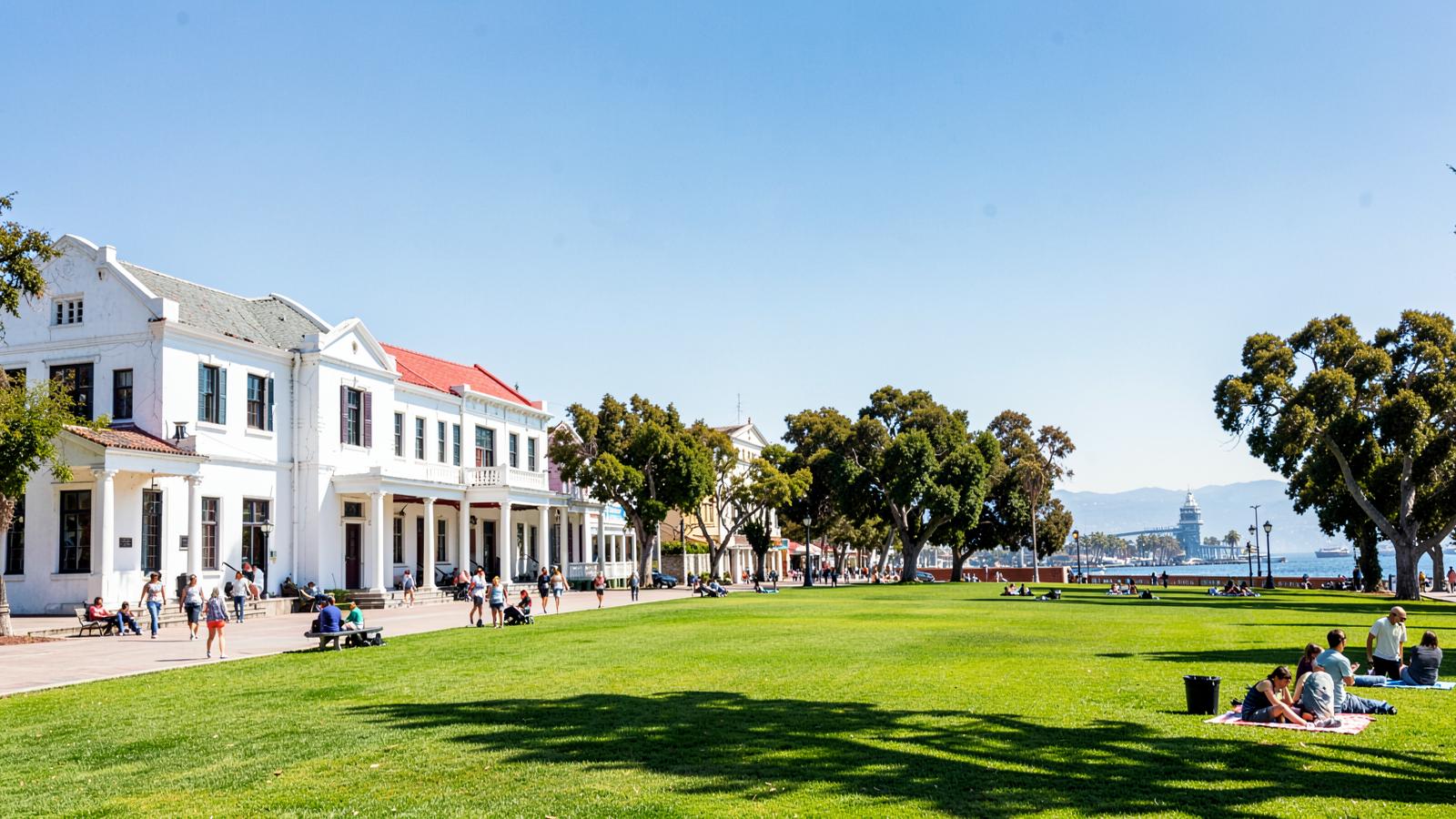
The former Naval Training Center operated from 1923 to 1997. Today, Liberty Station combines restaurants, shops, arts organizations and public spaces in its historic buildings. The Arts District alone occupies a substantial campus; trying to walk the entire property in one visit can turn a short outing into an exhausting tour. The itinerary here focuses on a few neighboring places with different experiences, so you can spend more time looking at art than crossing parking lots.
Plan for a Friday or Saturday morning through early afternoon if you want both of the free galleries to be open. Wednesday and Thursday also work with a tighter time window. The market's regular daily schedule is different from the galleries' schedules. Check each before arriving, especially around Thanksgiving and Christmas. The suggestions are based on publicly documented locations and programs rather than a claimed recent firsthand visit.
Stop 1: see textile art at Visions Museum
Start at 2825 Dewey Road, Suite 100. The Visions Museum of Textile Art focuses on contemporary fiber and textile fine art, including art quilts. The material itself is part of the experience: look at stitching, layering, surface texture and the relationship between a piece's scale and the techniques used. This can be a refreshing change from the more conventional framed paintings found in many art galleries.
The museum lists free admission with donations welcome. Its usual hours are Wednesday and Thursday 10 a.m.–2 p.m. and Friday and Saturday 10 a.m.–4 p.m. Make this the first stop on a shorter weekday visit because it closes earlier than the market. Check current exhibitions, and contact the museum in advance for a docent-led appointment if that is important to your group. Its visit page also describes a nearby ramp access option.
For a first visit, select a work you would not immediately describe as a quilt and ask yourself how the artist uses material to express the subject. Then compare it with a work whose construction is more familiar. Follow gallery policies on photography and touching artwork. With children, discuss the materials and shapes instead of trying to explain every artistic technique.
Stop 2: watercolor in the same building
The San Diego Watercolor Society gallery is next door at 2825 Dewey Road, Suite 105, Building 202. Its usual free gallery hours are Wednesday through Sunday from 11 a.m. to 3 p.m.; the society advertises a different daily schedule for its October international show. Check the calendar for holidays or special events. The visit page also provides information about accessible ramps.
The proximity of the two institutions makes a useful comparison possible. At the textile museum, material, texture and construction may dominate your attention. In the watercolor gallery, look at washes, transparency, soft and sharp edges and the use of unpainted paper. Pick one work from each that communicates a similar mood using different materials. You do not need formal art training to have an interesting conversation about those differences.
If one gallery is closed, do not treat the trip as ruined. Look at the current Arts District directory for an open studio or exhibition, and leave additional time for the historic campus. Artists may work irregular hours; do not interpret a closed studio as a public attraction that is guaranteed to open.
Stop 3: make Liberty Public Market a shared lunch
Liberty Public Market is at 2820 Historic Decatur Road. The operator currently publishes daily hours of 9 a.m.–8 p.m., with individual vendor schedules varying and Thanksgiving and Christmas Day closures. Look at the market map and current vendor page before setting out if you have a particular meal in mind. An example of its current variety includes Cecilia's Taqueria, Landini's Pizzeria and Fluster Cluck Chicken; the actual vendors and menus can change.
The main advantage of a food hall is that a group does not have to agree on one cuisine. Choose a meeting place and browse briefly before ordering. A small group can each select a different meal and share sides if everyone wants to. Ask vendors about allergens rather than assuming the entire hall has common ingredient or cross-contact rules. When it is busy, avoid occupying more seating than your group needs.
To keep spending predictable, look at menus and choose a meal budget before entering. Bring a refillable water bottle and skip optional snacks if lunch is substantial. If the hall is crowded, takeout may be an easier choice; find a permitted outdoor place to eat and follow its rules. A long lunch is a reasonable reason to skip the optional park visit.
Stop 4: follow the Naval Training Center history in the architecture
After eating, use Liberty Station's official historical walking-tour page to select several nearby stops. It describes the campus's Navy training history and identifies sites including Sellers Plaza and Gate One. Rather than trying to complete the full official tour in a short period, choose a few buildings near your current location and read their historical interpretation. Notice how courtyards, former training buildings and pedestrian spaces have been adapted for present-day uses.
The Arts District supports working studios, installations, exhibitions and performances. Public art can change over time, and some areas may be closed for events, schools or private activities. Use the organizer's current map and keep to public access. The campus is a place where people work, study and create, not an unrestricted abandoned military site. Ask permission before taking photos inside a private studio.
First Friday: a separate evening version
The Arts District hosts a recurring First Friday program with participating artists and cultural events. If your main objective is meeting working artists, an evening visit can be more rewarding than a daytime walk. Check the particular month's listings for participating studios and opening hours. Do not assume all galleries remain open late or that every workshop is free. Some activities require advance registration or a fee.
A simple evening plan is to browse two or three open studios, eat at the market or a restaurant, and leave time for a conversation with an artist. This is a different experience from the daytime route, and it can be repeated as exhibitions change. If you have a small child who tires early, the daytime museum-and-lunch version may be easier.
Parking, accessibility and a family alternative
Liberty Station's self-parking page currently specifies up to three hours of free parking for guests patronizing businesses, with no overnight parking. Read the lot's signs; do not assume you can leave your car all day because the district advertises free parking. If adding a lengthy park visit or event, verify the applicable parking arrangement. Accessible parking and building-specific entrances should be checked for individual needs.
For families, NTC Park at 2455 Cushing Road offers playgrounds, picnic areas and other recreation facilities. Make it a separate extension if time and parking allow, not an obligatory part of the three-hour art walk. The city-managed park has its own rules, including leash requirements for dogs and restrictions on certain group activities. A short gallery visit followed by lunch and playground time may be more successful with children than visiting multiple studios. For another free-admission art itinerary, our Balboa Park walk offers a contrasting collection of public spaces, plants and fine art.