Windansea Beach
La Jolla · Shack built 1946
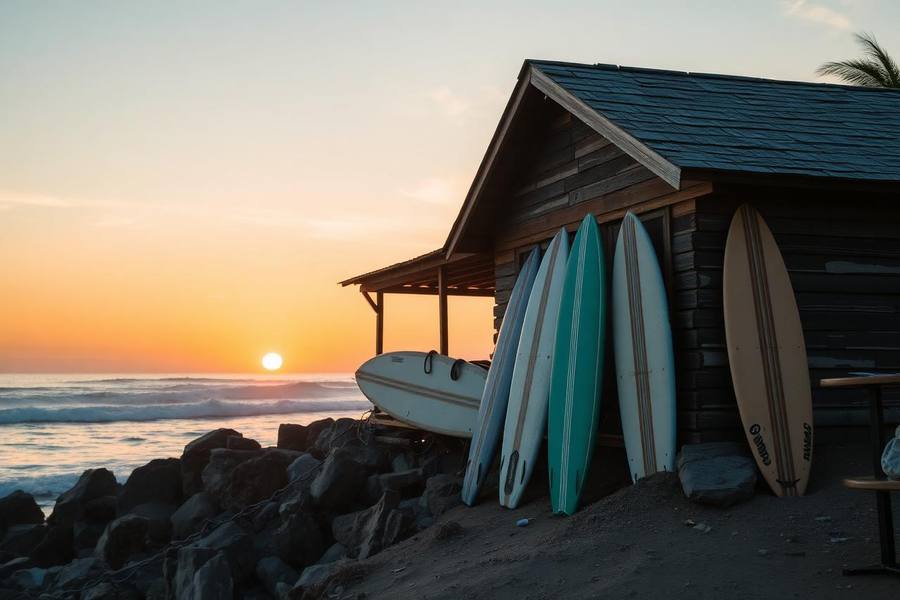
A reef break with a fiercely local lineup and the palm-frond shack that became the emblem of San Diego surfing. Best visited at sunset; watch from the sand unless you know the etiquette.
We use cookies for essential site functions and, with your permission, for analytics and advertising. California residents can opt out of the sale or sharing of personal information at any time. See our Privacy Policy, Cookie Policy, and Do Not Sell or Share My Personal Information.
The shacks, shapers and breaks that turned a coastline into an industry.
Last updated
San Diego has a claim on modern surfing that few places can match. Hawaiian surfers gave public demonstrations here in the 1910s, and by the 1930s a handful of local clubs were riding solid redwood planks at Ocean Beach and La Jolla. The palm-frond shack at Windansea, first built in 1946 and rebuilt many times since, is now a designated historic landmark and the single most photographed object in local surf culture. The wetsuit was commercialized out of this coastline in the 1950s, which is what made year-round cold-water surfing normal. Board building followed: shaping rooms across Encinitas, Solana Beach and Point Loma still supply a global market. And Black's Beach, at the base of the Torrey Pines cliffs, is the underwater-canyon-fed break that gave San Diego a serious big-wave reputation. You can trace the whole arc in an afternoon along the coast highway.
| Landmark | Why it matters | Where |
|---|---|---|
| Ocean Beach Pier and Point | Earliest organized local surf clubs | Ocean Beach |
| Windansea shack | Built 1946, historic landmark | La Jolla |
| Black's Beach | Canyon-fed big-wave break | Torrey Pines |
| Encinitas shaping corridor | Board industry's center of gravity | Coast Highway 101 |
| Swami's | Iconic point break and namesake | Encinitas |
| California Surf Museum | The archive, boards and timeline | Oceanside |
Rates and availability change daily, so we link the guide rather than quote a price. Each page compares walkable, short-drive and budget options with parking and resort fees called out.
La Jolla · Shack built 1946
A reef break with a fiercely local lineup and the palm-frond shack that became the emblem of San Diego surfing. Best visited at sunset; watch from the sand unless you know the etiquette.
Torrey Pines · Submarine canyon
The Scripps Canyon focuses swell energy into some of the biggest rideable surf on the mainland West Coast. The cliff access trails are steep and genuinely hazardous.
Encinitas · Point break
Named for the Self-Realization Fellowship above it. A long right-hand point that gave North County its identity and shows up in a Beach Boys lyric.
Ocean Beach · 1930s clubs
Where organized local surfing effectively started, and still the most stubbornly unchanged beach town in the county.
Pacific Beach · 1963
One of the first pieces of coastline in the country set aside specifically for surfing — no swimmers, by ordinance. Still the county's best learner longboard spot.
Oceanside · Museum
The proper archive: boards from every era, the shaping story, and rotating exhibits on local figures. An hour well spent before you drive the coast.
Encinitas / Solana Beach · Board building
Dozens of shaping and glassing operations within a few miles of Coast Highway 101 — the densest concentration of surfboard manufacturing anywhere.
San Diego coast · 1950s
Neoprene suits developed and sold out of this coastline turned surfing from a summer activity into a year-round one, which is the single biggest reason the industry exists.
La Jolla · Since 1903
Local wave forecasting grew out of Scripps research. Modern surf forecasting is, quite literally, San Diego science.
Hawaiian surfers gave public demonstrations along the coast in the 1910s, and organized local surf clubs formed at Ocean Beach and La Jolla in the 1930s riding solid redwood boards.
A palm-frond shelter first built by local surfers at Windansea Beach in La Jolla in 1946. It has been rebuilt many times after storms and is now a designated historic landmark.
The Scripps submarine canyon runs almost to shore and focuses swell energy at the break, producing waves far larger than neighboring beaches on the same swell.
The California Surf Museum in Oceanside is the main archive. Combine it with a drive down Coast Highway 101 through Encinitas and a stop at Windansea.
The Sandi Spots Newsletter
New beach finds, hidden taco shops, weekend events, and seasonal guides — once a week from a local. No spam, ever.
One email a week. Unsubscribe anytime.
Published by the Sandi Spots Editorial team at Sleep Coast LLC. Guides combine local perspective and source research. Check the individual guide for firsthand observations and follow official links to confirm current details.