Sandi Spots
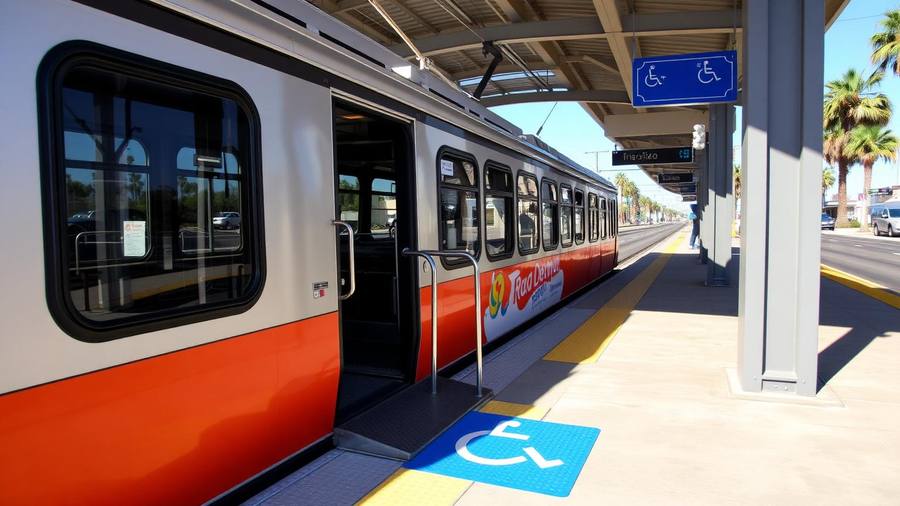
    San Diego trolley at a station platform with a level boarding ramp and blue wheelchair accessibility symbols on the platform

    Accessible Transit in San Diego

    Trolley ramps, MTS Access paratransit, reduced fares, and how to get from the airport without a car.

    Last updated

    Quick answer

    Every MTS bus and trolley in San Diego is wheelchair accessible. Trolley platforms are level with the low-floor sections of each car, so most riders roll straight on with no lift, and buses deploy a ramp at the front door with two securement positions inside. Riders with a qualifying disability can get a reduced fare through an MTS Senior/Disabled/Medicare card, which cuts single fares and passes roughly in half. For trips that fixed routes cannot serve, MTS Access is the county's ADA paratransit service: it operates within about three quarters of a mile of an existing bus or trolley route, requires an application and an in-person eligibility interview before you can book, and takes reservations one to seven days ahead. From the airport, the accessible options are the Route 992 bus downtown, wheelchair-accessible taxis booked in advance, and WAV rideshare, which is available but thin outside peak hours.

    Accessible transportation options in San Diego

    OptionAccessibleCostBooking
    MTS TrolleyLevel boarding, all carsStandard / reduced fareWalk up
    MTS busRamp, 2 securement spotsStandard / reduced fareWalk up
    MTS Access paratransitLift-equipped vansHigher than fixed route1–7 days ahead
    Coaster / SprinterAccessible cars and platformsZone fareWalk up
    Coronado ferryAccessible boardingLow flat fareWalk up
    WAV rideshareWheelchair vans, limited supplySurge pricingIn-app
    Accessible taxiRamp vansMeteredCall ahead
    Route 992 from airportRamp-equipped busStandard fareWalk up

    Fixed-route transit: trolley, bus, and rail

    The everyday network is genuinely accessible. Knowing the small mechanics makes it smooth instead of stressful.

    Trolley boarding

    Every trolley car has low-floor sections that meet the platform at grade, marked with the wheelchair symbol. Board through those doors, use the designated securement area, and press the accessible door button if the doors have already begun to close.

    Bus ramps and securement

    Buses kneel and deploy a ramp at the front door. Tell the operator your stop when you board — they secure the chair with straps and will call it out. There are two wheelchair positions per bus, so a very full bus occasionally means waiting for the next one.

    Reduced fares

    The MTS Senior/Disabled/Medicare card cuts fares roughly in half and requires an application with documentation. A Medicare card alone qualifies you. Load it onto a PRONTO card and the discount applies automatically.

    Coaster and Sprinter

    The Coaster along the coast to Oceanside and the Sprinter across North County both have accessible cars and level platform boarding, and they cover distances the bus network handles badly.

    Coronado ferry

    Accessible boarding at both landings and one of the best-value rides in the city. Pairs well with the flat, paved Coronado ferry landing path and the Bayshore Bikeway.

    Elevator outages

    A handful of trolley stations rely on elevators to reach the platform. MTS posts outages, and it is worth checking before you commit to a station you cannot leave easily.

    MTS Access paratransit, step by step

    Paratransit is the safety net when fixed routes will not work. The application is the slow part, so start it before you need it.

    Check the service area

    MTS Access serves trips that begin and end within roughly three quarters of a mile of an existing MTS bus or trolley route, during the hours that route runs. Outside that corridor, it is not available.

    Apply and interview

    Eligibility requires an application plus an in-person interview and functional assessment. Allow several weeks. Visitors with paratransit eligibility from another region can usually ride as visitors for a limited period by presenting their home-agency documentation.

    Book one to seven days ahead

    Reservations open a week out and close the day before. Same-day rides are not part of ADA paratransit. Popular medical-appointment windows fill first, so book as early as the window opens.

    Expect a pickup window

    Paratransit is shared-ride and scheduled in a window, not to the minute. Build slack around appointments and be ready at the start of your window.

    Fares

    Paratransit fares run higher than fixed-route fares — federal rules allow up to twice the comparable fixed-route fare. Personal care attendants generally ride free; companions pay.

    Cancellations count

    Late cancellations and no-shows accumulate and can lead to suspension. Cancel as soon as plans change, even if it is only an hour out.

    Rideshare, taxis, and the airport

    Fixed routes cover the city well, but arrival day and late nights are where accessible travel gets thin.

    From the airport

    Route 992 runs between the terminals and downtown on ramp-equipped buses and connects to the trolley — the cheapest accessible option. Terminal curbside has designated accessible loading zones for taxis and rideshare.

    WAV rideshare

    Uber and Lyft both offer wheelchair-accessible vehicle options in San Diego, but the fleet is small. Wait times stretch outside peak hours and in North County, so do not build a tight schedule around one.

    Accessible taxis

    Several San Diego taxi companies run ramp vans. They must be booked by phone in advance — often the evening before for a morning trip — but they are the most reliable option for a flight or an appointment you cannot miss.

    Renting an accessible vehicle

    Wheelchair-accessible van rental exists in San Diego through specialty providers rather than the standard airport counters. Reserve well ahead; the local fleet is small and books out in summer.

    Parking with a placard

    A valid placard from any state parks free at California on-street meters with no time limit. Gated lots, private garages, and beach lots still charge.

    Getting around downtown

    Downtown, the Embarcadero, and Little Italy have consistent curb cuts and flat sidewalks, which makes short trips easier to roll than to ride. Gaslamp's older sidewalks are narrower and get crowded at night.

    Before you go

    • • Access equipment breaks and programs change. Call the lifeguard station, park office, or venue the morning of your visit rather than trusting any published list — including this one.
    • • Beach wheelchairs are first-come and are not motorized. Most require a companion to push through soft sand, and none of them float.
    • • Accessible parking placards from any US state are honored in California, but the meter-exempt rules only apply to on-street meters, not private lots or beach lots with gates.
    • • Sensory-friendly hours are usually a handful of dates per year, not a standing schedule. Check the venue's accessibility page a month out and put the dates on your calendar.

    Frequently asked

    Is the San Diego trolley wheelchair accessible?

    Yes. Every trolley car has low-floor sections that board level with the platform, marked with the wheelchair symbol, plus designated securement areas inside. No lift is needed at most stations, though a few rely on elevators to reach the platform.

    What is MTS Access?

    MTS Access is San Diego's ADA paratransit service — lift-equipped shared-ride vans for people whose disability prevents them from using fixed-route bus or trolley service. It operates within about three quarters of a mile of existing routes and requires an application and in-person eligibility interview.

    How far in advance do I book MTS Access?

    Between one and seven days ahead. Reservations open a week out and close the day before your trip; same-day booking is not part of ADA paratransit service. Book as soon as the window opens for medical appointments.

    How do I get a reduced transit fare in San Diego?

    Apply for an MTS Senior/Disabled/Medicare card with supporting documentation — a Medicare card alone qualifies. The discount cuts single fares and passes roughly in half and loads onto your PRONTO card automatically.

    Are there wheelchair accessible Ubers in San Diego?

    Yes, both Uber and Lyft offer wheelchair-accessible vehicle options, but the local fleet is small and wait times get long outside peak hours and away from the urban core. For flights and appointments, a pre-booked accessible taxi is more reliable.

    How do I get from San Diego airport to downtown in a wheelchair?

    Route 992 runs from the terminals to downtown on ramp-equipped buses and connects to the trolley — the cheapest accessible option. Wheelchair-accessible taxis booked in advance and WAV rideshare from the designated accessible curbside zones are the other choices.

    Keep reading

    The Sandi Spots Newsletter

    San Diego, in your inbox.

    New beach finds, hidden taco shops, weekend events, and seasonal guides — once a week from a local. No spam, ever.

    One email a week. Unsubscribe anytime.

    About this guide

    Written and fact-checked by the Sandi Spots Editorial team — San Diego residents publishing under Sleep Coast LLC. Every place we recommend has been visited in person or verified against an official source, and no business can pay for inclusion or a higher ranking. Last updated .

    Local, first-hand. Reported on the ground in San Diego County.
    Kept current. Prices, hours, and closures reviewed on a rolling basis.
    Independent. Affiliate links never influence rankings.

    Editorial policy · About us · Suggest a correction