Fruit comes in by truck
Producers contract rows from vineyards in Ramona, Temecula, Paso Robles, Santa Barbara, or Lodi and haul harvested fruit down to a city warehouse within hours of picking.
We use cookies for essential site functions and, with your permission, for analytics and advertising. California residents can opt out of the sale or sharing of personal information at any time. See our Privacy Policy, Cookie Policy, and Do Not Sell or Share My Personal Information.
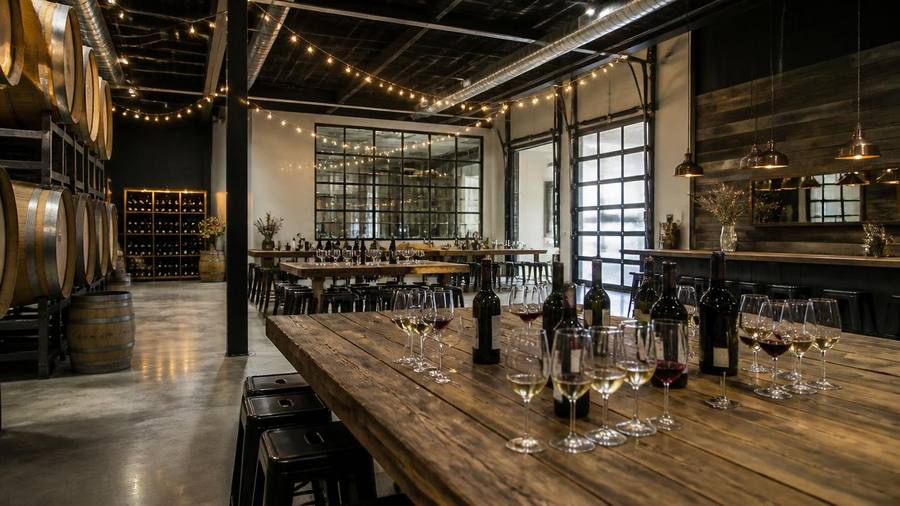
Real winemaking in warehouses — no backcountry drive required.
Last updated
San Diego has a growing set of urban wineries that truck in fruit from Ramona, Temecula, Paso Robles, and Central Coast vineyards and ferment, age, and pour it inside the city — so you can taste real production wine without leaving town. The clusters are Miramar and Kearny Mesa, where wineries share industrial parks with breweries and distilleries; Little Italy and downtown, where tasting bars and by-the-glass rooms sit within walking distance of hotels; North Park and South Park, home to small-batch producers and natural-wine bars; Carlsbad and Vista in North County, where tasting rooms share space with breweries; and Escondido, the bridge between urban rooms and true vineyard visits. Tastings usually run 15 to 25 dollars for four to six pours, most rooms are open Wednesday or Thursday through Sunday, and many double as bottle shops. The trade-off versus Ramona is simple: you get no vineyard view, but you keep your afternoon, skip the drive, and can walk or rideshare between three stops.
| Area | What you'll find | Pair it with |
|---|---|---|
| Miramar / Kearny Mesa | Warehouse wineries fermenting on site, barrel rooms, big tasting bars | The brewery and distillery corridor next door |
| Little Italy | Walkable tasting bars, by-the-glass lists, bottle shops with pours | Dinner and the Saturday Mercato |
| North Park / South Park | Small-batch urban producers and natural-wine bars | A neighborhood dinner crawl |
| Carlsbad / Vista | Tasting rooms sharing industrial space with breweries | A beach afternoon before or after |
| Escondido / San Pasqual | Larger estates with actual vines on site | Safari Park or a Ramona extension |
| Gaslamp / East Village | Hotel-adjacent wine bars, fewer producers | A ballgame or a show |
Rates and availability change daily, so we link the guide rather than quote a price. Each page compares walkable, short-drive and budget options with parking and resort fees called out.
The grapes travel; the winemaking happens here.
Producers contract rows from vineyards in Ramona, Temecula, Paso Robles, Santa Barbara, or Lodi and haul harvested fruit down to a city warehouse within hours of picking.
Tanks and barrels sit behind or beside the tasting bar, so the room you drink in is the room the wine was made in. Harvest season smells like it.
Because runs are tiny, lineups change every few months and one-off bottlings are common. Two visits a year look like two different wineries.
No vineyard means lower overhead, which is why urban flights often cost less than backcountry tastings and bottle prices stay reasonable.
Industrial zoning that permits breweries also permits wineries, which is why Miramar has both and why tasting rooms sit between auto shops.
Some 'tasting rooms' are retailers pouring other people's wine. That's a fine night out — just not the same as a producer's room.
Ask what you want out of the afternoon before you book anything.
Two hours, no driver, easy rideshare home. Vineyard days need a full afternoon and a sober driver.
Views, picnics, and the sense of place don't exist in a warehouse. Anniversaries belong in Ramona or Temecula.
Bachelorette groups and birthdays fit more comfortably in Little Italy, where you can walk between rooms and get real dinner nearby.
One winery, one brewery, one distillery in a single industrial park is the most efficient tasting day in the county.
North Park, South Park, and Golden Hill hold the low-intervention and natural-wine bars. That style is scarce in the backcountry.
Producer rooms sell library and club-only bottles you can't get retail. Retail-focused wine bars can't do that.
Small rooms reward asking questions.
Rooms with 30 seats fill by 4pm Saturday. Noon to 2pm is when the winemaker has time to talk.
Barrel and tank samples are common and usually free-poured for genuinely curious guests. Not on the menu, often the best glass.
Use the flight to find the one you like, then drink a real pour of it instead of paying for a second flight.
Many rooms allow outside food or host trucks on weekends. Check before planning dinner.
Producer rooms can generally only pour their own wine, so a bottle you bring elsewhere isn't an option here.
If you visit more than three times a year, a club almost always beats paying per tasting and unlocks the small releases.
Yes. Urban wineries operate in Miramar, Kearny Mesa, Little Italy, North Park, and North County industrial areas, bringing fruit in from Ramona, Temecula, and Central Coast vineyards and fermenting it on site.
Urban tasting flights generally run 15 to 25 dollars for four to six pours, often credited toward a bottle purchase. Backcountry wineries in Ramona run 15 to 30 dollars.
Little Italy and North Park are the most walkable, and the Miramar cluster is one short rideshare from central neighborhoods. All three let you visit multiple rooms without a designated driver.
An urban winery makes its own wine on site and pours it; a wine bar buys and pours other producers' bottles. Both are worth visiting, but only the winery can sell you library and club-only releases.
Some do, many allow outside food, and several host food trucks on weekends. Producer-focused rooms in industrial areas most often have no kitchen at all.
Typically Wednesday or Thursday through Sunday, with afternoon and early-evening hours. Monday and Tuesday closures are the norm across the county.
For convenience, yes — you save two hours of driving and can walk between rooms. For scenery and estate experiences, Temecula and Ramona win. Many locals do urban rooms on weeknights and vineyards for occasions.
Craft spirits, tasting rooms, and cocktail bars attached to stills.
The backcountry AVA locals drive to instead of Temecula.
Where the beans are actually roasted, plus tours and cuppings.
The sweet side — panaderías, pastry counters, and scoop shops.
The beer side of the same drinking economy.
By-the-glass lists without the winery drive.
Where to eat after the flight.
The Sandi Spots Newsletter
New beach finds, hidden taco shops, weekend events, and seasonal guides — once a week from a local. No spam, ever.
One email a week. Unsubscribe anytime.
Published by the Sandi Spots Editorial team at Sleep Coast LLC. Guides combine local perspective and source research. Check the individual guide for firsthand observations and follow official links to confirm current details.