Three zones, set by distance
Measure C split the city into three zones based on how close a hotel is to the Convention Center, with the tax rising as you get closer: 11.75%, 12.75% and 13.75%. The City publishes a map you can look an address up on.
We use cookies for essential site functions and, with your permission, for analytics and advertising. California residents can opt out of the sale or sharing of personal information at any time. See our Privacy Policy, Cookie Policy, and Do Not Sell or Share My Personal Information.
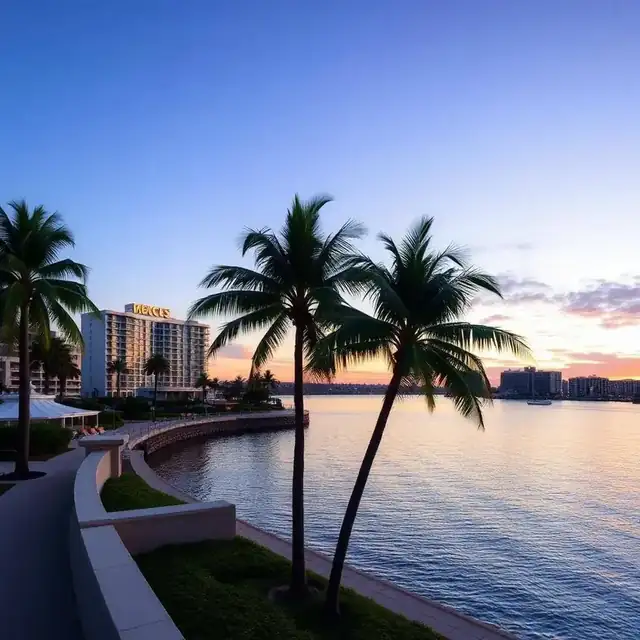
Two identical hotel rooms a mile apart can carry different tax rates. Here is why.
Last updated
Since 1 May 2025, the City of San Diego's hotel tax has been charged in three zones set by distance from the Convention Center: 11.75%, 12.75% or 13.75% of your room rate, replacing the old flat 10.5%. The closer a hotel sits to the Convention Center, the higher the zone, so two similar hotels a mile apart can be taxed differently. On top of that, hotels in the city with 70 or more rooms pay a Tourism Marketing District assessment of 2% of room revenue, which appears on your folio as a separate line. Outside the city limits the rates are entirely different: Coronado charges 10% plus a 1% tourism assessment that applies only to the Marriott, the Hotel del Coronado, Loews and the Glorietta Bay Inn; Oceanside charges 10% plus a 2.5% tourism assessment on hotels; Chula Vista charges 10%; and Del Mar charges 13%. Carlsbad adds a 2% tourism district assessment to its own occupancy tax. None of this includes resort fees or parking, which are the hotel's own charges rather than tax — and which are usually the bigger surprise on the bill.
| Where | Occupancy tax | Tourism assessment on top |
|---|---|---|
| City of San Diego | 11.75%, 12.75% or 13.75% depending on Measure C zone, by distance from the Convention Center | 2% of room revenue at hotels with 70 or more rooms |
| Coronado | 10% | 1% total, applied only at the Marriott, Hotel del Coronado, Loews and Glorietta Bay Inn |
| Del Mar | 13% | Not published as a separate assessment |
| Oceanside | 10% | 2.5% for hotels and motels; 1.5% for short-term rentals |
| Chula Vista | 10% | Not published as a separate assessment |
| Carlsbad | Rate not published in figures on the city's own tax page | 2% tourism business improvement district assessment |
Measure C split the city into three zones based on how close a hotel is to the Convention Center, with the tax rising as you get closer: 11.75%, 12.75% and 13.75%. The City publishes a map you can look an address up on.
Before 1 May 2025 every hotel room in the city was taxed at 10.5%. If you are comparing against an older quote or a cached rate, that is the gap you are seeing.
The voter-approved increase — 1.25, 2.25 or 3.25 percentage points by zone — is earmarked for the Convention Center, homelessness services and street repair.
Hotels in the city with 70 or more rooms pay a 2% Tourism Marketing District assessment on room revenue. Small inns and most short-term rentals fall below the threshold.
Gaslamp, East Village, the Marina district and the bayfront convention hotels sit in the highest zone. A Mission Valley or Kearny Mesa room in the lowest zone can be two percentage points cheaper on tax alone.
A nightly charge set by the hotel, not the city, and at the bay resorts it dwarfs the tax. Our table shows the fee, the parking and the real nightly cost per hotel.
Charged separately at nearly every downtown and bayfront hotel, and often the largest single add-on. Some inland hotels still include it.
Where the rate you see is close to the rate you pay, tax aside.
Room rate, plus resort fee, plus parking, then tax on the taxable portion. A $299 downtown room with a $50 fee and $55 parking is well over $430 before you have bought a coffee.
10% occupancy tax, with the 1% tourism assessment only at four named hotels — but resort fees at the big beachfront properties are among the highest in the county.
Carlsbad and Oceanside sit outside the San Diego zones entirely, with their own occupancy tax and tourism assessments.
10% flat, and generally the lowest room rates in the county before tax.
Inside the city but in a lower Measure C zone, with free parking still common — usually the best-value combination for a driving trip.
In the City of San Diego it is 11.75%, 12.75% or 13.75% of the room rate, depending on which Measure C zone the hotel sits in — the zones are set by distance from the Convention Center, and the rate rises as you get closer. Hotels with 70 or more rooms also pay a 2% tourism assessment on room revenue.
Voters approved Measure C, which replaced the flat 10.5% occupancy tax with three zone-based rates from 1 May 2025. The increase — between 1.25 and 3.25 percentage points depending on zone — is earmarked for the Convention Center, homelessness services and street repair.
Yes. Coronado is its own city and charges 10%, plus a 1% tourism assessment that applies only at the Marriott, the Hotel del Coronado, Loews and the Glorietta Bay Inn. The San Diego zone rates do not apply there.
No. A resort fee is a charge the hotel sets and keeps, not a tax collected for the city. It is also usually the bigger number — our resort fee table shows the fee, the parking charge and the real nightly cost for each major San Diego hotel.
The Measure C zone furthest from the Convention Center, at 11.75%, which covers areas such as Mission Valley, Kearny Mesa and the inland north of the city. Downtown and the bayfront convention hotels sit in the highest zone at 13.75%.
Short-term rentals in the city are subject to occupancy tax, generally collected by the platform, but they fall below the 70-room threshold for the 2% tourism assessment. Oceanside sets a lower tourism assessment for short-term rentals than for hotels, at 1.5% against 2.5%.
The Sandi Spots Newsletter
New beach finds, hidden taco shops, weekend events, and seasonal guides — once a week from a local. No spam, ever.
One email a week. Unsubscribe anytime.
Written and fact-checked by the Sandi Spots Editorial team — San Diego residents publishing under Sleep Coast LLC. Every place we recommend has been visited in person or verified against an official source, and no business can pay for inclusion or a higher ranking.