Sandi Spots
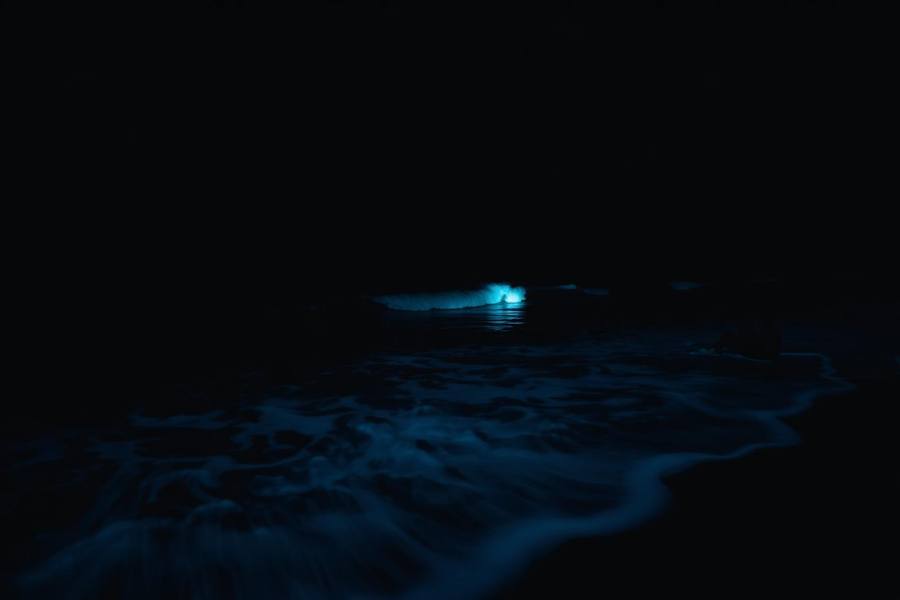
    Electric blue bioluminescent wave breaking on a dark San Diego beach at night

    San Diego Bioluminescence

    When the red tide turns the surf electric blue, and how to actually catch it.

    Last updated

    Quick answer

    Bioluminescence in San Diego is caused by a bloom of dinoflagellates — most famously Lingulodinium polyedra — that tints the water rusty brown by day and makes breaking waves glow electric blue at night. It is completely unpredictable: blooms have appeared most often in spring and late summer, can last days or weeks, and some years barely happen at all. To see it you need an active bloom, full darkness, minimal moonlight and breaking surf. The best odds are at wide, dark beaches like Torrey Pines, Blacks, Del Mar and the north end of Ocean Beach, well away from streetlights, between roughly 10pm and 2am. Scripps Institution of Oceanography tracks blooms, and local social media is usually the fastest confirmation that it's glowing tonight.

    Conditions that make or break the show

    FactorWhat you wantWhy
    Active bloomBrown or rust-colored water by dayNo bloom, no glow — this is non-negotiable
    TimeRoughly 10pm–2amNeeds full darkness; the glow is faint
    MoonNew moon or moon already setA bright moon washes out the effect entirely
    SurfSome wave energyAgitation triggers the light; flat water barely glows
    Light pollutionDark beach, no boardwalk lightsStreetlights kill your night vision
    Eyes20+ minutes adjusting, no phone screenMost people give up before adapting

    Best beaches to try

    Darkness matters more than location. These are the darkest accessible stretches of San Diego coastline.

    Torrey Pines State Beach

    Del Mar / La Jolla

    Wide, dark, backed by bluffs rather than houses, with a big parking lot. The most reliable combination of darkness and access in the county.

    Local tip: The state beach lot closes at night — check current hours and park legally on the street shoulder if permitted.

    Del Mar

    North County coastal

    Long dark stretches north and south of the main beach, with easy street parking in the village at night.

    Ocean Beach, north end

    Ocean Beach

    Toward the Dog Beach end and the river mouth it gets appreciably darker than the pier area, and there's parking.

    Coronado

    Coronado

    The wide flat beach south of the Hotel del is dark, quiet and easy to walk. Watch out for the Naval base boundaries at the south end.

    Cardiff and Encinitas

    North County

    Highway 101 pullouts give quick beach access with less ambient light than the built-up beach towns to the south.

    La Jolla Shores

    La Jolla

    Popular and easy, but the parking lot and adjacent buildings throw a lot of light. Walk north toward Blacks for a darker view.

    Photographing it

    You need a real camera

    Phone night modes have improved enormously, but the glow lasts a second or two on a breaking wave. A camera you can set manually will do far better.

    Fast lens, high ISO, tripod

    A typical starting point is a wide fast lens at its widest aperture, ISO in the thousands, and a shutter around 1–3 seconds — long enough to catch a wave breaking, short enough not to smear it.

    Local tip: Focus manually on a distant light before dark. Autofocus will hunt endlessly in a pitch-black surf zone.

    Turn off your phone

    Every screen resets everybody's night vision, including yours. Use a red headlamp if you need light.

    Safety and the red tide question

    Is it safe to swim in?

    Lingulodinium polyedra blooms are generally not considered toxic to humans in the way some other harmful algal blooms are, but red tides can irritate skin and eyes and can be associated with poor water quality. Public health agencies sometimes advise avoiding contact. Check current county water quality advisories.

    Night surf is dangerous

    Rip currents don't announce themselves in the dark and lifeguards are off duty. Watch from the sand.

    The smell

    A decaying bloom can smell strongly of rotting seaweed, especially by day. That's normal and it passes.

    Beach access hours

    Many San Diego beaches and their lots technically close overnight. Rules and enforcement vary by beach and city — know the local rule before you go.

    Set expectations

    • • Most nights during a bloom are underwhelming. The dramatic photos you've seen are the best minutes of the best nights.
    • • There is no reliable forecast — Scripps Institution of Oceanography research updates and local surf reports are the best available signal.
    • • Check San Diego County water quality advisories before entering the water during a red tide.

    Frequently asked

    When can you see bioluminescence in San Diego?

    Only during an active dinoflagellate bloom, which is unpredictable. Blooms have most often occurred in spring and late summer, lasting days to weeks, and some years barely happen. You also need full darkness, little moonlight and breaking surf.

    What causes the glowing waves in San Diego?

    A bloom of dinoflagellates — most commonly Lingulodinium polyedra — that emits light when agitated. The same organisms tint the water rust-brown during the day, which is why it's called a red tide.

    Where is the best place to see bioluminescence in San Diego?

    Dark, wide beaches away from streetlights: Torrey Pines State Beach, Del Mar, the north end of Ocean Beach, and Coronado south of the Hotel del. Darkness matters more than the specific beach.

    What time of night is bioluminescence best?

    Roughly 10pm to 2am, when it's fully dark. Give your eyes at least twenty minutes to adjust and avoid looking at phone screens.

    Is it safe to swim in bioluminescent water?

    Lingulodinium polyedra blooms are generally not considered acutely toxic to humans, but red tides can irritate skin and eyes and are sometimes accompanied by water quality advisories. Check current San Diego County advisories, and don't swim at night regardless — there are no lifeguards and rip currents are invisible.

    Can you photograph bioluminescence with a phone?

    Sometimes, with a modern phone's night mode and a steady rest, but results are inconsistent because the glow lasts only a second or two. A manual camera with a fast lens, high ISO and a tripod does far better.

    Keep reading

    The Sandi Spots Newsletter

    San Diego, in your inbox.

    New beach finds, hidden taco shops, weekend events, and seasonal guides — once a week from a local. No spam, ever.

    One email a week. Unsubscribe anytime.

    About this guide

    Written and fact-checked by the Sandi Spots Editorial team — San Diego residents publishing under Sleep Coast LLC. Every place we recommend has been visited in person or verified against an official source, and no business can pay for inclusion or a higher ranking. Last updated .

    Local, first-hand. Reported on the ground in San Diego County.
    Kept current. Prices, hours, and closures reviewed on a rolling basis.
    Independent. Affiliate links never influence rankings.

    Editorial policy · About us · Suggest a correction