Sandi Spots
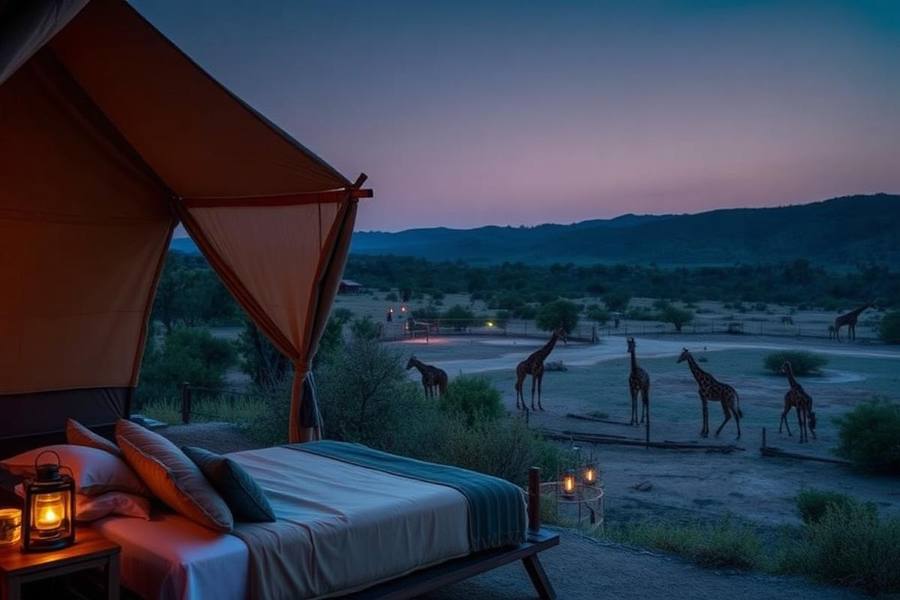
    Safari-style canvas tent lodging at dusk overlooking a wildlife enclosure with giraffes in the distance

    Where to Stay at the Safari Park

    Roar & Snore safari tents, what they cost, and the nearby hotels worth booking when they're sold out.

    Last updated

    Quick answer

    There is exactly one way to sleep on the grounds of the San Diego Zoo Safari Park: Roar & Snore, the park's overnight safari tent camping program in Escondido. You stay in canvas tents on platforms overlooking the African field enclosures, with evening animal encounters, a guided after-hours walk, campfire, dinner and breakfast, plus next-day park admission included. Pricing typically runs about $180 to $300 per person depending on tent tier and season, with premium tents closest to the animal viewing and family-friendly dates set aside for younger kids. It runs seasonally, mostly spring through fall, and sells out weeks to months out — release dates matter more than anything else here. If Roar & Snore is full, the practical alternative is a hotel in Escondido (5 to 10 minutes away and cheapest), Rancho Bernardo (15 to 20 minutes, better chains), San Marcos or Temecula wine country (35 to 45 minutes, nicer resorts). Note the Safari Park is a 45-minute drive north of downtown San Diego, so staying downtown and driving up means an early alarm.

    Where to stay, by drive time to the Safari Park

    OptionDrive timeTypical nightly cost
    Roar & Snore (on site)0 minutes$180-$300 per person, includes meals and admission
    Escondido hotels5-10 minutes$110-$180
    Rancho Bernardo15-20 minutes$140-$220
    San Marcos / Vista20-30 minutes$130-$200
    Temecula wine country35-45 minutes$200-$400 resort
    Downtown San Diego45-55 minutes$180-$350

    The Safari Park's backstory

    Born from the Zoo's success, 1972

    The park opened in 1972 as the San Diego Wild Animal Park, on 1,800 acres in the San Pasqual Valley northeast of Escondido. It began as the zoo's off-site breeding facility, where endangered species could live in herds on open range instead of in enclosures.

    The San Pasqual Valley

    The valley has been farmed for centuries — by the Kumeyaay, then under the 1843 Rancho San Pasqual Mexican land grant, then as dairy and citrus country. The zoo chose it for its dry, warm climate, which closely mimics the African savanna.

    A conservation powerhouse

    The park became famous for breeding programs that pulled species back from the edge — most notably the California condor and the southern white rhino, dozens of which have been born here. The northern white rhino program was headquartered here as well.

    From Wild Animal Park to Safari Park

    The park was renamed the San Diego Zoo Safari Park in 2010, a rebrand meant to sell it as an experience rather than an annex — and Roar & Snore, the overnight tent program, is part of that shift from 'zoo branch' to destination.

    Over a century of the Zoo itself

    The parent San Diego Zoo traces back to the 1915 Panama-California Exposition in Balboa Park — its founder, Dr. Harry Wegeforth, heard a lion roar from the fair's animal exhibits and decided San Diego needed a zoo. It was founded in 1916.

    Roar & Snore, explained

    What's included

    A canvas tent on a platform, dinner and breakfast, an evening guided walk through areas closed to day visitors, animal encounters with keepers, a campfire program, and admission to the Safari Park the following day.

    Tent tiers

    Tents are priced by location and size — premium and vista tents sit closest to the African field enclosures with the best chance of hearing and seeing animals overnight. Standard tents are further back and noticeably cheaper.

    Family versus adult dates

    Some dates are set aside as family nights with a lower minimum age and kid-oriented programming; others are adults-only or have higher age minimums. Check the age requirement before booking — it's the most common surprise.

    When it runs and when to book

    The program operates seasonally, largely spring through fall, and dates sell out weeks to months in advance. Set a reminder for when the season's dates are released rather than shopping for a specific weekend.

    What to bring

    Bedding is provided but nights inland get cold — a warm layer, closed shoes for the walk, and a flashlight. Shared restroom and shower facilities are a short walk from the tents.

    Is it worth it

    Yes for a milestone birthday, an animal-obsessed kid or a genuinely different night. It's expensive per person once you count meals and admission, but you're paying for after-hours access nobody else gets.

    Hotels near the Safari Park

    Escondido

    The closest lodging base, five to ten minutes from the gate, with mid-range chain hotels at the lowest prices in the area. Not scenic, but unbeatable for an early park entry.

    Rancho Bernardo

    Fifteen to twenty minutes south along I-15, with better chain hotels, a resort option and more restaurants. The best balance of quality and proximity for most families.

    San Marcos and Vista

    Twenty to thirty minutes west, useful if you're also doing Legoland in Carlsbad on the same trip — it splits the difference between the two parks.

    Temecula wine country

    Thirty-five to forty-five minutes north into Riverside County, with the nicest resorts and spas in range. Good for adults pairing the park with wine tasting.

    Carlsbad

    About thirty-five minutes west on the coast. Choose this if beach time and Legoland matter more than a short drive to the Safari Park.

    Staying downtown instead

    Workable but not ideal — it's a 45 to 55 minute drive each way, and the Safari Park is best done early before the animals move to shade. Only worth it if the rest of your trip is downtown-based.

    Practical notes

    • • Roar & Snore pricing, age minimums, season dates and inclusions are set by San Diego Zoo Wildlife Alliance and change — confirm on the official site.
    • • Escondido and inland North County are 10 to 15 degrees hotter than the coast in summer; a hotel pool matters more here than downtown.
    • • The Safari Park is best in the morning — animals are active and the inland heat is manageable — so proximity buys you a better visit, not just convenience.
    • • Zoo membership discounts sometimes apply to Roar & Snore; check before booking if you're a member.

    Frequently asked

    Can you stay overnight at the San Diego Zoo Safari Park?

    Yes, through the Roar & Snore program — canvas safari tents on the park grounds overlooking the African field enclosures, including dinner, breakfast, after-hours animal experiences and next-day park admission.

    How much does Roar & Snore cost?

    Typically about $180 to $300 per person depending on tent tier and season, which includes meals, the evening programming and admission to the Safari Park the next day.

    How far in advance should you book Roar & Snore?

    Weeks to months. Dates are released seasonally and popular weekends sell out almost immediately, so watch for the release rather than shopping close to your travel dates.

    What hotels are closest to the Safari Park?

    Escondido hotels are five to ten minutes away and the cheapest option. Rancho Bernardo is fifteen to twenty minutes with better chains, and Temecula is thirty-five to forty-five minutes with the nicest resorts.

    Is there an age limit for Roar & Snore?

    Yes, and it varies by date — some nights are family-oriented with a lower minimum age, others have higher minimums or are adults-only. Check the specific date's requirement before booking.

    Can you stay in downtown San Diego and visit the Safari Park?

    You can, but it's a 45 to 55 minute drive each way and the park is best early in the morning. Staying in Escondido or Rancho Bernardo the night before makes a real difference.

    Keep reading

    The Sandi Spots Newsletter

    San Diego, in your inbox.

    New beach finds, hidden taco shops, weekend events, and seasonal guides — once a week from a local. No spam, ever.

    One email a week. Unsubscribe anytime.

    About this guide

    Published by the Sandi Spots Editorial team at Sleep Coast LLC. Guides combine local perspective and source research. Check the individual guide for firsthand observations and follow official links to confirm current details.

    San Diego focused. Places and practical planning across the county.
    Kept current. Confirm prices, hours, and closures with the venue.
    Independent. Affiliate links never influence rankings.

    Editorial policy · About us · Suggest a correction