Retrofit (insert)
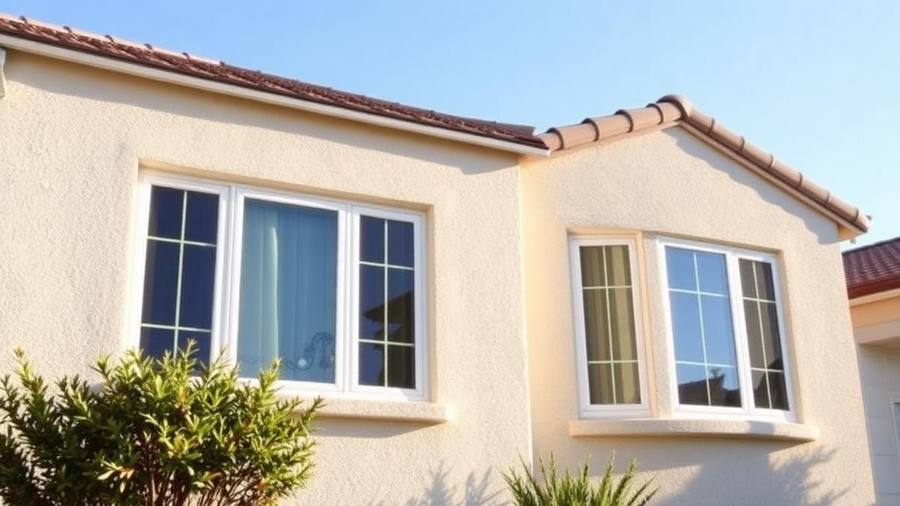
The new window nests inside the existing frame with a flush fin over the stucco. No stucco damage, one to two days for a whole house, and the lowest price. You lose about an inch of visible glass per side.
We use cookies for essential site functions and, with your permission, for analytics and advertising. California residents can opt out of the sale or sharing of personal information at any time. See our Privacy Policy, Cookie Policy, and Do Not Sell or Share My Personal Information.
Retrofit vs. full-frame, vinyl vs. fiberglass, and why the sales pitch is worse than the product.
Last updated
Budget $500–$900 per window installed for standard vinyl retrofit, $900–$1,600 for fiberglass or high-end vinyl, and $1,500–$3,000+ per opening for wood or aluminum-clad and for full-frame installs that require stucco cutting and re-patching. A typical San Diego home with 12 windows lands somewhere between $7,000 and $20,000. Retrofit installation slips a new window inside the existing frame and is cheaper and faster but shrinks the glass area slightly; full-frame removes everything down to the studs and is the right call when there is water damage or dry rot. California Title 24 sets maximum U-factor and Solar Heat Gain Coefficient values, so any legitimate quote will list both numbers, and low-E glass is effectively mandatory. Near the ocean, skip raw aluminum frames — they pit and corrode. Verify a C-17 glazing or B general contractor license, get three bids on identical specs, and walk away from anyone who quotes a price that only holds until the end of the appointment.
| Type | Cost per window | Notes |
|---|---|---|
| Vinyl retrofit, standard | $500–$900 | The volume-market option |
| Vinyl, premium / large | $900–$1,400 | Bigger openings, better hardware |
| Fiberglass | $1,000–$1,800 | Best coastal durability-to-price |
| Wood / aluminum-clad | $1,500–$3,000+ | Historic districts and high-end remodels |
| Full-frame install adder | +$200–$600 | Stucco cut, flashing, re-patch |
| Sliding glass door | $1,800–$5,000 | Multi-slide and pocket doors far more |
| Bay or garden window | $2,000–$4,500 | Structural support may be needed |
| Whole-home, 12 windows | $7,000–$20,000 | Depends entirely on material and install type |
| Permit | $150–$600 | Required for most replacements |
| Stucco patch and paint | $100–$300/opening | Only with full-frame installs |
Rates and availability change daily, so we link the guide rather than quote a price. Each page compares walkable, short-drive and budget options with parking and resort fees called out.
The new window nests inside the existing frame with a flush fin over the stucco. No stucco damage, one to two days for a whole house, and the lowest price. You lose about an inch of visible glass per side.
Everything comes out to the rough opening, new flashing and weather barrier go in, and the stucco is cut and patched. More expensive and messier, but the only way to fix water intrusion or rot properly.
Existing frames are rotted, rusted, or out of square; you are changing the window size; or there is any evidence of past leaking below a window.
Extremely common in San Diego housing from the 1950s through 1980s. They conduct heat, sweat in winter, and are the biggest comfort upgrade you can make.
Dual-pane with low-E is the baseline. Argon fill helps marginally in our mild climate. Laminated glass is the real upgrade for street noise near airports, freeways, and the trolley line.
Bedroom windows must meet minimum openable area for escape. If you change window type — say, casement to slider — confirm the new unit still complies.
The default for a reason: good insulation, low cost, no painting. Dark exterior colors on large west-facing units can warp on cheap product, so buy quality frames.
Stronger, more dimensionally stable, and handles coastal exposure better than vinyl. Costs 40–70% more and is the smart pick for beach-adjacent homes with big spans.
Raw and even anodized aluminum pits and corrodes in salt air. If you want the thin sightlines, budget for thermally broken, marine-grade finishes.
Homes in designated historic districts — parts of Burlingame, Mission Hills, Sherman Heights — may be required to keep wood windows or use approved replicas. Check with Historical Resources before ordering.
Your quote should list U-factor and SHGC for each product. Both must meet California's prescriptive limits for our climate zone; the contractor documents this on the permit.
Most window replacements require a permit even when the opening size does not change. It is inexpensive and protects you when you sell.
Under the flight path in Point Loma and Bankers Hill, laminated glass and dissimilar pane thicknesses do far more than standard dual-pane. Ask for an STC rating.
National window companies train long presentations ending in a price that drops repeatedly and expires tonight. Set a one-hour limit up front and tell them you are getting three bids.
Manufacturer, series name, frame material, glass package, U-factor, SHGC, and install method. Two quotes with the same brand can be very different windows.
Install quality determines whether a window leaks, not the brand. Ask whether crews are employees or subs and how long they have worked for the company.
Zero-percent offers frequently carry a dealer fee inside the price. Ask for the cash price and the financed price separately.
Lifetime warranties usually cover the original owner only, or transfer once. If you plan to sell in a few years, that changes the value of the premium product.
Standard vinyl runs three to six weeks; custom sizes and colors run eight to twelve. Measure-to-install schedules slip in summer.
C-17 glazing or a B general contractor license, active on cslb.ca.gov, with a bond and workers' comp.
Roughly $500–$900 per window for standard vinyl retrofit, $1,000–$1,800 for fiberglass, and $1,500–$3,000 or more for wood, clad, or full-frame installs requiring stucco work. A 12-window home typically totals $7,000–$20,000.
Retrofit inserts the new window into the existing frame with no stucco damage, which is cheaper and faster but reduces glass area slightly. Full-frame removes the old window down to the rough opening, allows new flashing, and is required when there is rot or water intrusion.
Yes, most window replacements require a building permit even if the opening size stays the same, and the products must meet Title 24 U-factor and SHGC limits for our climate zone.
The energy savings alone pay back slowly here, but comfort and noise reduction are immediate and significant, especially replacing old single-pane aluminum. Inland homes with real cooling loads see the biggest utility benefit.
Fiberglass or high-quality vinyl. Raw and anodized aluminum corrodes in salt air, and untreated wood needs constant maintenance in coastal moisture.
A retrofit install on a typical home takes one to two days once the windows arrive. Ordering is the long part — three to six weeks for standard sizes, eight to twelve for custom.
The Sandi Spots Newsletter
New beach finds, hidden taco shops, weekend events, and seasonal guides — once a week from a local. No spam, ever.
One email a week. Unsubscribe anytime.
Published by the Sandi Spots Editorial team at Sleep Coast LLC. Guides combine local perspective and source research. Check the individual guide for firsthand observations and follow official links to confirm current details.