Shuffle, do not step
Slide your feet forward along the bottom in the shallows. The vibration warns rays and they move. Almost every sting is a foot coming straight down onto a buried ray.
We use cookies for essential site functions and, with your permission, for analytics and advertising. California residents can opt out of the sale or sharing of personal information at any time. See our Privacy Policy, Cookie Policy, and Do Not Sell or Share My Personal Information.
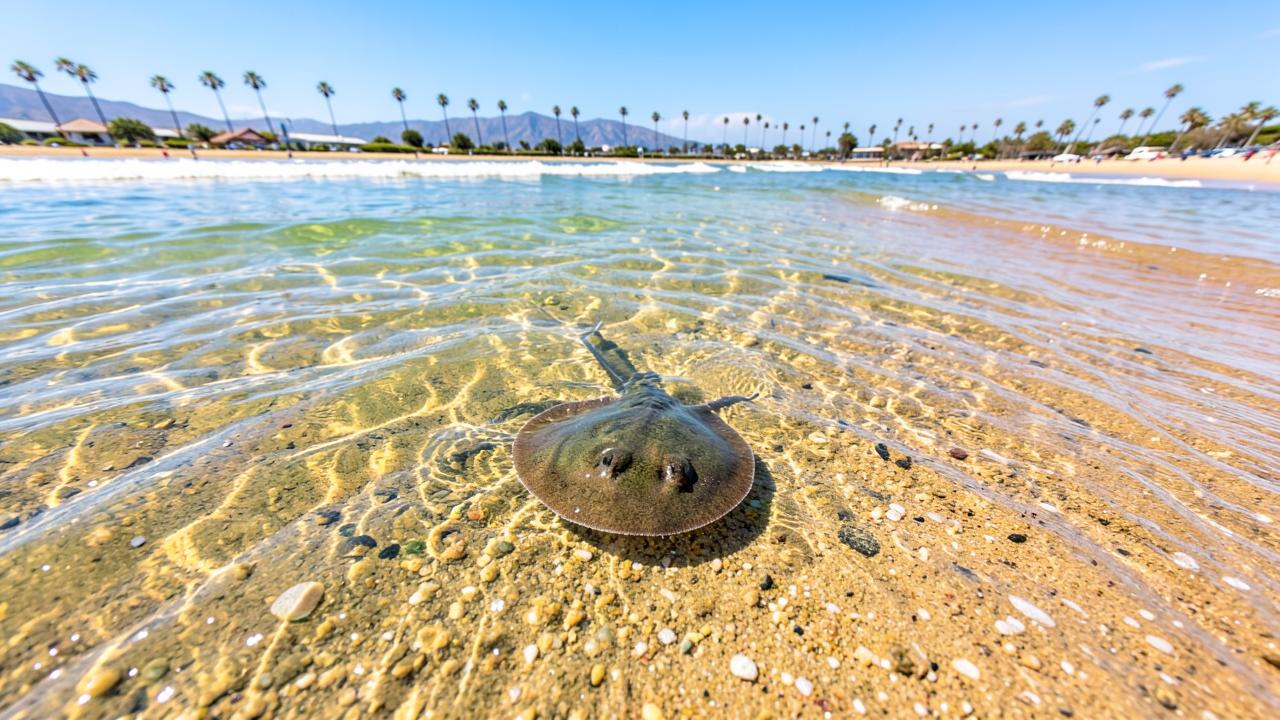
Warm water means round rays in the shallows. Here is when, where, how to avoid them, and what to do if you are unlucky.
Last updated
The animal in question is the round stingray, a dinner-plate-sized ray that buries itself in the sand in warm, shallow, calm water. It does not attack — it stings defensively when someone steps directly on it, which is why nearly every incident happens in ankle-to-knee-deep water. Risk rises with water temperature, so the season runs roughly from late spring through early fall and peaks in the warmest weeks of summer and early autumn, when San Diego's water is at its warmest. Calm, flat, sandy, protected beaches are far worse than exposed surf breaks: La Jolla Shores, Mission Bay's calm coves, Coronado's flatter stretches and the bay-side beaches see more incidents than a churning beach break. The prevention is genuinely effective and costs nothing — shuffle your feet along the bottom instead of stepping down, so the vibration pushes rays out of your way rather than pinning them. If you are stung, get to a lifeguard: the standard treatment is immersing the wound in water as hot as you can tolerate without scalding, typically for 30 to 90 minutes, which breaks down the venom protein and dramatically reduces pain. Lifeguard towers at busy San Diego beaches keep hot water buckets for exactly this. Seek medical care if the barb or fragments remain in the wound, if bleeding is significant, or if you develop symptoms beyond local pain.
| Period | Risk level | What is driving it |
|---|---|---|
| November – March | Low | Cold water; rays are largely out of the shallows |
| April – May | Rising | Water warming, first incidents of the year appear |
| June – August | High | Peak water temperature and peak swimmer numbers at the same time |
| September – October | Highest | San Diego's warmest water of the year usually arrives in late summer and early fall |
| Flat sandy beaches and bays | Higher | La Jolla Shores, Mission Bay coves, Coronado flats — calm water lets rays settle in the shallows |
| Exposed surf breaks | Lower | Churning sand and shore break make poor resting habitat |
Rates and availability change daily, so we link the guide rather than quote a price. Each page compares walkable, short-drive and budget options with parking and resort fees called out.
Slide your feet forward along the bottom in the shallows. The vibration warns rays and they move. Almost every sting is a foot coming straight down onto a buried ray.
Ankle to knee depth on flat sand is where nearly all incidents happen — entering and exiting the water, not swimming beyond the break.
Children sprinting into the shallows are the highest-risk behavior at any San Diego beach. Ten seconds of instruction genuinely prevents the ER trip.
Neoprene booties or water shoes provide meaningful protection and are common among locals who swim at La Jolla Shores in late summer.
Towers track sting counts for the day and will tell you straight if it has been a bad morning. Some beaches post warning signs when counts spike.
If someone in your group is anxious about it, a beach with active surf and shifting sand is a lower-risk swim than a glassy protected cove.
As hot as you can tolerate without burning, for 30 to 90 minutes. It denatures the venom and the pain relief is dramatic. Lifeguards at busy beaches keep buckets ready.
San Diego lifeguards treat stings constantly in summer, have the supplies on hand, and will tell you whether you need further care.
If the barb or a fragment stayed in the wound, bleeding is heavy, the wound is on the torso or face, you have signs of allergic reaction, or pain and swelling worsen over the following days.
San Diego occasionally sees by-the-wind sailors wash ashore and, in some years, purple-striped jellies offshore. Serious stings are uncommon compared with the stingray issue, and there is no local box jellyfish threat.
Every summer, hundreds of harmless leopard sharks aggregate in the warm shallows at La Jolla Shores. They are a snorkeling attraction, not a hazard, and they have no interest in people.
Rain-driven runoff advisories and occasional bacterial closures affect far more beach days than any animal does.
Roughly late spring through early fall, tracking water temperature. Risk is highest in the warmest weeks, which in San Diego usually fall in late summer and early autumn rather than early summer.
Sliding your feet along the sandy bottom instead of stepping down as you walk in and out of the shallows. The vibration prompts buried rays to swim off rather than being stepped on, and it prevents the large majority of stings.
Go to a lifeguard and immerse the wound in water as hot as you can tolerate without scalding, generally for 30 to 90 minutes. Seek medical care if barb fragments remain, bleeding is heavy, or symptoms go beyond local pain.
Calm, flat, sandy beaches and protected bay water — La Jolla Shores, Mission Bay coves and flatter Coronado stretches — see more incidents than exposed beach breaks with churning sand.
Occasionally, but serious jellyfish stings are uncommon here. By-the-wind sailors wash ashore in some seasons and purple-striped jellies appear offshore in some years. Stingrays are the practical concern.
No. Leopard sharks gather in the warm shallows at La Jolla Shores each summer, are harmless to people, and are one of the best easy snorkeling experiences in the county.
The Sandi Spots Newsletter
New beach finds, hidden taco shops, weekend events, and seasonal guides — once a week from a local. No spam, ever.
One email a week. Unsubscribe anytime.
Published by the Sandi Spots Editorial team at Sleep Coast LLC. Guides combine local perspective and source research. Check the individual guide for firsthand observations and follow official links to confirm current details.