Biennial renewal
Most 1976-and-newer gasoline vehicles need a test every other registration renewal. Your DMV notice tells you; it will also say if a STAR station is required.
We use cookies for essential site functions and, with your permission, for analytics and advertising. California residents can opt out of the sale or sharing of personal information at any time. See our Privacy Policy, Cookie Policy, and Do Not Sell or Share My Personal Information.
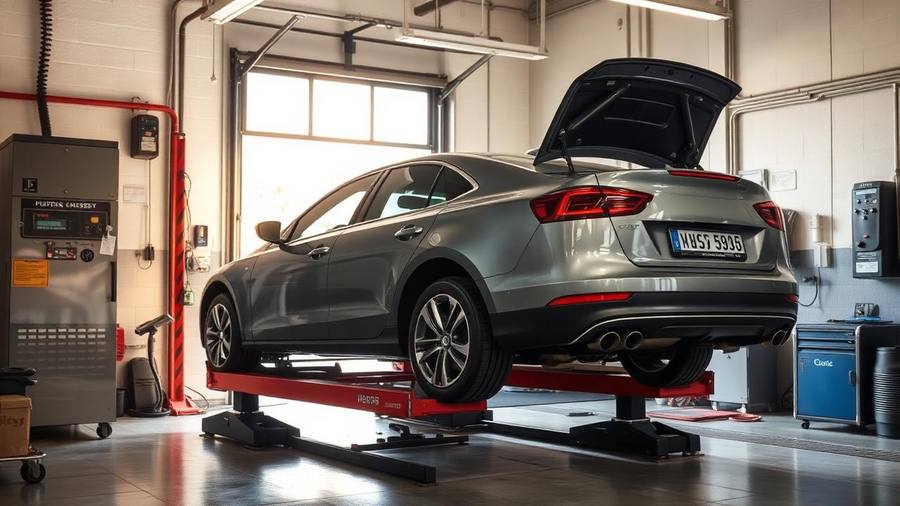
Test-only vs. STAR stations, the 90-day rule, and the state program that pays for your repairs.
Last updated
A smog check in San Diego typically costs $40–$70 plus an $8.25 state certificate fee, and most stations post a coupon price around $30–$45 for the test itself. California requires a smog check every two years for most gasoline cars from 1976 or newer, on any change of ownership for cars more than four model years old, and when registering a car from out of state. Cars four or fewer model years old pay a $28 smog abatement fee instead of testing; electric vehicles, motorcycles, and diesels from 1997 or older are exempt entirely. If the DMV renewal notice says 'STAR station', you must use a STAR-certified shop — a regular station's certificate will not clear your registration. If you fail, you can apply to the Bureau of Automotive Repair's Consumer Assistance Program, which pays up to $1,200 toward repairs at a STAR test-and-repair station for income-qualified owners, or offers about $1,500 to retire the vehicle.
| Item | Typical cost / rule | Notes |
|---|---|---|
| Standard smog test | $40–$70 | Plus $8.25 certificate fee; coupons common |
| STAR station test | $50–$90 | Required when your renewal notice directs it |
| Test-only station | $45–$75 | Cannot do repairs, so no incentive to fail you |
| Smog abatement fee | $28/yr | Cars 4 or fewer model years old, in lieu of testing |
| Retest after repairs | Free–$40 | Many shops retest free within 30–60 days |
| Consumer Assistance repair aid | Up to $1,200 | Income-qualified, at a STAR test-and-repair shop |
| Vehicle retirement | ~$1,500 | State pays you to scrap a failing car |
| Certificate validity | 90 days | For a sale; 90 days for DMV renewal too |
Most 1976-and-newer gasoline vehicles need a test every other registration renewal. Your DMV notice tells you; it will also say if a STAR station is required.
Required for vehicles more than four model years old, and the certificate must be under 90 days old. The seller pays.
Every car being registered in California from another state needs a smog check plus a VIN verification, regardless of its age.
Vehicles four or fewer model years old skip the test and pay a $28 annual smog abatement fee instead.
Electric vehicles, motorcycles, gasoline vehicles from 1975 or earlier, diesel vehicles from 1997 or earlier, and diesels over 14,000 lbs GVWR.
Plug-in hybrids and conventional hybrids are tested like gasoline cars. Only full battery-electrics are exempt.
Can test but cannot repair. They have no financial stake in the outcome, which is why many people use them by default.
Meets the STAR requirement on your renewal notice and still cannot repair. Best of both if your notice demands STAR.
Required if you want Consumer Assistance Program repair money — the state only pays STAR test-and-repair shops.
Fine for a routine test, but its certificate will not satisfy a STAR-directed renewal.
Convoy Street and Kearny Mesa, El Cajon Boulevard, Sports Arena Boulevard, Chula Vista's Broadway, and Escondido's Mission Avenue all have several stations within a block or two — good for price shopping on foot.
The Bureau of Automotive Repair publishes every station's license status and enforcement history. Two minutes on the BAR site avoids the shops with a record.
The VIR tells you whether you failed on emissions, on a visual inspection of components, or on the OBD readiness monitors. They have completely different fixes.
If your battery was recently disconnected or codes were cleared, the OBD monitors are not set and you will fail automatically. Drive 100–200 mixed miles and retest — nothing is actually wrong.
An illuminated MIL is an automatic fail in California, full stop. Diagnose the code before you spend money on a test.
Income-qualified owners can get up to $1,200 toward repairs at a STAR test-and-repair station. Apply through BAR after the failure, before the repair.
The state pays roughly $1,500 to scrap a failing vehicle through a licensed dismantler. Worth comparing to the repair estimate on an old car.
If you have spent the state's minimum on emissions repairs at a licensed shop and still fail, you may qualify for a cost waiver at a BAR referee station. Referees operate at select community colleges in the county.
Typically $40–$70 plus the $8.25 state certificate fee, with coupon pricing at some stations closer to $30. STAR-certified stations tend to run $50–$90. Prices are set by the shop, not the state, so it is worth calling two or three.
Every two years for most 1976-and-newer gasoline vehicles, plus on any change of ownership for cars more than four model years old, and when first registering an out-of-state vehicle. Your DMV renewal notice states the requirement.
STAR stations meet higher state performance standards. You must use one only if your DMV renewal notice specifically directs you to; otherwise any licensed station works. You also need a STAR test-and-repair shop to use state repair assistance money.
You cannot renew registration until it passes. Fix the cause and retest — many stations retest free within 30–60 days. Income-qualified owners can get up to $1,200 in repair assistance from the Bureau of Automotive Repair, or about $1,500 to retire the vehicle.
Yes. Battery-electric vehicles are permanently exempt, as are motorcycles, gasoline vehicles from 1975 or earlier, and diesel vehicles from 1997 or earlier. Hybrids and plug-in hybrids are not exempt.
Ninety days, both for a vehicle sale and for clearing a DMV registration renewal. Results are transmitted to the DMV electronically, so you usually do not need to bring paper.
The Sandi Spots Newsletter
New beach finds, hidden taco shops, weekend events, and seasonal guides — once a week from a local. No spam, ever.
One email a week. Unsubscribe anytime.
Published by the Sandi Spots Editorial team at Sleep Coast LLC. Guides combine local perspective and source research. Check the individual guide for firsthand observations and follow official links to confirm current details.