Sandi Spots
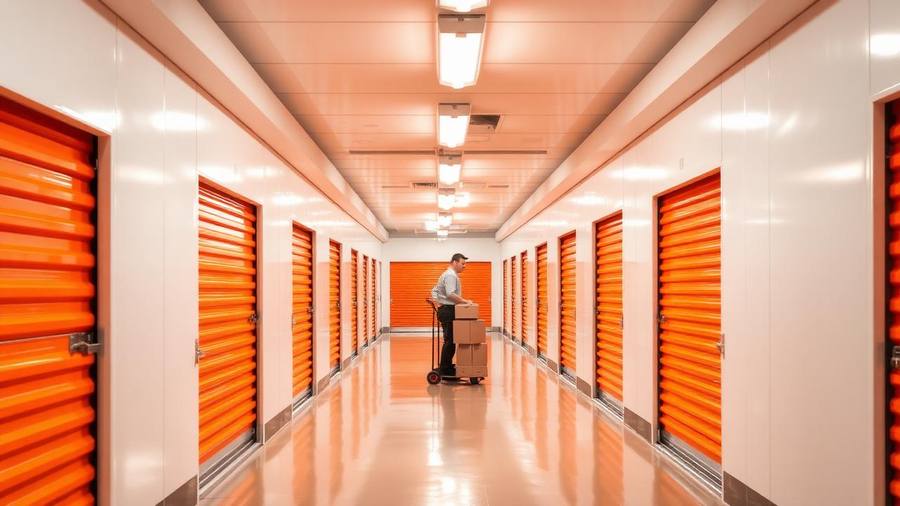
    Clean self-storage facility corridor with orange roll-up doors and a person moving boxes on a dolly

    San Diego Self-Storage Prices

    What each size actually costs, where the same unit is cheaper, and how to stop the annual rate hike.

    Last updated

    Quick answer

    Self-storage in San Diego runs roughly $60-110 a month for a 5x5 locker, $110-190 for a 5x10, $180-320 for a 10x10, and $280-500 for a 10x20 — with climate control adding about 20-40% and coastal locations charging 30-50% more than the same unit inland. The two things that move the price most are location and timing: a 10x10 in Miramar, Santee or Chula Vista costs meaningfully less than the identical unit in Pacific Beach or La Jolla, and rates spike from May through August when leases turn over and students move. Every major operator uses the same playbook — a low online-only teaser rate, sometimes a first month free, followed by an increase of 10-25% somewhere around month six to twelve. Budget for that increase, and know that a phone call to the facility manager after a hike frequently gets it rolled back, because an occupied unit at the old rate beats an empty one.

    Typical San Diego monthly rates by unit size

    Unit sizeFits roughlyTypical monthly range
    5x5 (locker)A closet: boxes, seasonal gear, a bike$60-110
    5x10Studio apartment's worth, or a motorcycle$110-190
    10x10A one-bedroom apartment$180-320
    10x15Two-bedroom apartment$230-400
    10x20Small house or a car$280-500
    Vehicle / RV spaceOutdoor parking, boat or RV$100-350

    What drives the price

    Location, by a wide margin

    The same 10x10 can differ by $120 a month between Pacific Beach and Santee. Coastal and central facilities price against land value and demand from small apartments; inland facilities in Miramar, El Cajon, Santee and Chula Vista compete on price. If you're storing things you won't touch monthly, drive the extra 20 minutes.

    Climate control

    Adds roughly 20-40%. In San Diego's mild climate it's genuinely unnecessary for furniture, tools and most household goods. It's worth paying for near the coast if you're storing electronics, instruments, photographs, artwork, leather or anything that warps or molds — salt air and humidity do real damage in unconditioned coastal units.

    Ground floor and drive-up access

    Drive-up units cost more than interior units on an upper floor, and they're worth it if you'll be visiting often or moving heavy furniture. If you're loading once and leaving it, take the elevator unit and the discount.

    Season

    May through August is peak — leases turn over, students move, and the same unit lists higher. October through February is the cheapest window to sign, and it's when facilities are most willing to discount to fill space.

    Insurance and admin fees

    Nearly every facility requires coverage and will sell you a policy for $10-30 a month. Your renters or homeowners policy often already covers off-site storage at some percentage — bring proof and you can usually decline theirs. Expect a one-time admin fee of around $25 and a mandatory disc lock purchase.

    Cheaper areas versus convenient areas

    A rough map of where the same unit costs what.

    Most expensive: coastal and central

    Pacific Beach, La Jolla, Ocean Beach, downtown and Coronado-adjacent facilities. High demand from small apartments with no garages, limited land, and prices that reflect both.

    Middle: Mission Valley, Kearny Mesa, Clairemont

    Central, easy freeway access from most of the city, and priced in between. This is the sweet spot if you need regular access without paying beach rates.

    Cheapest: Miramar, Santee, El Cajon, Chula Vista, Escondido

    Industrial land, more supply, and real competition between facilities. Expect to save 25-40% versus a coastal unit for the same square footage, in exchange for a longer drive.

    Vehicle, boat and RV storage

    Concentrated in Miramar, Otay Mesa and East County where large outdoor lots exist. Covered spaces cost roughly double uncovered ones, and waitlists are common for larger RV spots in summer.

    How to pay less

    Book the online rate, always

    Web-only pricing is routinely 10-20% below the walk-in rate at the same facility, and first-month-free promotions are near-universal for new customers. Never sign in the office at the counter price.

    Expect the rate hike and call about it

    Increases of 10-25% typically arrive between month six and month twelve. Call the facility manager, be polite, mention the competing rate down the street, and ask for the increase to be reversed. This works often enough that it's always worth ten minutes.

    Local tip: Have a specific competitor's current online price for the same size ready before you call.

    Buy one size down and pack properly

    Most people rent a size too big. Uniform boxes, stacked to the ceiling, with a center aisle, fits far more than a loose pile. Dropping from a 10x15 to a 10x10 saves roughly $60-100 a month indefinitely.

    Compare portable containers for short moves

    For a two-to-four-month gap between homes, a delivered container can beat a unit plus a truck rental, because the loading happens once at your curb instead of twice. For long-term storage it's usually more expensive.

    Do the honest math on keeping it

    A 10x10 at $250 a month is $3,000 a year. Storage makes sense during a move, a deployment, a remodel or a genuine downsizing gap. If a unit is a year old and holds furniture you can't picture in your next place, selling it is the cheaper decision.

    Before you sign

    • • Check gate hours — 24-hour access is not standard and costs more at many facilities.
    • • Ask whether the advertised rate is promotional and what the standard rate becomes after it ends.
    • • Photograph everything as you load it; you'll want the record for an insurance claim and for remembering what's in there.
    • • California storage liens move fast on non-payment — units can go to auction after a statutory notice period, so keep autopay on.
    • • Bring proof of your renters or homeowners coverage if you plan to decline the facility's insurance.

    Frequently asked

    How much does a storage unit cost in San Diego?

    Roughly $60-110 a month for a 5x5, $110-190 for a 5x10, $180-320 for a 10x10 and $280-500 for a 10x20. Climate control adds about 20-40%, and coastal facilities charge 30-50% more than inland ones.

    Where is storage cheapest in San Diego?

    Miramar, Santee, El Cajon, Chula Vista and Escondido. Industrial land and more competition make the same unit 25-40% cheaper than in Pacific Beach, La Jolla or downtown.

    Do I need climate-controlled storage in San Diego?

    Usually not for furniture, tools and household goods — the climate is mild. Pay for it near the coast if you're storing electronics, instruments, artwork, photos or leather, since salt air and humidity cause real damage.

    Why did my storage rate go up?

    Nearly every operator uses a low introductory rate followed by an increase of 10-25% around month six to twelve. Call the facility manager with a competitor's current price and ask for it to be reversed — it frequently is.

    What size storage unit do I need?

    A 5x10 holds a studio's contents, a 10x10 holds a one-bedroom, a 10x15 holds a two-bedroom and a 10x20 holds a small house or a car. Most people over-rent by one size; packing in uniform boxes to the ceiling usually lets you drop a size.

    Is my stuff insured in a storage unit?

    Not by the facility. They require coverage and will sell you a policy, but many renters and homeowners policies already cover off-site storage — bring proof and you can typically decline theirs.

    Keep reading

    The Sandi Spots Newsletter

    San Diego, in your inbox.

    New beach finds, hidden taco shops, weekend events, and seasonal guides — once a week from a local. No spam, ever.

    One email a week. Unsubscribe anytime.

    About this guide

    Written and fact-checked by the Sandi Spots Editorial team — San Diego residents publishing under Sleep Coast LLC. Every place we recommend has been visited in person or verified against an official source, and no business can pay for inclusion or a higher ranking. Last updated .

    Local, first-hand. Reported on the ground in San Diego County.
    Kept current. Prices, hours, and closures reviewed on a rolling basis.
    Independent. Affiliate links never influence rankings.

    Editorial policy · About us · Suggest a correction