Rancho Santa Fe and Fairbanks Ranch
The county's most expensive and most polished equestrian area, with extensive private trail systems, show barns, and top hunter-jumper and dressage training.
We use cookies for essential site functions and, with your permission, for analytics and advertising. California residents can opt out of the sale or sharing of personal information at any time. See our Privacy Policy, Cookie Policy, and Do Not Sell or Share My Personal Information.
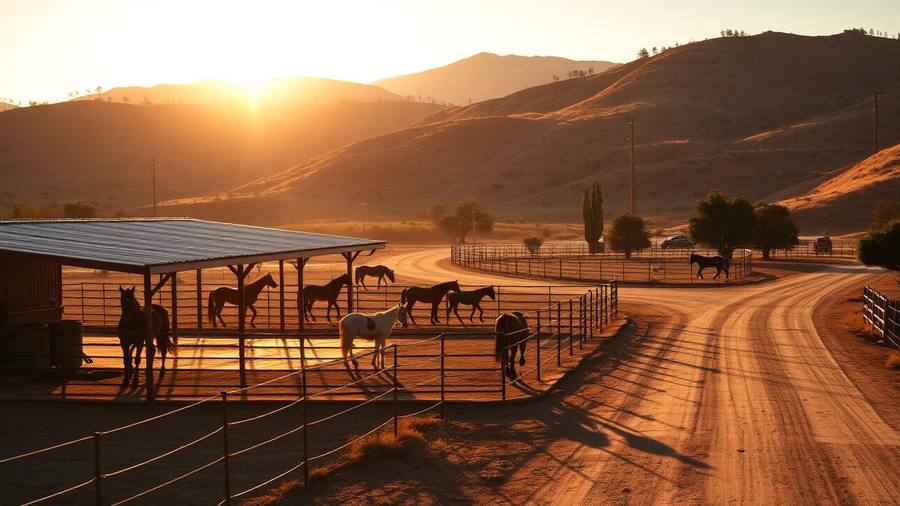
What boarding actually costs by care level, where the barns are, and what to check before you sign.
Last updated
Horse boarding in San Diego County generally runs about $450 to $700 a month for pasture or pipe-corral board, $650 to $1,100 for standard full-care stall board, and $1,200 to $2,500-plus at full-service show barns in Rancho Santa Fe, Del Mar, and Fairbanks Ranch that include training and trainer amenities. The county's equestrian centers cluster in Rancho Santa Fe and Del Mar on the coastal side, and inland in Poway, Ramona, Valley Center, Lakeside, Bonsall, Fallbrook, and Jamul, where land is cheaper and pastures are bigger. Beyond price, the things that actually matter are footing and arena quality, turnout frequency, hay type and feeding schedule, water source and reliability in drought years, trailer access, and — critically in San Diego — a written wildfire evacuation plan. Ask directly how the barn evacuated during the last major fire and where the horses went. The Del Mar Fairgrounds and other county sites serve as large-animal evacuation centers, but a barn without trailers or a plan is a real risk here.
| Board type | Monthly cost | What's included |
|---|---|---|
| Pasture board | $450–$650 | Turnout, feed, shared shelter |
| Pipe corral / partial care | $500–$750 | Feed, you handle some daily care |
| Full-care stall board | $650–$1,100 | Stall cleaning, feed, turnout |
| Show / training barn | $1,200–$2,500+ | Includes training, arenas, amenities |
| Self-care | $300–$500 | Space only; you do everything |
| Farrier (per visit) | $60–$200 | Trim vs. full shoes |
| Riding lesson | $60–$120/hour | Group lessons cheaper |
Rates and availability change daily, so we link the guide rather than quote a price. Each page compares walkable, short-drive and budget options with parking and resort fees called out.
The county's most expensive and most polished equestrian area, with extensive private trail systems, show barns, and top hunter-jumper and dressage training.
Home of the Del Mar Fairgrounds and Horsepark, with show facilities, event grounds, and the region's central large-animal evacuation site.
Poway keeps a strong horse-keeping culture with residential zoning that allows horses, plus miles of connected trails through the Poway and Peñasquitos systems.
The most affordable acreage in the county for horses, with big pastures and open riding — and the highest wildfire exposure, so evacuation planning matters most here.
East County's traditional working-horse and western-discipline area, with rodeo grounds and a strong roping and barrel-racing scene.
North County inland with large parcels, mild climate, and a mix of pleasure and performance barns at moderate prices.
Walk the arena. Deep, dusty, or rock-filled footing causes injuries and tells you how the barn spends money. Ask how often it's dragged and watered.
'Daily turnout' can mean an hour in a small pen. Get frequency, duration, and paddock size specified.
Hay type, quantity, number of feedings, and who pays for supplements or a special diet. Two feedings a day is common; three is better.
Ask about well vs. municipal water and what happens during restrictions. Inland barns have had real problems in dry years.
The single most important San Diego question. How many trailers on site, who drives, where do horses go, and what happened last fire?
Whether the barn allows outside vets and farriers or requires their own, and how emergencies are handled when you're unreachable.
Direct trail access is worth a lot. Poway, Rancho Santa Fe, Mission Trails, and the San Dieguito River corridor all have substantial equestrian trails.
Read the boarding agreement, notice period, lien language, and insurance requirements. California barns typically require proof of liability coverage.
Lesson programs across Poway, Lakeside, and North County run $60 to $120 an hour, and most will let you ride school horses for months before you commit.
Leasing a horse two or three days a week is the standard bridge between lessons and ownership, and costs a fraction of boarding plus purchase.
Board is roughly half. Add farrier every six to eight weeks, vaccinations and dental, insurance, tack, and an emergency fund for colic surgery.
San Diego County has several accredited therapeutic riding programs serving riders with disabilities and veterans, many with sliding-scale fees.
If you just want to ride occasionally, guided trail outfits in the county's open space are far cheaper than any form of ownership.
About $450 to $700 a month for pasture or pipe corral, $650 to $1,100 for full-care stall board, and $1,200 to $2,500 or more at full-service show barns in Rancho Santa Fe and Del Mar.
Rancho Santa Fe, Fairbanks Ranch, and Del Mar on the coast; Poway, Ramona, Lakeside, Alpine, Jamul, Bonsall, Fallbrook, and Valley Center inland, where acreage is more affordable.
Turnout frequency and paddock size in writing, hay type and feeding schedule, arena footing maintenance, water source, outside vet and farrier policy, and — most important in San Diego — the written wildfire evacuation plan.
Well-run barns keep trailers on site, maintain a driver list, and have a destination arranged. County large-animal evacuation sites, including the Del Mar Fairgrounds, open during major fires.
Roughly $60 to $120 per hour for private lessons, with group lessons meaningfully cheaper. Most programs provide school horses and tack.
Yes, substantially. Ramona, Valley Center, and Lakeside cost far less than coastal North County, with the tradeoffs being drive time, summer heat, and higher wildfire exposure.
Softball, soccer, volleyball, and kickball leagues around the county.
Memberships, boutique studios, and what they actually cost.
Where to play, drop-in times, and court etiquette.
Guided trail rides and where to ride.
Corridors, alerts, and large-animal evacuation.
The trail network in San Diego's horse country.
The Sandi Spots Newsletter
New beach finds, hidden taco shops, weekend events, and seasonal guides — once a week from a local. No spam, ever.
One email a week. Unsubscribe anytime.
Published by the Sandi Spots Editorial team at Sleep Coast LLC. Guides combine local perspective and source research. Check the individual guide for firsthand observations and follow official links to confirm current details.