The transcontinental snub
1870s–1880s · Turning point
San Diego repeatedly courted the major lines and repeatedly lost out. Without a direct eastern terminus, the port could not compete with Los Angeles for freight.
We use cookies for essential site functions and, with your permission, for analytics and advertising. California residents can opt out of the sale or sharing of personal information at any time. See our Privacy Policy, Cookie Policy, and Do Not Sell or Share My Personal Information.
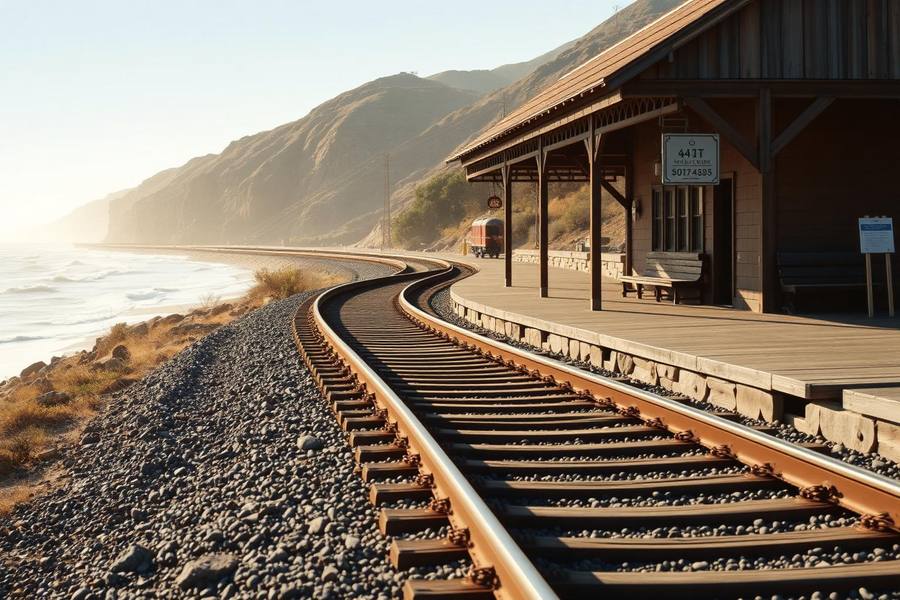
A century of trying to get a direct line east — and the coastal route that ended up mattering more.
Last updated
San Diego lost the 19th-century railroad race, and that single fact explains why Los Angeles is the bigger city. The transcontinental lines terminated north, and every San Diego attempt to build a direct eastern connection ran into the same wall of mountains and desert. John D. Spreckels finally forced one through in 1919 — the San Diego & Arizona, nicknamed the 'Impossible Railroad' for its 11 tunnels through Carrizo Gorge — and floods, fires and tunnel collapses have kept it mostly out of service ever since. What survived is the coastal line: the Santa Fe route north through Del Mar and Oceanside, now carrying Amtrak's Pacific Surfliner and the Coaster, plus the 1915 Santa Fe Depot downtown. For visitors, the practical rail history is the Surfliner ride itself, the depot, and the Pacific Southwest Railway Museum in Campo.
| What | Where | Notes |
|---|---|---|
| Santa Fe Depot | Downtown | 1915 landmark, still an active station |
| Pacific Surfliner | Coastal route north | One of the most scenic rides in the US |
| Coaster commuter rail | Downtown to Oceanside | Cheap way to see the coast |
| Pacific Southwest Railway Museum | Campo | Excursion trains, historic equipment |
| Carrizo Gorge trestle | Desert backcountry | Visible from a distance; trespassing is illegal |
| Old Town Transit Center | Old Town | Trolley, Coaster and Amtrak interchange |
Rates and availability change daily, so we link the guide rather than quote a price. Each page compares walkable, short-drive and budget options with parking and resort fees called out.
1870s–1880s · Turning point
San Diego repeatedly courted the major lines and repeatedly lost out. Without a direct eastern terminus, the port could not compete with Los Angeles for freight.
Citywide · 1887
A rail connection via Los Angeles briefly set off a speculative frenzy. When it collapsed, the city's population fell by more than half.
Carrizo Gorge · 1907–1919
Spreckels spent 12 years and a fortune blasting the San Diego & Arizona through the mountains. It opened, then spent the next century being closed by washouts and tunnel fires.
Del Mar to Oceanside · Ongoing
The north-south route became the region's real rail spine — and the bluff-top section through Del Mar is now the subject of a major relocation debate as the cliffs erode.
Downtown · Free to enter
A 1915 Mission Revival station built for the Panama-California Exposition, with tiled waiting-room walls and the original wooden benches. Walk in even if you're not traveling.
Coastal · ~3 hrs
Sit on the west side. The stretch between Del Mar and San Clemente runs at beach level for miles and is worth the fare on its own.
North County · Commuter fare
The cheap version of the same view, with stops at Solana Beach, Encinitas and Carlsbad for a car-free beach day.
Campo · Weekend excursions
Restored equipment and weekend train rides on a surviving stretch of the San Diego & Arizona in the backcountry, about an hour east.
The mountain and desert terrain east of the city made a direct route far more expensive than the northern approaches, and the major railroads chose Los Angeles instead. That decision shaped the relative size of the two cities.
The San Diego & Arizona Railway, built by John D. Spreckels between 1907 and 1919 through Carrizo Gorge with 11 tunnels and dozens of trestles. Repeated damage has kept most of it out of regular service.
Yes. Amtrak's Pacific Surfliner and the regional Coaster both run north along the coastline from the downtown Santa Fe Depot, with stops through North County.
Yes — it is a 1915 Mission Revival landmark with an intact tiled waiting room, and it's free to walk through. It also connects to the trolley and Coaster.
The Sandi Spots Newsletter
New beach finds, hidden taco shops, weekend events, and seasonal guides — once a week from a local. No spam, ever.
One email a week. Unsubscribe anytime.
Published by the Sandi Spots Editorial team at Sleep Coast LLC. Guides combine local perspective and source research. Check the individual guide for firsthand observations and follow official links to confirm current details.