The harbor itself
San Diego Bay · Geography
One of the few natural deepwater harbors on the West Coast, protected by Point Loma and the Silver Strand, with year-round flying weather overhead.
We use cookies for essential site functions and, with your permission, for analytics and advertising. California residents can opt out of the sale or sharing of personal information at any time. See our Privacy Policy, Cookie Policy, and Do Not Sell or Share My Personal Information.
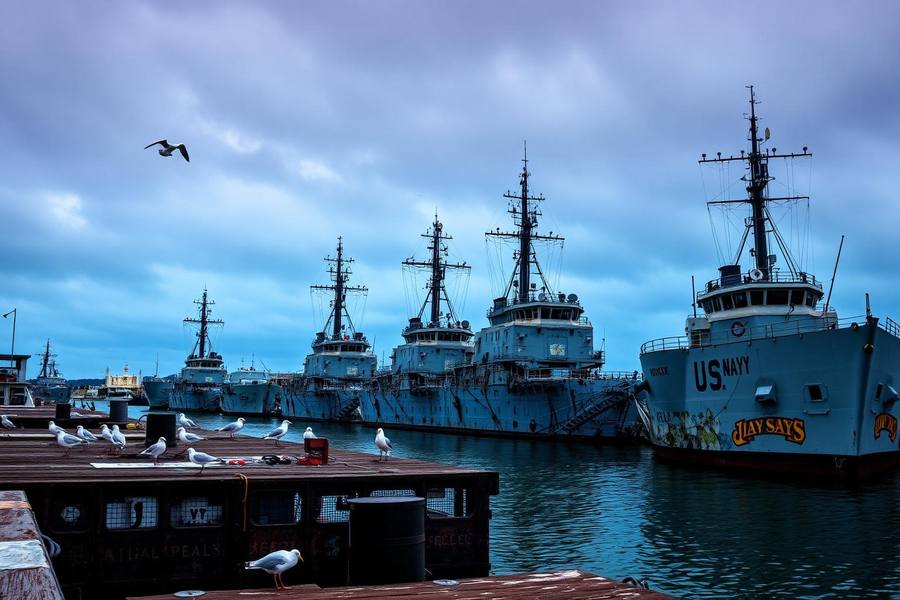
A century of fleet decisions turned a quiet harbor town into the largest Navy concentration in the country — and left landmarks all over the county.
Last updated
San Diego's harbor is deep, sheltered, ice-free and close to open ocean, which is why the Navy started dredging and building here in the 1910s and never stopped. Congressman William Kettner spent the 1910s and 1920s lobbying the fleet to San Diego; the training station on Point Loma, North Island's naval air station and the 32nd Street base followed, and by World War II the city's population and economy were effectively military. That history is why Coronado looks the way it does, why Liberty Station exists as a repurposed boot camp, and why the aircraft carrier at Navy Pier is a museum instead of scrap. You can trace most of it in a single day: USS Midway, the Embarcadero memorials, Cabrillo National Monument's coastal defense remnants and Liberty Station's old parade grounds.
| Site | Era | Cost |
|---|---|---|
| USS Midway Museum | 1945–1992 carrier | Ticketed |
| Liberty Station | 1923–1997 training center | Free to walk |
| Cabrillo National Monument | WWII coastal defense | Park entry fee |
| Fort Rosecrans National Cemetery | 1800s onward | Free |
| Flying Leatherneck collection | Marine aviation | Free / by schedule |
| Maritime Museum of San Diego | Submarines and tall ships | Ticketed |
Rates and availability change daily, so we link the guide rather than quote a price. Each page compares walkable, short-drive and budget options with parking and resort fees called out.
San Diego Bay · Geography
One of the few natural deepwater harbors on the West Coast, protected by Point Loma and the Silver Strand, with year-round flying weather overhead.
Citywide · 1913–1921
The congressman who convinced Washington to base the Pacific Fleet's infrastructure here. Much of the modern city traces back to that lobbying.
Coronado · 1917 onward
Where naval aviation effectively began on the West Coast, and still one of the busiest air stations in the Navy.
Citywide · WWII
Wartime shipbuilding and aircraft plants roughly doubled the city in a decade and created whole neighborhoods of fast-built housing that still stand.
Downtown Embarcadero · Half a day
The longest-serving carrier of the 20th century, with the hangar deck, island and flight deck open. Go at opening to beat the crowd on the bridge.
Local tip: The audio tour is included and narrated by former crew — worth the extra hour.
Point Loma · Free
The old Naval Training Center, now arts studios, restaurants and open lawns. The original barracks and parade grounds are intact enough to read as a base.
Point Loma · Park fee
Beyond the lighthouse, the point holds WWII coastal defense bunkers and searchlight positions with the best harbor view in the county.
Point Loma · Free
Rows of white headstones on a bluff above the bay. Quiet, moving, and open to respectful visitors.
Embarcadero · Ticketed
A Soviet-era submarine, a US Navy research sub and the 1863 Star of India moored together on the waterfront.
A deep natural harbor, mild flying weather and early federal investment starting in the 1910s. Once the training, air and repair infrastructure was built here, the fleet concentration compounded.
USS Midway Museum. It takes about three hours, covers 20th-century naval aviation thoroughly, and sits within walking distance of the Embarcadero memorials.
Generally no — bases require ID and sponsorship. Fleet Week events and the annual air shows are the main public access points.
The Naval Training Center San Diego, which ran from 1923 to 1997. It was redeveloped into an arts, dining and office district while keeping the original Spanish Colonial Revival buildings.
The Sandi Spots Newsletter
New beach finds, hidden taco shops, weekend events, and seasonal guides — once a week from a local. No spam, ever.
One email a week. Unsubscribe anytime.
Published by the Sandi Spots Editorial team at Sleep Coast LLC. Guides combine local perspective and source research. Check the individual guide for firsthand observations and follow official links to confirm current details.