Wandering or exit-seeking
The clearest signal. Once someone leaves the house and cannot find their way back, home safety devices only buy time. Secured perimeters exist for exactly this.
We use cookies for essential site functions and, with your permission, for analytics and advertising. California residents can opt out of the sale or sharing of personal information at any time. See our Privacy Policy, Cookie Policy, and Do Not Sell or Share My Personal Information.
What a dementia waiver actually means, what $7,000 a month buys, and the local help that costs nothing.
Last updated
Memory care in San Diego County typically costs $6,000–$9,500 a month, roughly $1,500–$2,500 more than standard assisted living at the same address, because of secured doors, higher staffing, and dementia-trained caregivers. In California a memory care unit is still an RCFE, but it must hold a dementia care waiver and file a plan of operation for secured perimeters and delayed-egress doors — ask to see it. Small board-and-care homes can also serve dementia residents and often do it well for $4,500–$7,000 when the person is calm and needs routine more than programming. The usual trigger for the move is not memory loss itself but safety: wandering, leaving the stove on, falls, or a caregiver at the end of their capacity. San Diego is unusually well resourced here — the County's Alzheimer's Project, Alzheimer's San Diego, and the UC San Diego Shiley-Marcos Alzheimer's Disease Research Center all offer free family support and care consultations.
| Item | Typical cost | Notes |
|---|---|---|
| Memory care, large community | $6,000–$9,500/mo | Secured unit; all-inclusive or level-based |
| Memory care, board-and-care home | $4,500–$7,000/mo | Six residents; needs a dementia waiver |
| Behavioral care add-on | $500–$2,000/mo | For exit-seeking or resistance to care |
| Adult day program | $85–$150/day | Delays placement; huge caregiver relief |
| In-home dementia care | $36–$45/hour | 24/7 at home usually exceeds facility cost |
| Overnight respite stay | $200–$400/night | Short-term stays at many communities |
| Neurology / memory evaluation | Medicare-covered | Including the annual cognitive assessment |
| Family support & care consults | $0 | Alzheimer's San Diego and the county's program |
Rates and availability change daily, so we link the guide rather than quote a price. Each page compares walkable, short-drive and budget options with parking and resort fees called out.
The clearest signal. Once someone leaves the house and cannot find their way back, home safety devices only buy time. Secured perimeters exist for exactly this.
A burner left on, a scorched pot, or a car found parked blocks away. San Diego's DMV re-examination process starts with a physician report — the memory clinic can initiate it.
Sundowning and 3 a.m. wandering destroy the primary caregiver's health faster than anything else. This is the most common breaking point families describe.
Once transfers need two people, home care costs double and most assisted living communities will decline. Memory care with the right staffing may still accept.
Spousal caregivers have measurably worse health outcomes. Deciding to place someone because you cannot continue is a legitimate clinical reason, not a failure.
Adult day health programs across the county run $85–$150 a day, give structure and socialization, and frequently postpone placement by a year or more.
Ask to see the waiver and the plan of operation. Delayed-egress doors, staff dementia training hours, and an activity program designed for cognition are all documented requirements — not marketing.
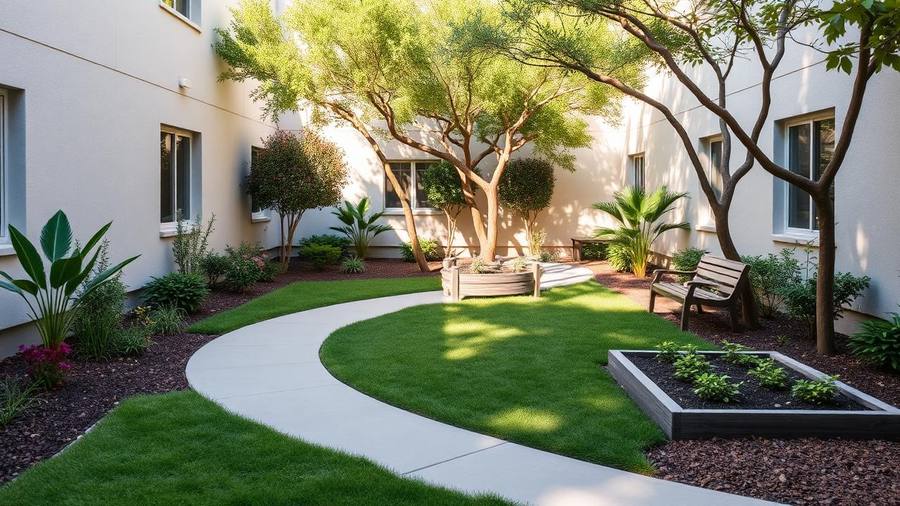
This is San Diego. A residence that keeps people indoors all day in this climate is wasting its biggest therapeutic asset. Look for a looping path with no dead ends and shade.
Residents with dementia do far better with the same faces. Ask about caregiver turnover and whether staff are assigned to consistent neighborhoods of residents.
Music, gardening, folding, sorting, walking. Ask what a Tuesday afternoon actually looks like, then visit on a Tuesday afternoon and see.
Ask what happens after an aggressive episode. Communities that immediately send residents to a psych hold and then refuse readmission are common. Get the policy in writing.
A hospice waiver lets someone stay in place at the end of life instead of making a final disorienting move. Confirm the facility has one.
An independent local nonprofit — not a national chapter — with free care consultations, support groups across the county, and classes for family caregivers.
The County of San Diego's countywide initiative coordinating research, clinical care, and caregiver support. A good front door if you do not know where to start.
One of the longest-running federally designated Alzheimer's research centers in the country, offering evaluation and clinical trial access locally.
Benefits screening, IHSS applications, respite referrals, and the ombudsman program, all free.
California's Caregiver Resource Center system serves San Diego and can fund short respite stays and counseling for family caregivers.
Ask local law enforcement and the county about voluntary registries and GPS or Bluetooth locator programs for at-risk adults.
Typically $6,000–$9,500 a month at a larger secured community and $4,500–$7,000 at a licensed board-and-care home with a dementia waiver. Behavioral care add-ons run $500–$2,000 more. That is roughly $1,500–$2,500 above standard assisted living.
No. Medicare covers cognitive evaluations, neurology visits, medications under Part D, and hospice, but not the monthly cost of a memory care residence. Medi-Cal's Assisted Living Waiver and the VA Aid and Attendance benefit are the main sources of help.
Most families move when safety, not memory, becomes the issue — wandering outside, stove or driving incidents, repeated falls, nighttime activity nobody can supervise, or a primary caregiver whose own health is failing. Adult day programs often buy a year before that point.
A California licensing addition that allows an RCFE to serve residents who cannot exit unassisted. It requires delayed-egress or secured perimeter doors, documented staff dementia training, and an approved plan of operation. Ask any memory care community to show you theirs.
Often yes, especially for someone who is calm, needs routine and one-on-one attention, and finds large environments overstimulating. The home must carry a dementia care waiver. For exit-seeking or behavioral needs, a purpose-built secured unit is usually safer.
Alzheimer's San Diego offers free care consultations and support groups, the County's Alzheimer's Project coordinates countywide services, and UC San Diego's Shiley-Marcos Alzheimer's Disease Research Center provides evaluation and trial access. County Aging & Independence Services handles benefits screening.
The Sandi Spots Newsletter
New beach finds, hidden taco shops, weekend events, and seasonal guides — once a week from a local. No spam, ever.
One email a week. Unsubscribe anytime.
Published by the Sandi Spots Editorial team at Sleep Coast LLC. Guides combine local perspective and source research. Check the individual guide for firsthand observations and follow official links to confirm current details.