Manzanita and ceanothus
California natives that look good year-round and need essentially no summer water once established. Ceanothus puts on a blue spring show that stops traffic.
We use cookies for essential site functions and, with your permission, for analytics and advertising. California residents can opt out of the sale or sharing of personal information at any time. See our Privacy Policy, Cookie Policy, and Do Not Sell or Share My Personal Information.
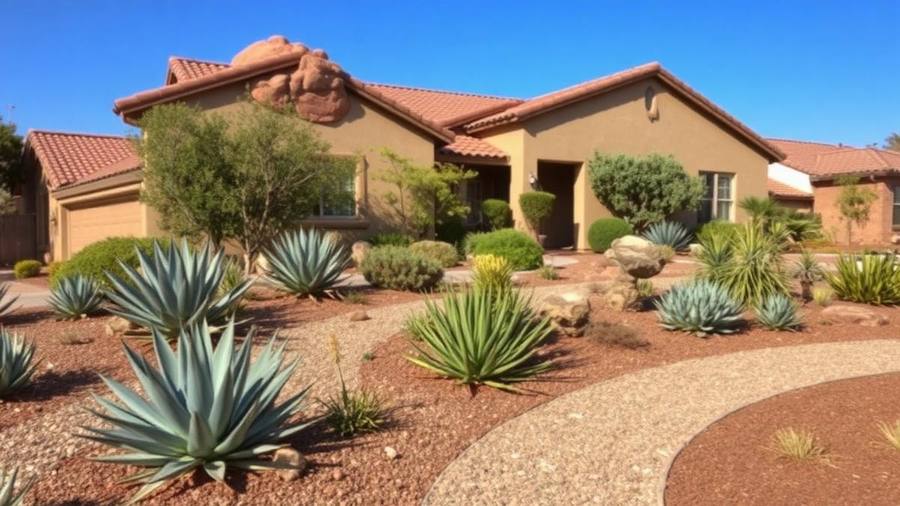
Replacing lawn with something that survives August without a water bill that hurts.
Last updated
Basic maintenance for a small San Diego yard runs $120–$250 a month, and a full front-yard xeriscape conversion typically costs $8–$20 per square foot, so a 1,000 sq ft lawn replacement lands around $8,000–$20,000 depending on hardscape and irrigation. Turf replacement rebates through SoCal WaterSmart and local water agencies have historically paid $2–$4 per square foot, but the programs open and close with funding, so confirm availability and get pre-approved before you remove a single blade — rebates are almost never paid retroactively. The plants that genuinely thrive here without babying are natives and Mediterranean climate analogs: manzanita, ceanothus, toyon, sages, agave, aloe, and grasses like deergrass. Convert your irrigation to drip while the yard is open, verify a C-27 landscaping license for any contracted work, and remember hardscape over 500 sq ft or any retaining wall over three feet needs a permit.
| Item | Typical cost | Notes |
|---|---|---|
| Monthly maintenance, small yard | $120–$250 | Weekly or biweekly mow and blow |
| Monthly maintenance, large lot | $250–$600 | Includes shrub and tree care |
| Xeriscape conversion | $8–$20/sq ft | Full design, plants, irrigation, mulch |
| DIY sheet mulch conversion | $1–$3/sq ft | Cardboard, mulch, and patience |
| Artificial turf | $10–$20/sq ft | No water, but heats up badly in sun |
| Drip irrigation retrofit | $1,500–$4,000 | Pays for itself in a few years |
| Smart irrigation controller | $150–$400 | Often rebate-eligible |
| Decomposed granite pathway | $4–$8/sq ft | Classic SoCal look, needs stabilizer |
| Paver patio | $15–$30/sq ft | Permit needed over 500 sq ft in many cities |
| Retaining wall | $40–$90/linear ft | Permit required over 3 ft |
| Tree removal | $500–$2,500 | Palms and eucalyptus at the high end |
| Turf rebate | $2–$4/sq ft back | Pre-approval required, funding varies |
California natives that look good year-round and need essentially no summer water once established. Ceanothus puts on a blue spring show that stops traffic.
Cleveland sage, black sage, and California buckwheat feed pollinators, smell incredible after rain, and shrug off drought.
The visual backbone of most local xeriscapes. Give agave room — a full-size Agave americana will eventually eat a walkway.
Deergrass and muhly grass add movement and soften hardscape. Cut back once a year and they are done.
Both do well in most of the county away from the coldest inland pockets, but they are not low-water — plan them on their own irrigation zone.
Thirsty lawn in a full-sun front yard, invasive pampas grass and fountain grass, and eucalyptus near structures. In fire-prone areas, keep the first five feet from the house plant-free.
Coastal gardens tolerate more shade-loving material and fight salt spray; inland yards deal with 100°F stretches and frost pockets in the valleys. Buy from a local nursery that knows the difference.
SoCal WaterSmart and several local water districts pay per square foot to convert irrigated lawn. Apply and get approval before removal — retroactive claims are almost always denied.
Rebates typically require a minimum plant coverage percentage, permeable ground cover, and no artificial turf in the converted area. Read the terms before designing.
Smart irrigation controllers, rotating nozzles, and rain barrels have their own smaller rebates that are easier to claim.
Day-and-time watering limits appear during drought stages. Drip systems and hand watering are usually exempt or less restricted.
Retaining walls over three feet, most hardscape over 500 sq ft, and any grading that changes drainage need permits. Do not let a landscaper talk you out of one on a wall.
In fire hazard zones, county and CAL FIRE rules require 100 feet of defensible space with a lean, clean five-foot ember-resistant zone against the structure.
Street trees and some heritage trees require city approval before removal even when they are on your property line. Check before the chainsaw.
Mow-and-blow gardeners do not need a license, but anyone installing irrigation, hardscape, or walls over $500 in labor and materials does. Verify at cslb.ca.gov.
A $500–$2,500 design from a landscape designer gets you comparable bids and prevents the expensive mid-project redesign.
Zones grouped by water need — hydrozoning — is the difference between a yard that thrives and one where half of it dies while the other half rots.
Three inches of mulch is what suppresses weeds and holds moisture. Skimping here is the most common corner cut.
One-gallon natives routinely catch up to five-gallon plants within two years and cost a quarter as much. Buy small for natives, large for slow growers.
Even drought-tolerant plants need regular water for the first one to two years. Ask the contractor for a written establishment watering schedule.
Confirm what is included: are green waste hauling, irrigation repairs, and seasonal pruning extra? Most disputes are about scope, not price.
A professionally installed conversion runs about $8–$20 per square foot, so roughly $8,000–$20,000 for a 1,000 sq ft front yard depending on hardscape and irrigation. A DIY sheet-mulch conversion can be done for $1–$3 per square foot.
Yes, through SoCal WaterSmart and several local water agencies, historically $2–$4 per square foot. Funding opens and closes, and you must be approved before removing the lawn — retroactive applications are generally denied.
California natives and Mediterranean species: manzanita, ceanothus, toyon, Cleveland and black sage, California buckwheat, agave, aloe, and grasses like deergrass and muhly. All still need regular water for the first year or two to establish.
About $120–$250 a month for a small yard on a weekly or biweekly schedule, and $250–$600 for larger lots that include shrub, tree, and irrigation care.
It eliminates watering and mowing, but it runs hot in direct summer sun, typically costs $10–$20 per square foot, and is usually excluded from water agency turf rebates. Planted xeriscape is generally the better value and better for the yard's ecology.
Not for planting and irrigation, but yes for retaining walls over three feet, larger hardscape areas in many cities, and grading that changes drainage. Some tree removals also require city approval.
The Sandi Spots Newsletter
New beach finds, hidden taco shops, weekend events, and seasonal guides — once a week from a local. No spam, ever.
One email a week. Unsubscribe anytime.
Published by the Sandi Spots Editorial team at Sleep Coast LLC. Guides combine local perspective and source research. Check the individual guide for firsthand observations and follow official links to confirm current details.