Sandi Spots
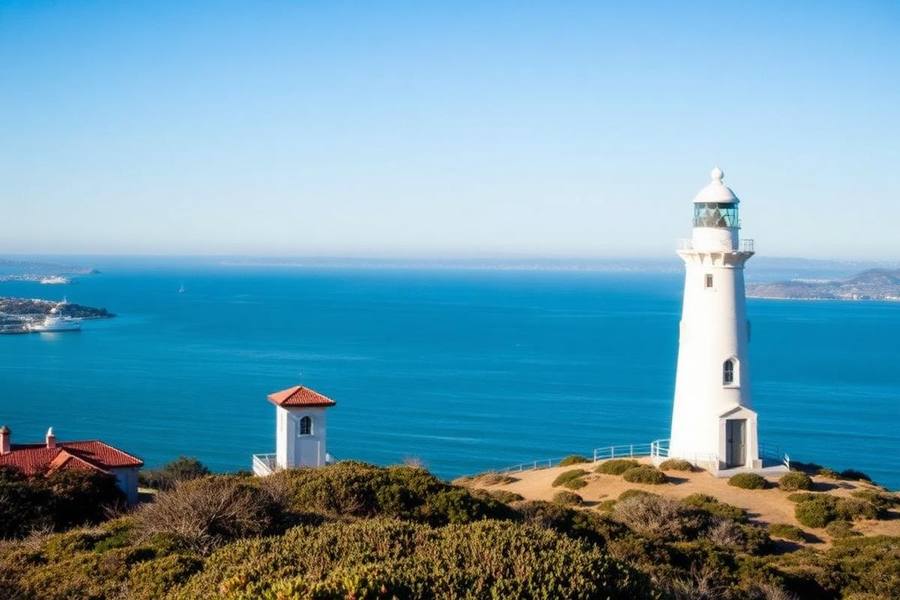
    Historic Old Point Loma Lighthouse on a bluff above San Diego Bay and the Pacific Ocean

    Cabrillo National Monument

    The best view in San Diego, the lighthouse, the tide pools, and how to time a visit around the tide chart.

    Last updated

    Quick answer

    Cabrillo National Monument occupies the tip of the Point Loma peninsula and delivers the single best panoramic view in San Diego — the bay, downtown, Coronado, the naval base and, on clear days, Mexico. Entry is per vehicle for a pass valid seven days, currently in the $20-25 range, and America the Beautiful annual passes are accepted. The site has three distinct parts and most first-timers only see one: the visitor center and overlook at the top with the restored 1855 Old Point Loma Lighthouse, the Bayside Trail — a two-mile out-and-back through coastal sage scrub with bay views — and the tide pools on the ocean side, reached by a separate road down the west face. The tide pools only work at low tide, ideally a minus tide, so check the tide chart before you commit; the difference between a great visit and a pointless one is entirely the water level. Go in the morning for clear air and easy parking, and in winter to catch gray whale migration from the overlook, roughly December through March.

    Cabrillo National Monument at a glance

    ItemDetailsNotes
    Entrance feePer vehicle, ~$20-25, valid 7 daysAnnual and America the Beautiful passes accepted
    Time needed2-3 hoursAdd an hour for the tide pools
    Old Point Loma LighthouseRestored 1855 interiorFree with entry, short climb
    Bayside TrailAbout 2 miles round tripNo shade, moderate uphill return
    Tide poolsSeparate road on the ocean sideOnly worth it at low or minus tide
    Whale watchingGray whales, roughly Dec-MarBring binoculars to the overlook

    Why this point matters in history

    The Kumeyaay, long before 1542

    The Kumeyaay people lived on and around Point Loma for thousands of years before European contact, fishing the bay and ocean from the peninsula. Their history at the point far predates anything the monument commemorates.

    Cabrillo's landing, 1542

    In September 1542, the Portuguese explorer Juan Rodríguez Cabrillo, sailing for Spain, became the first European to set foot on the West Coast of the present-day United States when his expedition anchored in San Diego Bay. The monument was established on the point in 1913 to mark it.

    The 1855 lighthouse

    The Old Point Loma Lighthouse went into service in 1855, one of the first eight lighthouses on the Pacific Coast. Perched 422 feet above the water, its light was routinely hidden by fog and low clouds, and it was retired in 1891 — one of the shortest-serving lighthouses on the coast.

    Fort Rosecrans and the harbor defenses

    Through both World Wars, Point Loma was a fortified military reservation guarding the entrance to San Diego Bay, with coastal artillery batteries, searchlight stations and underground bunkers — the concrete ruins along the Bayside Trail are what's left of them.

    The New Point Loma Lighthouse

    The replacement light, built in 1891 at the base of the point just above the water, still operates today — you can see it from the tide pool road, which is about as close as visitors get.

    What to do there

    The overlook and visitor center

    The postcard view over the harbor, plus exhibits on Juan Rodríguez Cabrillo's 1542 landing and the peninsula's military history. Ranger talks run through the day and are worth catching.

    Old Point Loma Lighthouse

    Restored to its 1880s appearance with period furnishings, and open to walk through. It was decommissioned in 1891 because fog and low clouds regularly hid the light at that elevation — the newer lighthouse sits far below at the water's edge.

    Bayside Trail

    Roughly two miles round trip on an old military road through native coastal sage scrub, with bay views the whole way and World War II-era defensive structures along it. All the elevation is on the return.

    The tide pools

    Reached by a separate road down the ocean side, with a small lot that fills fast on weekend low tides. Anemones, chitons, crabs, sea hares and octopuses if you're lucky. Wear grippy shoes, step on bare rock, and put everything back exactly as you found it.

    Whale watching from the overlook

    Gray whales pass close to Point Loma on their migration, roughly December through March. The glassed-in whale overlook and a pair of binoculars are all you need.

    Military history sites

    Coastal defense batteries and a restored radio station scattered around the point, remnants of the peninsula's role guarding the harbor entrance through both world wars.

    How to time it

    Check the tide chart first

    If the tide pools are the goal, everything else is secondary — aim for a low tide under about one foot, and best of all a minus tide. Arrive an hour before the low.

    Morning over afternoon

    Clearer air, easier parking, and the marine layer usually lifts by mid-morning. Weekend afternoons fill both lots and the tide pool road can close when it's full.

    Winter for whales and clarity

    December through March gives you migrating gray whales and the year's clearest views across to Mexico. It's also the least crowded season.

    Bring layers and water

    It's windier and 5 to 10 degrees cooler at the point than downtown, and there's no shade on the Bayside Trail or at the tide pools.

    Pair it with Point Loma

    Sunset Cliffs, Liberty Station and the Point Loma seafood spots are all a short drive back up the peninsula. Cabrillo in the morning, tacos at the fish landing after, is a good half day.

    Practical notes

    • • Fees, hours and tide pool road access are set by the National Park Service and change seasonally — confirm on the official Cabrillo National Monument site.
    • • The monument sits on an active military installation's road; you pass a naval cemetery and base signage on the way in, which is normal.
    • • Drones are prohibited, and pets are restricted to a few paved areas only.
    • • Tide pool creatures are protected — look, photograph, and don't collect or pry anything loose.

    Frequently asked

    How much does it cost to get into Cabrillo National Monument?

    Entry is charged per vehicle for a pass valid seven days, currently in the $20 to $25 range. America the Beautiful and other federal annual passes are accepted.

    How long should you spend at Cabrillo National Monument?

    Two to three hours for the overlook, lighthouse and Bayside Trail, plus another hour if you're going down to the tide pools.

    When is the best time to visit the Cabrillo tide pools?

    At low tide, ideally a minus tide, arriving about an hour before the low. Outside of low tide there is essentially nothing to see.

    Can you see whales from Cabrillo National Monument?

    Yes, gray whales pass close to Point Loma on their migration roughly from December through March, and the monument has a dedicated whale overlook. Binoculars help a lot.

    Is the Old Point Loma Lighthouse open to visitors?

    Yes, the lighthouse is restored to its 1880s appearance and open to walk through, included with monument entry. It was retired in 1891 because fog often obscured the light at that height.

    Is Cabrillo National Monument worth visiting?

    Yes — it has the best panoramic view in San Diego, real history, an easy coastal trail and tide pools, all for one vehicle fee. Time it with a low tide to get everything.

    Keep reading

    Everything about Cabrillo in one place

    Tickets, parking, food and hotels nearby, comparisons and every guide we publish about Cabrillo National Monument.

    The Sandi Spots Newsletter

    San Diego, in your inbox.

    New beach finds, hidden taco shops, weekend events, and seasonal guides — once a week from a local. No spam, ever.

    One email a week. Unsubscribe anytime.

    About this guide

    Published by the Sandi Spots Editorial team at Sleep Coast LLC. Guides combine local perspective and source research. Check the individual guide for firsthand observations and follow official links to confirm current details.

    San Diego focused. Places and practical planning across the county.
    Kept current. Confirm prices, hours, and closures with the venue.
    Independent. Affiliate links never influence rankings.

    Editorial policy · About us · Suggest a correction