Sandi Spots
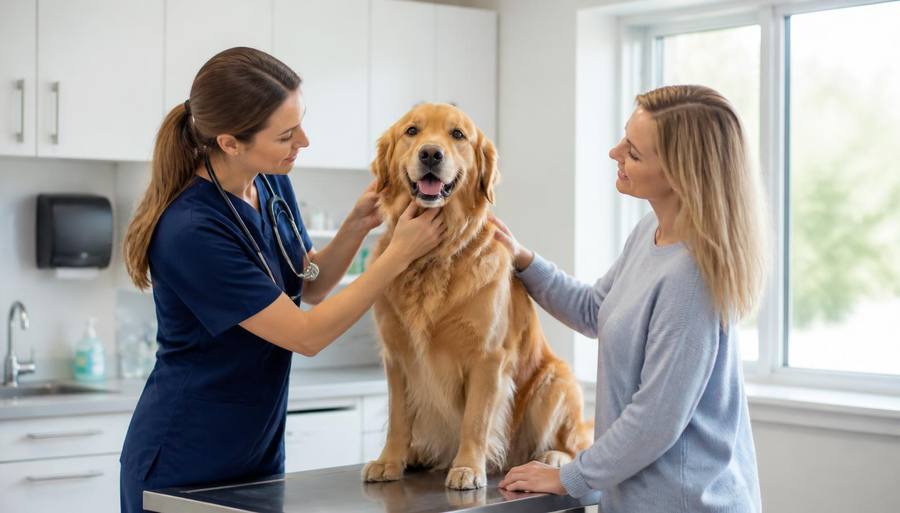
    A veterinarian in navy scrubs examining a golden retriever on an exam table while the owner reassures the dog

    Choosing a Veterinarian in San Diego

    What a wellness visit actually costs here, the questions that separate a good practice from a busy one, and the local hazards your vet should know.

    Last updated

    Quick answer

    San Diego is an expensive veterinary market and it has been consolidating fast — a large share of practices are now owned by national corporate groups rather than the veterinarian you meet, which affects pricing, staff turnover, and how aggressively diagnostics get recommended. Neither model is automatically better, but it is worth asking. Budget roughly $75 to $120 for a routine wellness exam, $250 to $500 for a first-year puppy or kitten series with vaccines and fecal testing, $400 to $900 for a spay or neuter at a private practice or far less at a nonprofit clinic, and $600 to $1,400 for a dental cleaning under anesthesia, which most dogs need every year or two. Choose a practice on three things: how far it is when something is wrong on a Tuesday morning, whether they hold same-day sick appointments, and whether they explain a plan in tiers rather than presenting one expensive path. AAHA accreditation and Fear Free certification are meaningful signals, and every California veterinarian and hospital is searchable in the state Veterinary Medical Board license lookup. Local knowledge matters more here than people expect: foxtails from late spring through summer, rattlesnakes in the canyons, valley fever in the dusty inland areas, leptospirosis risk near standing water, toxic algae, and heatstroke on the first hot inland day of the year are all San Diego problems a good local vet raises before you have to ask.

    Routine veterinary costs in San Diego, 2026

    ServiceTypical costNotes
    Wellness exam$75–$120Higher at specialty and coastal practices
    Puppy or kitten series (first year)$250–$500Vaccines, deworming, fecal, exams
    Annual vaccines for an adult dog$100–$250Depends on lifestyle: lepto, bordetella, rattlesnake
    Spay or neuter, private practice$400–$900Size and age dependent
    Spay or neuter, nonprofit clinic$75–$250Income-qualified or open-access programs
    Dental cleaning under anesthesia$600–$1,400Extractions add several hundred each
    Annual bloodwork panel$150–$300Standard for seniors, useful as a baseline earlier
    Microchip$25–$70Often free or cheap at shelter clinics — register it, it is useless unregistered
    Flea, tick, and heartworm prevention$250–$500/yearYear-round here; the climate does not give you a break
    Specialist consult (derm, cardio, ortho)$180–$300Before imaging or procedures

    How to choose a practice

    Ask who owns it

    A straightforward question with no wrong answer. Independent practices tend to have more continuity of doctor; corporate groups often have better equipment and extended hours. What you want to avoid is a practice where you see a different rotating vet every visit for a chronic problem.

    Ask about same-day sick appointments

    This is the single most practical differentiator. A practice that can never see you within 48 hours means every real problem becomes an expensive after-hours visit somewhere else.

    Look for AAHA accreditation and Fear Free

    AAHA accreditation is voluntary and involves an actual inspection against practice standards. Fear Free certification means the staff are trained in low-stress handling, which genuinely changes life with an anxious dog or any cat.

    Check the license and any discipline

    The California Veterinary Medical Board publishes license status and disciplinary actions for both individual veterinarians and hospital premises permits. It takes a minute and it is free.

    Watch how they present a plan

    A good vet gives you a gold-standard plan and an honest, safe alternative when money is tight, and says which parts are diagnostic versus treatment. A practice that presents one number and gets defensive when you ask about options is telling you something.

    Ask what happens after hours

    Which emergency hospital do they refer to, do they send records over, and will they follow up the next day? Continuity between your vet and the ER is worth a lot on a bad night.

    Consider a cat-only or exotics practice

    Cats behave completely differently in a dog-free waiting room, and rabbits, reptiles, and birds need a vet who actually sees them regularly. San Diego has both; a general practice that 'will look at' a bearded dragon is not the same thing.

    San Diego-specific health risks to raise at the first visit

    Foxtails

    The defining local hazard. From late spring through summer, dried grass awns burrow into paws, ears, noses, and eyes, and removal is often a sedated procedure. Check paws and ears after every canyon or trail walk, and consider trimming paw fur in season.

    Rattlesnakes

    Present in canyons, East County, and along most inland trails from spring through fall. Ask about the rattlesnake vaccine and aversion training, and know your nearest hospital that stocks antivenin.

    Heatstroke on the first inland hot day

    Coastal dogs are not acclimated. A 68-degree beach morning and a 95-degree afternoon in El Cajon are the same day. Flat-faced breeds are at the highest risk, and pavement burns pads well before it feels hot to you.

    Valley fever

    A soil fungus in dry inland areas that dogs inhale from disturbed dust. Chronic cough, limping, or unexplained weight loss in an inland or backcountry dog is worth naming it specifically to your vet.

    Leptospirosis and standing water

    Risk rises around creeks, standing water, and wildlife. Most local vets now recommend the lepto vaccine for dogs with any outdoor exposure — ask whether your dog's lifestyle qualifies.

    Toxic algae and ocean hazards

    Blue-green algae blooms in lakes and lagoons can kill a dog that drinks the water. Ocean swimming brings salt-water toxicity from gulping, plus stingrays in the shallows and the occasional red tide.

    Year-round parasites

    There is no winter here that breaks the flea cycle, and heartworm is present. Prevention is a twelve-month expense, not a seasonal one.

    Related pet guides

    How to use this page

    • • Hours, prices, and even whether a clinic is still open change constantly in veterinary medicine — 24-hour clinics in particular have cut overnight hours across the region in recent years because of staffing. Call before you drive, every single time.
    • • Every cost range here is a mid-2026 San Diego County snapshot meant to help you budget and recognize a fair estimate. Your clinic's written estimate is the only real number.
    • • Nothing here is veterinary advice. If something is wrong with your animal, call a veterinarian or the ASPCA Animal Poison Control Center rather than reading a webpage.
    • • Licenses are public. California veterinarians and veterinary hospitals are searchable in the Veterinary Medical Board license lookup, which also shows disciplinary history.
    • • Dog rules differ by city and by beach. San Diego, Coronado, Del Mar, Encinitas, Carlsbad, and Oceanside each set their own leash hours and off-leash zones, and several change seasonally.
    • • Restaurant patio access is at the operator's discretion under California retail food rules. A patio that welcomed your dog last year may not this year — a quick call saves an awkward walk-out.

    Frequently asked

    How much does a vet visit cost in San Diego?

    A routine wellness exam runs roughly $75 to $120 before anything else, and that is just the exam — vaccines, bloodwork, and fecal testing are additional. A first-year puppy or kitten typically totals $250 to $500 across the series, and an annual adult visit with vaccines and a basic panel lands around $300 to $600. Coastal and specialty practices sit at the top of every range.

    Where can I find low-cost veterinary care in San Diego?

    The San Diego Humane Society runs vaccine and spay/neuter programs, county animal services holds low-cost vaccine clinics, and several nonprofit and mobile clinics serve income-qualified households countywide. Veterinary schools and training programs occasionally offer reduced-cost services. These handle prevention and routine surgery well; they are not a substitute for emergency or specialty care.

    Is my vet corporate-owned?

    Quite possibly — national groups have bought a large share of San Diego practices, often keeping the original name and signage. It is a fair question to ask at the front desk. The practical effects to watch for are doctor turnover, standardized diagnostic packages, and pricing set above the practice level. Plenty of corporate-owned hospitals are excellent; you just want to know who you are dealing with.

    How often does my dog need a dental cleaning?

    Most dogs need one every one to three years, and small breeds far more often than large ones. It requires general anesthesia to be done properly, which is why 'anesthesia-free dental cleaning' at a grooming shop is cosmetic only — it scrapes the visible crown and does nothing below the gumline where the disease actually is. Untreated dental disease is painful and shortens lives.

    Do I need pet insurance in San Diego?

    It is a strong bet in this market, where a single emergency surgery routinely exceeds several years of premiums. Enroll while the pet is young — every insurer excludes pre-existing conditions — and compare on whether the policy reimburses a percentage of the actual bill versus a benefit schedule, whether exam fees are included, and what the annual cap is.

    What is a foxtail and why does everyone here warn about them?

    It is the barbed seed head of dried wild grasses, everywhere in San Diego canyons and open space from roughly April through summer. It moves in one direction only — inward — and can migrate from a paw or a nostril into deep tissue. Removal usually means sedation and often surgery. Checking paws, ears, and armpits after every off-trail walk during the dry months is the whole prevention strategy.

    Keep reading

    The Sandi Spots Newsletter

    San Diego, in your inbox.

    New beach finds, hidden taco shops, weekend events, and seasonal guides — once a week from a local. No spam, ever.

    One email a week. Unsubscribe anytime.

    About this guide

    Written and fact-checked by the Sandi Spots Editorial team — San Diego residents publishing under Sleep Coast LLC. Every place we recommend has been visited in person or verified against an official source, and no business can pay for inclusion or a higher ranking. Last updated .

    Local, first-hand. Reported on the ground in San Diego County.
    Kept current. Prices, hours, and closures reviewed on a rolling basis.
    Independent. Affiliate links never influence rankings.

    Editorial policy · About us · Suggest a correction