Districts predate annexation
Many districts were formed when their areas were farm towns. The City of San Diego later annexed the land; the school districts never merged.
We use cookies for essential site functions and, with your permission, for analytics and advertising. California residents can opt out of the sale or sharing of personal information at any time. See our Privacy Policy, Cookie Policy, and Do Not Sell or Share My Personal Information.
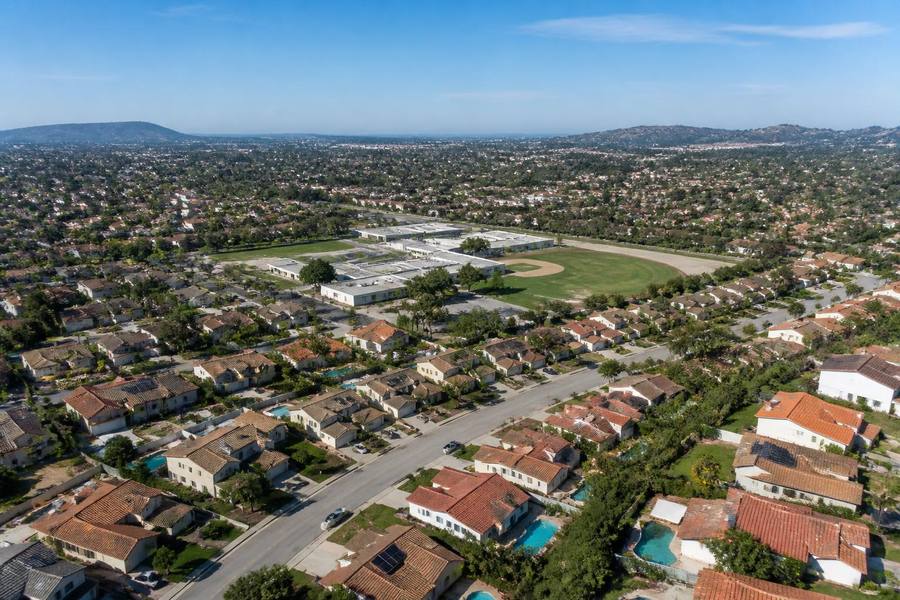
Why the district map ignores city limits, and how to verify what school an address really feeds.
Last updated
San Diego County has more than 40 independent school districts, and their boundaries were drawn for historical reasons that have nothing to do with today's city limits. Living inside the City of San Diego does not mean you're in San Diego Unified — parts of the city feed Poway Unified, Del Mar Union, San Dieguito Union, and others. Several areas are served by separate elementary and high school districts, so your child changes districts on the way to ninth grade. Within a district, your address maps to a specific attendance area school, and that school feeds a designated middle and high school — the feeder pattern, which matters more than the elementary rating when you're buying a house. Never rely on a real estate listing, a school-rating site, or a neighbor's answer: use the district's own official address lookup, then call the district office and get the answer confirmed, ideally in writing. Boundaries and feeder patterns do get redrawn when enrollment shifts or a school opens or closes, and being assigned today is not a permanent guarantee.
| Situation | What people assume | What's actually true |
|---|---|---|
| City of San Diego address | Must be San Diego Unified | Parts of the city feed Poway, Del Mar, San Dieguito and others |
| Coastal North County | One K-12 district | Separate elementary and union high school districts are common |
| New housing development | Feeds the nearest school | Assignment can be to a school miles away until capacity is added |
| Same street, different schools | A street is one attendance area | Boundaries frequently split down the middle of a street |
| Listing says 'top schools' | It's verified | Listings are marketing; only the district lookup counts |
| Good elementary | Means good middle and high | The feeder pattern may send you somewhere entirely different |
| Charter nearby | Boundary determines entry | Charters use lotteries, not attendance boundaries |
District lines are 19th and 20th century artifacts, not modern planning.
Many districts were formed when their areas were farm towns. The City of San Diego later annexed the land; the school districts never merged.
In much of North County, one district runs K-6 or K-8 and a separate union high school district runs 9-12, each with its own board and boundary.
San Diego Unified, Poway Unified, Chula Vista's high school partner districts and others operate as unified or paired systems. Which model you're in changes how many boundaries you need to check.
Lines follow historical parcel and canyon geography, which is why they cut through neighborhoods and split streets.
Large unincorporated stretches are served by small rural districts with only one or two schools.
Do this before you sign anything, in this order.
Determine which district the address is in before you look at any specific school. Use the county office of education's district locator or ask the county directly.
Every large district publishes an address-based attendance-area lookup. That tool, not a third-party site, is the source of truth.
Read them the exact address including unit number and ask for the assigned elementary, middle, and high school. Ask for it by email.
The assigned elementary is only a third of the answer. Get the middle and high school in writing too.
Popular schools can be at capacity and overflow new residents elsewhere even when the address is in-boundary.
Districts run boundary reviews when a school opens, closes, or overcrowds. If one is underway in your area, you want to know before closing escrow.
If you're buying a year ahead, confirm again when you actually enroll. Lines move.
There are legitimate routes, but none is guaranteed.
Most districts run an annual choice or open-enrollment window letting you apply to other schools within the district, subject to space and lottery.
Moving between districts requires release from your district of residence and acceptance by the receiving one. Both can say no.
California allows a transfer request based on a parent working within the boundaries of another district. Still subject to space.
Magnet programs draw from outside the attendance area by design and are a common way into a specific campus.
Charters ignore attendance boundaries entirely; residency in the district is usually the only geographic factor.
Once one child is enrolled, siblings usually get priority, and enrolled students often keep their spot if you move within the district. Ask before you move.
Choice windows are typically in fall or winter for the following year. Missing the window usually means waiting a full year.
Boundaries are the single most expensive detail buyers get wrong here.
School attendance is not something you can renegotiate in escrow. Confirm with the district before you write the offer.
Boundaries genuinely split streets in San Diego. The comp across the road may be in a different attendance area.
Paying a premium for an elementary school that feeds a high school you don't want is a common and costly mistake.
In new developments, assignments can be temporary until a planned school is built. Ask what the interim and permanent assignments are.
Renters have the same enrollment rights, but you'll need a lease and proof of residency for enrollment. Verify the address first.
Third-party school maps lag official changes by months or years. Use them for research, never for decisions.
More than 40, including unified districts, separate elementary districts, and union high school districts. It's one of the most fragmented county school maps in California.
No. Parts of the city fall within Poway Unified, Del Mar Union, San Dieguito Union, and other districts. City limits and district boundaries are unrelated.
Identify the district first, then use that district's official address-based school locator, then confirm by phone or email with the district enrollment office. Ask for the assigned elementary, middle, and high school.
Sometimes. Options include the district's intradistrict choice lottery, an interdistrict transfer with releases from both districts, a parent-employment transfer, magnet programs, or a charter lottery. All are space-dependent.
Yes. Districts redraw boundaries and feeder patterns when schools open, close, or overcrowd. Ask whether any boundary study is underway in the area before you buy.
No. Listings and rating sites are marketing tools and often lag official changes. Only the district's own lookup and written confirmation should drive a decision.
Cost, admissions, curriculum, and who each option actually suits.
How homeschooling is structured in California and where families gather locally.
What infant, toddler, and preschool care actually costs by care type.
How to find and evaluate early childcare across the county.
The master hub for childcare, schools, activities, and senior care.
Where to buy, and what each area trades off.
The relocation hub, from costs to first-month logistics.
The Sandi Spots Newsletter
New beach finds, hidden taco shops, weekend events, and seasonal guides — once a week from a local. No spam, ever.
One email a week. Unsubscribe anytime.
Published by the Sandi Spots Editorial team at Sleep Coast LLC. Guides combine local perspective and source research. Check the individual guide for firsthand observations and follow official links to confirm current details.