Board certification and fellowship
Look for board certification in orthopedic surgery plus fellowship training in the relevant subspecialty. Fellowship is where the specific procedure expertise is built.
We use cookies for essential site functions and, with your permission, for analytics and advertising. California residents can opt out of the sale or sharing of personal information at any time. See our Privacy Policy, Cookie Policy, and Do Not Sell or Share My Personal Information.
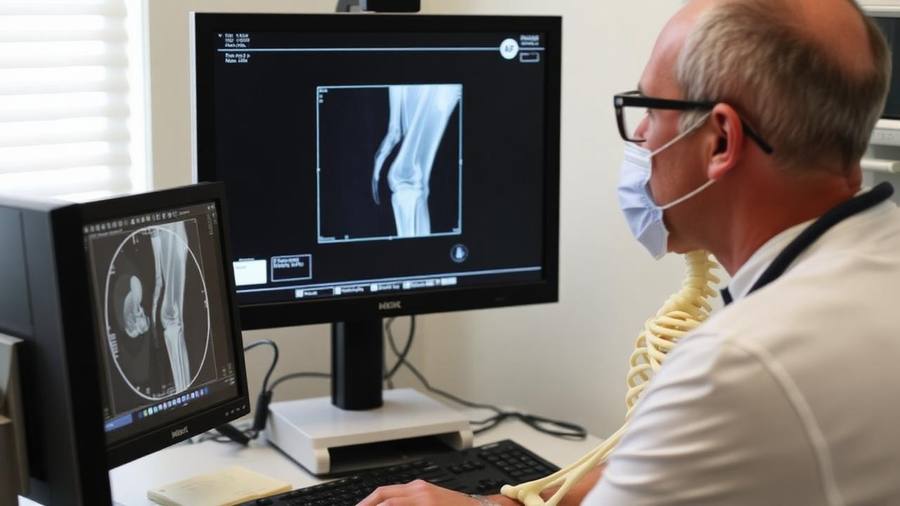
Subspecialty matters more than reputation, and volume matters more than either. How to vet a surgeon before you consent.
Last updated
Orthopedic surgery is a subspecialized field, and the single most useful thing you can do is match your problem to a surgeon who does that exact operation constantly — a sports medicine surgeon doing hundreds of ACLs a year, a dedicated shoulder and elbow surgeon, a foot and ankle specialist, a spine surgeon, a hand surgeon, or a joint replacement surgeon focused on hips and knees. Ask directly how many of your specific procedure they perform annually and what their approach is; high-volume surgeons have better-drilled teams and clearer recovery protocols. Second opinions are standard and expected in orthopedics, especially before elective spine or joint replacement surgery, and San Diego makes them easy with academic centers, large multispecialty groups, and independent sports practices all within a short drive. Bring your imaging on disc or via portal so you're not repeating an MRI. On cost, verify authorization and get an all-in estimate covering surgeon, facility, anesthesia, and implants, since a surgery center is usually far cheaper than a hospital for the same outpatient procedure. Finally, ask what the rehab plan looks like before you schedule, because outcomes for ACLs, rotator cuffs, and replacements are made in the months of physical therapy afterward, not in the operating room.
| Problem | Subspecialty | Ask about |
|---|---|---|
| ACL / meniscus tear | Sports medicine | Graft choice, annual volume, return-to-sport testing |
| Rotator cuff / labrum | Shoulder and elbow | Repair technique, sling time, PT protocol |
| Hip or knee arthritis | Adult reconstruction | Approach, implant, outpatient eligibility |
| Back or neck pain | Spine | Nonoperative options tried, fusion vs decompression |
| Wrist, thumb, carpal tunnel | Hand | Awake procedures, time off work |
| Ankle instability, bunion | Foot and ankle | Podiatry co-management, weight-bearing timeline |
Look for board certification in orthopedic surgery plus fellowship training in the relevant subspecialty. Fellowship is where the specific procedure expertise is built.
Ask the number out loud. Surgeons who do a procedure weekly have refined teams, standardized protocols, and fewer surprises than someone who does a handful a year.
Ambulatory surgery centers cost dramatically less than hospitals for outpatient procedures. Confirm the facility is in-network separately from the surgeon — they're billed separately.
At teaching hospitals, residents and fellows participate. That's normal and often fine, but you're entitled to know the attending's role.
A surgeon who can clearly explain what happens if you don't operate, and under what conditions they'd wait, is giving you real information. Be wary of one who can't.
Elective orthopedic surgery is exactly the situation second opinions exist for. Surgeons expect it and many insurers encourage it.
Request the actual DICOM images and the radiologist's report, not just the summary. Repeating an MRI wastes weeks and money.
If the first opinion came from a private sports group, get the second from an academic center or a large multispecialty group. Different incentives, different defaults.
Two surgeons may agree on the diagnosis but differ on timing, technique, and rehab. The rehab difference is often the bigger one.
Prior authorizations expire. If you're shopping opinions, confirm timelines so your approval doesn't lapse before you decide.
Roughly nine to twelve months to a genuine return to cutting sports, with structured criteria-based rehab throughout. Anyone promising a fast return is describing walking, not playing.
Four to six weeks in a sling, months of graded strengthening, and a full year for maximum strength. Local surfers should plan the surgery for the flat season.
Many patients now go home the same day. Expect walking within days, driving within weeks, and continued gains for six to twelve months.
Often a quick return to daily activity, but partial meniscectomy has long-term tradeoffs worth discussing versus repair or nonoperative care.
Highly variable. Decompression recoveries are faster than fusions; both benefit from a documented trial of nonoperative care first.
Match the subspecialty to your injury, ask how many of that exact procedure they perform per year, confirm surgeon and facility are both in-network, and ask about the rehab plan before scheduling.
Yes for elective surgery, especially spine and joint replacement. Bring your actual imaging files so the second surgeon doesn't need to reorder them.
Usually much cheaper for outpatient orthopedic procedures. Get an all-in estimate covering surgeon, facility, anesthesia, and implants before you commit.
PPO plans usually let you self-refer. HMO plans typically require a primary care referral and prior authorization for imaging and surgery.
Weeks for elective consults at popular practices; acute injuries are usually seen much faster if you say clearly that it's a new injury.
Sports medicine is a fellowship within orthopedics focused on athletic injuries. Nonoperative sports medicine physicians also exist and treat many of the same injuries without surgery.
How to get established with primary care without waiting months.
Covered California, employer plans, Medi-Cal, and how networks work here.
Which system serves your area, and when urgent care beats the ER.
Where the outcome is actually determined.
Foot problems below the ankle.
Sauna and cold plunge for the maintenance phase.
The Sandi Spots Newsletter
New beach finds, hidden taco shops, weekend events, and seasonal guides — once a week from a local. No spam, ever.
One email a week. Unsubscribe anytime.
Published by the Sandi Spots Editorial team at Sleep Coast LLC. Guides combine local perspective and source research. Check the individual guide for firsthand observations and follow official links to confirm current details.