Mission San Diego de Alcalá
Mission Valley · 1769
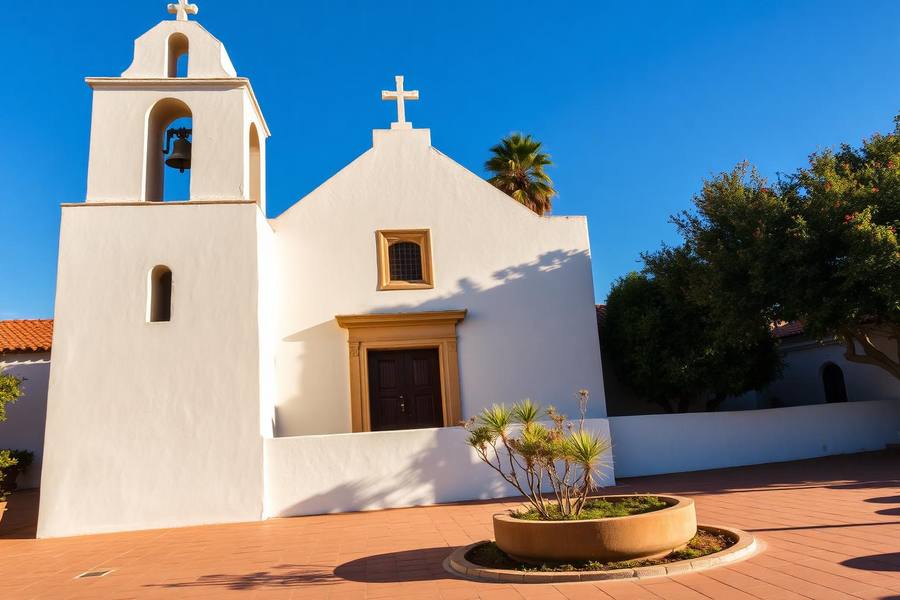
The 'Mother of the Missions.' The current church is a 1930s reconstruction on the original footprint, with excavated foundations, the campanario bell wall and a small museum in the garden.
We use cookies for essential site functions and, with your permission, for analytics and advertising. California residents can opt out of the sale or sharing of personal information at any time. See our Privacy Policy, Cookie Policy, and Do Not Sell or Share My Personal Information.
California's first mission, the fort above Old Town, and the cattle ranches whose boundaries still shape the county map.
Last updated
San Diego is where Spanish California began: Mission San Diego de Alcalá, founded in 1769, was the first of the 21 California missions, and the presidio above what is now Old Town was the first permanent European settlement on the West Coast. The mission moved inland to Mission Valley in 1774 for better water and farmland, and the church there is still an active parish you can tour. After Mexican independence, the mission lands were broken up into rancho grants — Rancho Santa Fe, Rancho Peñasquitos, Rancho Bernardo, Otay, Jamul — and those grant names survive today as neighborhoods and city boundaries. The best half-day version of this history is Presidio Park and the Serra Museum, Old Town State Historic Park, then the mission itself, all within about six miles.
| Site | Founded | Visiting |
|---|---|---|
| Mission San Diego de Alcalá | 1769 / moved 1774 | Small admission, active parish |
| Presidio Park & Serra Museum | 1769 | Park free; museum limited hours |
| Old Town State Historic Park | 1820s–1870s | Free |
| Mission San Luis Rey | 1798, Oceanside | Ticketed museum |
| Rancho Guajome Adobe | 1853, Vista | County park, tours |
| Los Peñasquitos Ranch House | 1823 | Free, in the preserve |
Rates and availability change daily, so we link the guide rather than quote a price. Each page compares walkable, short-drive and budget options with parking and resort fees called out.
Mission Valley · 1769
The 'Mother of the Missions.' The current church is a 1930s reconstruction on the original footprint, with excavated foundations, the campanario bell wall and a small museum in the garden.
Above Old Town · Free
The hilltop where the fort and first mission stood. The archaeology is largely still buried; the view over Mission Valley explains why they chose it.
Presidio Park · Limited hours
The 1929 mission-revival landmark that everyone mistakes for the actual mission. Worth going in when it's open for the founding-era exhibits.
Oceanside · 1798
The largest of the California missions, with a museum, cemetery and quadrangle. Roughly 40 minutes up the coast and far less crowded than the San Diego mission.
Almost every 'Rancho' place name in the county traces to a Mexican-era land grant.
Peñasquitos Canyon · 1823
The county's first private land grant. The adobe ranch house still stands inside the preserve, a short walk from the trailhead parking.
North County inland · Grant land
Originally part of Rancho San Dieguito, later a Santa Fe Railway eucalyptus plantation before it became the wealthiest ZIP code in the county.
Vista · 1853
One of the best-preserved Mexican-era adobes in Southern California, now a county park with docent tours.
Inland · Grant land
Both were cattle ranches, and the 1846 Battle of San Pasqual was fought on the land between them during the Mexican-American War.
Escondido · State park
The visitor center on Highway 78 interprets the war's bloodiest California engagement, near what is now the Safari Park.
Mission San Diego de Alcalá, founded July 16, 1769 by Junípero Serra. It moved about six miles inland to its current Mission Valley site in 1774 for better water and farmland.
Yes. It is an active Catholic parish with a small admission for the museum, garden and excavated foundations. Check the parish schedule, as services close parts of the site.
A Mexican-era land grant, mostly issued in the 1820s–1840s after mission lands were secularized. Names like Rancho Bernardo, Rancho Peñasquitos and Rancho Santa Fe come directly from those grants.
The contenders are the adobes in Old Town, including the Casa de Estudillo (1827) and the Cosmopolitan/Bandini house, along with the ranch house at Los Peñasquitos (1823).
The Sandi Spots Newsletter
New beach finds, hidden taco shops, weekend events, and seasonal guides — once a week from a local. No spam, ever.
One email a week. Unsubscribe anytime.
Published by the Sandi Spots Editorial team at Sleep Coast LLC. Guides combine local perspective and source research. Check the individual guide for firsthand observations and follow official links to confirm current details.