Sandi Spots
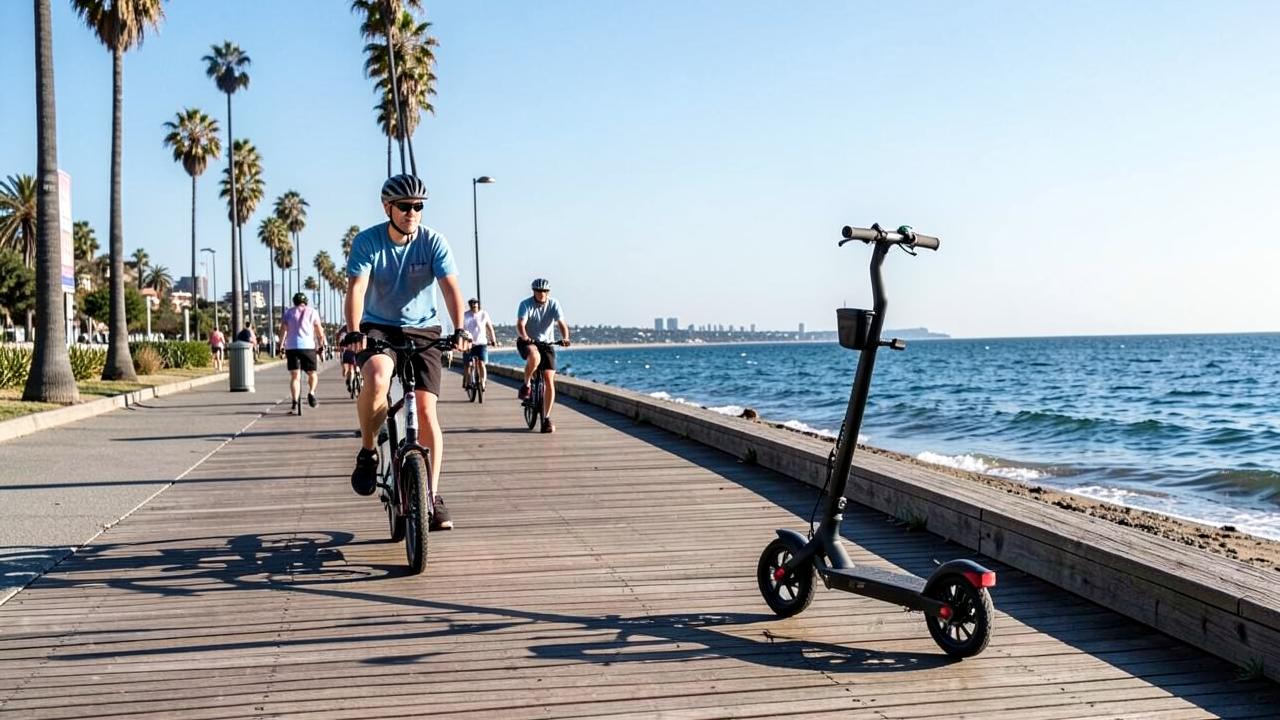
    Cyclists riding electric bikes along a San Diego beach boardwalk with a parked electric scooter beside the path

    San Diego E-Bike and Scooter Rules

    Boardwalk bans, the three e-bike classes, helmet and age law, and the parking rules that get shared scooters impounded.

    Last updated

    Quick answer

    California sorts e-bikes into three classes and San Diego's local rules stack on top of that. Class 1 is pedal-assist only up to 20 mph, Class 2 has a throttle and also cuts out at 20 mph, and Class 3 is pedal-assist up to 28 mph. Class 3 carries the strictest rules: riders must be at least 16, everyone on a Class 3 must wear a helmet regardless of age, and Class 3 e-bikes are generally barred from bike paths and trails where Class 1 and 2 are allowed. Under California law anyone under 18 must wear a helmet on any bicycle, e-bike or scooter. The rule that catches visitors hardest is San Diego's boardwalk ban: motorized transportation devices, including motorized shared scooters and motorized bikes, are prohibited on the beach-area boardwalks, and the San Diego Police Department enforces it. A regular pedal bicycle on the boardwalk is a different question governed by posted speed limits and yielding rules. Shared scooters have their own layer — operators are permitted by the City, devices must be parked upright in designated corrals or areas that keep the sidewalk passable, and scooters left blocking a path get relocated or impounded. Riding on sidewalks in business districts, riding two-up on a one-person device, and riding under the influence are all citable.

    California e-bike classes and what changes with each

    ClassHow it worksRules that differ
    Class 1Pedal-assist only, motor stops at 20 mphGenerally allowed anywhere a bicycle is allowed, including most bike paths and many trails
    Class 2Throttle-capable, motor stops at 20 mphTreated like Class 1 in most places, but some trails and parks exclude throttle devices
    Class 3Pedal-assist only, motor stops at 28 mphRider must be 16+, helmet required at any age, generally barred from bike paths and trails
    Anything faster or unlabeledOver 28 mph, or no class labelLegally a moped or motor vehicle — needs registration, license and insurance, and is not a bicycle
    Standing electric scooterMotorized, typically capped around 15 mphHelmet required under 18; no sidewalk riding; must be parked upright and clear of the path

    Where you can and cannot ride

    Beach boardwalks: motorized devices banned

    San Diego prohibits motorized transportation devices on the beach-area boardwalks, and SDPD has published enforcement guidance for it. That covers shared scooters and motorized bikes. Walk the device across the boardwalk rather than riding it.

    Bike lanes and streets

    E-bikes belong in bike lanes and on the street with traffic, riding in the same direction as cars, obeying signals and stop signs. Rolling a stop sign on an e-bike is the same violation as in a car.

    Sidewalks

    Motorized scooters may not be ridden on sidewalks. Bicycle sidewalk riding is restricted in business districts and prohibited wherever posted.

    Bike paths and trails

    Class 1 and Class 2 are usually welcome; Class 3 generally is not. Individual park and open-space managers — City, County, State Parks — can be stricter than the citywide baseline, and mountain-bike trails often ban all e-bikes.

    Mission Bay and park paths

    Shared multi-use paths around Mission Bay are legal for most e-bikes but crowded with pedestrians, kids and dogs. Speed is the enforcement trigger far more often than the class of your bike.

    Coronado and North County

    Coronado, Del Mar, Encinitas, Carlsbad and Oceanside each set their own e-bike and scooter ordinances, and several have tightened them recently. Cross a city line and re-read the signs.

    Helmets, ages and the rules that produce tickets

    Under 18: helmet always

    California requires a helmet for every rider and passenger under 18 on a bicycle, e-bike or motorized scooter. This one is enforced.

    Class 3: helmet at every age

    Any rider on a Class 3 e-bike must wear a helmet regardless of age, and the rider must be at least 16 years old.

    One rider per device

    Doubling up on a scooter or an e-bike not designed and equipped for a passenger is a citation, and it is the most common cause of shared-scooter injuries.

    Lights after dark

    A white front light and rear reflector or light are required at night. Coastal fog makes this materially more important than the law makes it sound.

    DUI applies

    Riding a motorized scooter or e-bike while impaired is enforceable. The beach bar to boardwalk scooter ride is a genuinely bad idea, legally and physically.

    Parking a shared scooter

    Park upright, in a designated corral where one exists, never blocking a sidewalk, curb ramp, transit stop, driveway or building entrance. Improperly parked devices are relocated or impounded and the operator may pass fees to you.

    How to verify this before you rely on it

    • • The City of San Diego Police Department publishes an E-Bike Laws & Safety Tips page and the City runs a Micromobility program page covering shared devices; the San Diego Municipal Code's Shared Mobility Devices division governs operator and parking requirements.
    • • E-bike law in California has changed repeatedly in recent years, particularly around Class 3 access and youth riders. Confirm current requirements with the City or the California Vehicle Code before relying on any summary, including this one.
    • • Rules differ between the City of San Diego and every neighboring city, and between city streets, County open space and State Parks. The posted sign at the trailhead or path entrance controls.
    • • Nothing here is legal advice. This page explains how the rules are structured so you know what to look up.

    Frequently asked

    Can you ride an e-bike on the Mission Beach boardwalk?

    Motorized transportation devices are banned from San Diego's beach-area boardwalks and the ban is actively enforced. Walk your e-bike or scooter on the boardwalk and ride on the street instead.

    Do adults need a helmet on an e-bike in San Diego?

    Adults must wear a helmet on a Class 3 e-bike, which assists up to 28 mph. On Class 1 and Class 2 e-bikes, helmets are required only for riders under 18 — but they are strongly advised at any age.

    What is the age limit for e-bikes in California?

    Class 3 e-bikes require the rider to be at least 16. Class 1 and Class 2 have no state minimum age, though riders under 18 must wear helmets and some local jurisdictions add restrictions.

    Can you ride an electric scooter on the sidewalk in San Diego?

    No. Motorized scooters are not permitted on sidewalks. Use bike lanes or the street, and dismount where riding is prohibited.

    Where do I park a shared scooter in San Diego?

    Upright, in a designated corral if one is nearby, and always clear of sidewalks, curb ramps, driveways, transit stops and entrances. Blocking devices are relocated or impounded.

    Keep reading

    The Sandi Spots Newsletter

    San Diego, in your inbox.

    New beach finds, hidden taco shops, weekend events, and seasonal guides — once a week from a local. No spam, ever.

    One email a week. Unsubscribe anytime.

    About this guide

    Published by the Sandi Spots Editorial team at Sleep Coast LLC. Guides combine local perspective and source research. Check the individual guide for firsthand observations and follow official links to confirm current details.

    San Diego focused. Places and practical planning across the county.
    Kept current. Confirm prices, hours, and closures with the venue.
    Independent. Affiliate links never influence rankings.

    Editorial policy · About us · Suggest a correction