Federally recognized sovereign nations
San Diego County contains 18 reservations. Tribes are sovereign governments that set their own commercial regulations on their own land.
We use cookies for essential site functions and, with your permission, for analytics and advertising. California residents can opt out of the sale or sharing of personal information at any time. See our Privacy Policy, Cookie Policy, and Do Not Sell or Share My Personal Information.
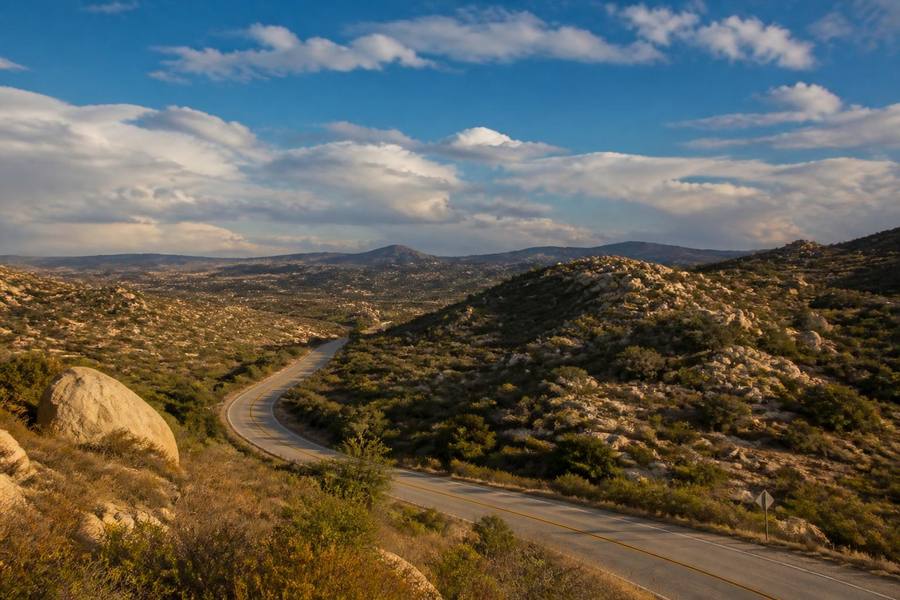
Reservation dispensaries operate under tribal law, not California's — which changes taxes, testing, and your exposure on the drive home.
Last updated
San Diego County has more federally recognized tribal reservations than any other county in the United States, and several tribes operate cannabis dispensaries on sovereign land in East County and the North County backcountry. Because those shops answer to tribal regulators rather than California's Department of Cannabis Control, prices are often lower — tribal operations typically don't collect the state's 15 percent excise tax — and product selection can include items that never went through California's testing and packaging system. The tradeoffs are real. State consumer protections, lab-testing mandates, and recall processes may not apply, and once you drive off the reservation you're back under California and county law, where possessing untaxed, non-compliant cannabis is not protected. Tribal shops are typically 45 to 90 minutes from central San Diego on two-lane backcountry roads, are often cash-only, and hours can change without notice. For most visitors a licensed city dispensary or delivery is the simpler and safer choice; the tribal option makes sense mainly for locals already heading east.
| Factor | Tribal-land shop | State-licensed dispensary |
|---|---|---|
| Regulator | The tribe's own cannabis authority | California Department of Cannabis Control plus the city |
| State excise tax | Typically not collected | 15 percent, plus local and sales tax |
| Lab testing | Depends on tribal rules; may differ from state standards | Mandatory state-standard testing on every batch |
| Consumer recourse | Tribal process; state agencies generally lack jurisdiction | State complaint and recall system |
| Purchase limits | Set by the tribe; often more permissive | One ounce flower, eight grams concentrate per day |
| Distance from downtown | 45 to 90 minutes each way | 10 to 25 minutes in most of the city |
| Payment | Frequently cash only | Cash or debit |
| Off-reservation legal status | Non-compliant product isn't protected once you leave | Compliant and legal to transport sealed |
Rates and availability change daily, so we link the guide rather than quote a price. Each page compares walkable, short-drive and budget options with parking and resort fees called out.
Sovereignty, not a loophole.
San Diego County contains 18 reservations. Tribes are sovereign governments that set their own commercial regulations on their own land.
Tribes that permit cannabis typically create their own licensing and compliance authority, with rules that may resemble or diverge from California's.
Like gaming before it, cannabis retail funds tribal government services, infrastructure, and programs.
California's authority over cannabis on tribal land is legally contested territory. That ambiguity is exactly why the tax and testing picture differs.
The differences are practical, not abstract.
Without the state excise tax layer, the same category of product often costs noticeably less. That's the main draw.
California's mandatory pesticide, potency, and contaminant testing may not apply. If you rely on tested-and-labeled products, ask directly what testing the shop requires.
You may not see the state's universal cannabis symbol, batch numbers, or standardized dose labeling. Dose carefully with edibles.
Some tribal shops allow larger transactions than the state's daily cap. Buying more than California's limit means carrying more than California allows once you leave.
If a product is bad, California's complaint and recall system generally can't help you. Your remedy runs through the tribe.
Plan it like a backcountry trip, not a grocery run.
Most reservations sit east of Alpine or in the Pala, Pauma, and Valley Center corridors. Roads are winding, dark at night, and thin on services.
Download directions before you leave. Several routes lose signal for long stretches.
Card acceptance is inconsistent and ATMs are scarce out there.
Hours change, and some operations have opened and closed within a season. A phone call saves a two-hour round trip.
If you're already going east for Julian, casinos, Cuyamaca, or Anza-Borrego, the stop costs you little. As a dedicated errand it rarely pencils out.
Backcountry roads close for fire and winter weather. Check conditions in fall fire season and after storms.
Be clear-eyed about what changes at the reservation boundary.
California possession limits and packaging rules apply on public roads. Untaxed, non-compliant product isn't protected off-reservation.
Carrying more than an ounce of flower on a California road is a state issue regardless of where you bought it.
Without standardized labeling, edible dosing is guesswork. Treat anything unlabeled as stronger than you expect.
Some unlicensed shops in unincorporated areas market themselves as tribal without being on reservation land. That's just an illegal store.
Reservations are residential communities, not attractions. Stay on marked roads and follow posted rules.
They operate under the sovereign authority of federally recognized tribes on tribal land, with tribal licensing rather than California state licensing. The scope of state authority over cannabis on tribal land is legally contested, which is why the tax and testing picture differs from a city dispensary.
Tribal operations generally don't collect California's 15 percent excise tax or local cannabis taxes, which removes a large chunk of the retail price.
It depends on the tribe's own rules. California's mandatory testing and labeling standards don't automatically apply, so ask the shop directly what testing it requires.
Once you leave reservation land, California law governs. That means the one-ounce possession limit, sealed-container and trunk rules, and the fact that non-compliant product isn't protected under state law.
Most are 45 to 90 minutes out, in East County beyond Alpine or in the Pala, Pauma, and Valley Center corridors, on two-lane backcountry roads.
Often not. Bring cash and don't count on finding an ATM nearby.
Where licensed shops actually are, neighborhood by neighborhood.
How delivery works countywide, what it costs, and where it reaches.
Where you legally can and cannot consume as a tourist.
The classic East County drive, pie included.
Backcountry desert planning if you're heading that far east.
The Sandi Spots Newsletter
New beach finds, hidden taco shops, weekend events, and seasonal guides — once a week from a local. No spam, ever.
One email a week. Unsubscribe anytime.
Published by the Sandi Spots Editorial team at Sleep Coast LLC. Guides combine local perspective and source research. Check the individual guide for firsthand observations and follow official links to confirm current details.