Sandi Spots
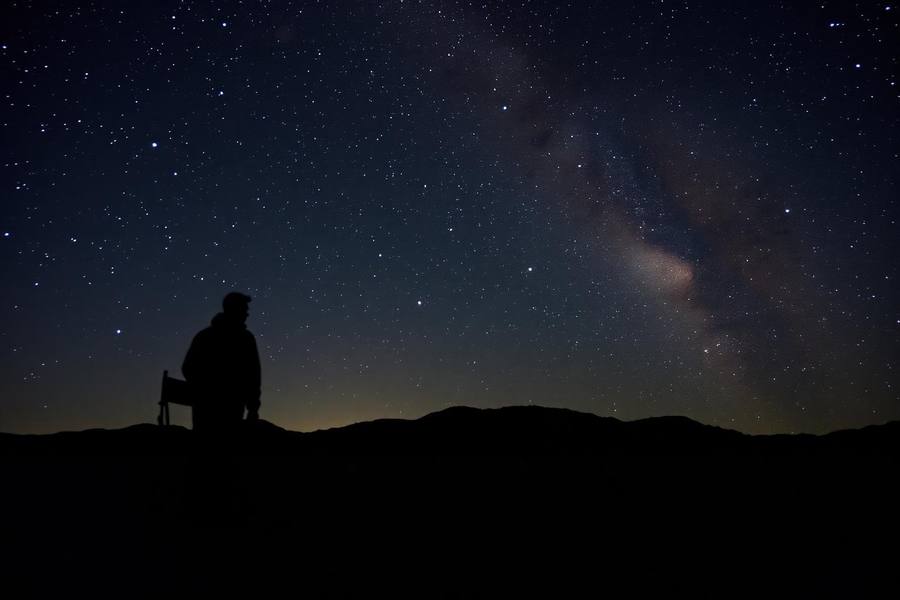
    Milky Way arcing over desert rock formations in the Anza-Borrego backcountry at night

    Stargazing Near San Diego

    Ninety minutes east and the sky turns back on.

    Last updated

    Quick answer

    You cannot meaningfully stargaze in the city — coastal light pollution and the marine layer both kill it. The payoff is east. Anza-Borrego Desert State Park is an International Dark Sky Park and the best night sky within easy reach, about two hours from downtown. The Laguna Mountains and Mount Laguna, roughly an hour east on I-8, are the closest genuinely dark option, and the Palomar Mountain area to the north is excellent and home to the historic Palomar Observatory. Go on a new moon, check the marine layer forecast, dress for temperatures 20–30 degrees colder than the coast, and give your eyes a full 20–30 minutes to adapt with no white light.

    Where to go, by drive time

    LocationDrive from downtownWhy go
    Mount Laguna~1 hour east on I-8Closest truly dark sky; pines, elevation, cold
    Palomar Mountain~1.5 hours northExcellent skies plus the historic observatory
    Anza-Borrego~2 hours eastInternational Dark Sky Park; the best in the region
    Julian area~1 hourDecent skies, actual lodging and food
    Coastal bluffsIn townNot dark, but fine for bright planets and the moon
    Best moon phaseNew moon ±5 daysA full moon washes out everything faint

    The dark sky destinations

    Anza-Borrego Desert State Park

    East County, ~2 hours

    California's largest state park and a certified International Dark Sky Park. Borrego Springs, the town at its center, is itself a Dark Sky Community with lighting ordinances to protect the view. This is the real thing — the Milky Way is bright enough to cast a faint shadow on a clear moonless night.

    Mount Laguna

    East County, ~1 hour

    The closest genuinely dark sky to the city, up at around 6,000 feet in the Cleveland National Forest. Cold, piney and much easier to fit into a weeknight than the desert.

    Palomar Mountain

    North County, ~1.5 hours

    Home to the Palomar Observatory and its historic 200-inch Hale Telescope. The observatory runs daytime visitor hours and periodic public programs; the surrounding state park and forest roads offer excellent night skies.

    Julian

    East County, ~1 hour

    Not as dark as the desert or Laguna, but the only one of these with a town attached — lodging, dinner and pie, which makes it the practical choice for a stargazing overnight.

    Cuyamaca Rancho State Park

    East County

    Meadows and open sky at elevation, close to Julian, with campgrounds that put you on site after dark instead of driving mountain roads at midnight.

    How to actually see anything

    Go on a new moon

    The moon is the biggest source of light pollution there is. A five-day window either side of new moon is the whole game; a full moon night is bright enough to read by and shows almost no faint sky.

    Local tip: Meteor showers peak on fixed dates but a shower peaking on a full moon is barely worth the drive. Check both.

    Beat the marine layer, and the humidity

    The coastal marine layer often stops at the first mountain ridge, which is exactly why the east county works. Check a mountain-specific forecast rather than the San Diego city one.

    Dark adapt for 20–30 minutes

    Your eyes take that long to fully adjust, and a single glance at a phone screen resets it. Use a red light and keep the phone away, or the whole trip is wasted.

    Dress for 20–30 degrees colder

    Mount Laguna and the desert at night are dramatically colder than the coast, and the desert swings hardest. People consistently underdress and leave after 40 minutes.

    Bring binoculars before a telescope

    A decent pair of binoculars shows Jupiter's moons, the Andromeda galaxy and the Pleiades and requires no setup. Most beginner telescopes are more frustrating than useful.

    Drive the mountain roads carefully

    The routes to Laguna, Palomar and Julian are narrow, dark and full of deer at night. Palomar's South Grade in particular is a serious road in the dark.

    What to watch for through the year

    Milky Way core season

    The bright galactic core is visible roughly from spring through early fall, highest and best in summer. Winter skies are still beautiful but the core is below the horizon.

    The major meteor showers

    The Perseids in August and the Geminids in December are the two reliably strong showers. The Geminids are the better one from San Diego — colder, but the desert is at its best in December.

    Planets

    Jupiter, Saturn, Venus and Mars are bright enough to see well even from suburban skies, which makes them the only worthwhile in-town target.

    Desert bloom overlap

    A wet winter can put a spring wildflower bloom and good Milky Way viewing in Anza-Borrego within the same trip window.

    Desert and mountain safety

    • • Cell service is unreliable to nonexistent at all of these sites. Download maps before you leave.
    • • Desert nights get genuinely cold; mountain nights can drop below freezing. Bring more layers than you think.
    • • Tell someone where you're going, and carry water — a breakdown on a backcountry road at night is a real problem.

    Frequently asked

    Where is the best stargazing near San Diego?

    Anza-Borrego Desert State Park, about two hours east, is an International Dark Sky Park and the best sky in the region. Mount Laguna, about an hour east on I-8, is the closest genuinely dark option, and Palomar Mountain to the north is also excellent.

    Can you see the Milky Way from San Diego?

    Not from the city — light pollution and the marine layer prevent it. Drive an hour or more east to Mount Laguna or two hours to Anza-Borrego on a moonless night and the Milky Way is spectacular, roughly spring through early fall.

    When is the best time to stargaze in San Diego?

    Within about five days of a new moon, on a clear night, from a dark east county location. Summer gives the brightest Milky Way core; December's Geminid meteor shower is the strongest annual event and coincides with the desert's best weather.

    How far do you have to drive from San Diego for dark skies?

    About an hour east on I-8 to Mount Laguna for genuinely dark skies, or about two hours to Borrego Springs and Anza-Borrego for the darkest skies in the region.

    Can you visit Palomar Observatory?

    Palomar Observatory, home of the historic 200-inch Hale Telescope, offers daytime visitor access and periodic public programs. Hours and programs vary seasonally and the mountain road can close in winter weather — check before driving up.

    What should I bring stargazing in San Diego?

    Far more layers than the coast requires, a red flashlight rather than white, binoculars, a chair or blanket, water, and downloaded offline maps since cell service is unreliable at every dark sky site in the county.

    Keep reading

    The Sandi Spots Newsletter

    San Diego, in your inbox.

    New beach finds, hidden taco shops, weekend events, and seasonal guides — once a week from a local. No spam, ever.

    One email a week. Unsubscribe anytime.

    About this guide

    Written and fact-checked by the Sandi Spots Editorial team — San Diego residents publishing under Sleep Coast LLC. Every place we recommend has been visited in person or verified against an official source, and no business can pay for inclusion or a higher ranking. Last updated .

    Local, first-hand. Reported on the ground in San Diego County.
    Kept current. Prices, hours, and closures reviewed on a rolling basis.
    Independent. Affiliate links never influence rankings.

    Editorial policy · About us · Suggest a correction