Sandi Spots
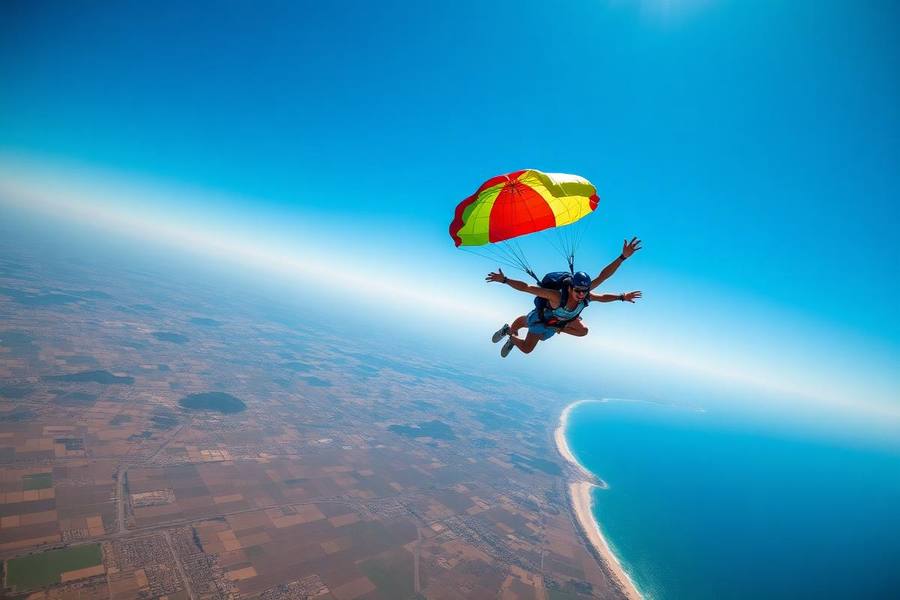
    Tandem skydivers under a bright canopy descending over the Southern California coastline

    Skydiving Near San Diego

    Coastal versus inland drop zones, real pricing, the rules that catch people out, and how to vet an operator.

    Last updated

    Quick answer

    There is no drop zone inside the city of San Diego — the airspace over the metro area is far too busy — so every jump means driving 30 to 90 minutes to a coastal drop zone in North County or an inland desert operation east of the county. A tandem jump typically costs about $200 to $300 midweek and $250 to $400 on weekends and holidays, with video and photos adding roughly $100 to $170 on top; coastal jumps with ocean views generally cost more than inland ones. Standard rules across operators: minimum age 18 with government photo ID and no parental waiver option, a tandem weight limit that usually lands somewhere between 220 and 240 pounds with surcharges above about 200, and a hard stop on jumping if you've been drinking. Book a first-load morning slot — winds pick up through the day and afternoon jumps are the ones that get delayed or scrubbed, and marine layer on the coast can push the whole schedule. Choose an operator that is a United States Parachute Association group member, ask how long your tandem instructor has been rated, and read recent reviews specifically for how weather cancellations and refunds are handled.

    What a tandem jump runs

    ItemTypical costNotes
    Tandem jump, weekday$200-$300Cheapest slots, fewest crowds
    Tandem jump, weekend$250-$400Book well ahead in summer
    Video + photos$100-$170Handcam vs. outside videographer
    Overweight surcharge$1-$2 per lb over ~200Limits vary by operator
    Accelerated freefall first course$300-$500If you want to learn to jump solo

    Where people jump

    Two very different experiences depending on which direction you drive.

    Coastal North County drop zones

    The main draw is the view — you exit over agricultural land and coastline with the Pacific filling the horizon. Closer to the city, more expensive, and more weather-sensitive because of marine layer and afternoon sea breeze.

    Local tip: Take the earliest load of the day; the coastal marine layer often burns off just in time and winds are calmest.

    Inland desert drop zones

    East of the county the air is dry, clear, and reliable, with fewer weather cancellations and lower prices. The scenery is high desert and mountains rather than ocean, and the drive is longer.

    Perris and Lake Elsinore area

    Roughly 75 to 90 minutes north, these are among the largest and busiest drop zones in the country, which means faster aircraft, more loads per day, and deep instructor benches. Worth the drive if scheduling flexibility matters.

    Indoor wind tunnels

    Not a substitute for the real thing, but a reasonable option for nervous first-timers, kids under 18, and anyone wanting to feel freefall body position before committing.

    Booking and safety

    Check USPA group membership

    Group member drop zones commit to USPA safety requirements, instructor ratings, and equipment standards. It's the baseline filter and it's easy to verify before you pay a deposit.

    Read the weather and refund policy

    Wind holds and cloud cover cancel jumps regularly. Find out whether a cancellation gets you a refund, a reschedule, or a credit that expires — this is the single most common complaint about any drop zone.

    Weigh in honestly

    Weight limits exist for canopy performance and instructor safety. Operators weigh you at check-in and will turn you away if you're over, deposit or not.

    Plan for a half day

    Between check-in, waivers, the briefing, gearing up, and waiting for your load, budget three to four hours at the drop zone even though the jump itself is minutes.

    Skip it if you're unwell

    Congestion or a head cold makes the altitude change genuinely painful. Recent surgery, some heart conditions, and pregnancy are disqualifying — call ahead if you're unsure.

    Cost, weight limits, and booking

    Skydiving pricing in San Diego is quoted low and adds up fast. Here's the honest all-in number and the requirements that disqualify people at check-in.

    Real 2026 pricing

    Tandem jumps advertise around $199–$279, but weekend surcharges, video packages ($100–$180), and gear fees push the typical all-in total to $350–$450 per person.

    Local tip: Weekday jumps are the cheapest and least crowded — same jump, sometimes $60–$80 less.

    Weight and age limits

    Most drop zones cap tandem passengers at 220–240 lbs with height-proportional restrictions, and the minimum age is 18 with a government photo ID. No parental waiver changes the age rule.

    Local tip: Weigh in honestly when booking — being turned away at the desk forfeits the deposit at most operators.

    Timing your day

    Budget three to five hours on site even though freefall lasts under a minute. Check-in, waivers, training, manifest, and weather holds fill the rest.

    Local tip: Book the first slot of the morning — winds are calmest and delays cascade later in the day.

    Weather cancellations

    Coastal fog, high winds, and low cloud ceilings ground jumps regularly, especially May and June mornings. Operators reschedule rather than refund.

    Local tip: If you're visiting, book early in your trip so a weather day still leaves room for a second attempt.

    What the jump is actually like

    Knowing the sequence removes most of the anxiety people carry into the plane.

    Altitude and freefall

    Standard tandem exits are at 10,000–13,000 feet, giving 30–60 seconds of freefall at about 120 mph, then a 5–7 minute canopy ride down.

    Local tip: The canopy ride is the part with the view — ask your instructor to point out Catalina and the coastline.

    What to wear

    Athletic clothes and laced sneakers. No sandals, no loose jewelry, and glasses are fine under goggles.

    Local tip: It's 30°F colder at altitude than on the ground — long sleeves are worth it even in August.

    Motion sickness and ears

    The plane ride causes more nausea than the jump. Eat a light meal a couple of hours before rather than nothing at all, and chew gum on the climb.

    Local tip: Tell your instructor if you're prone to motion sickness — they'll adjust the canopy ride.

    Coastal vs inland drop zones

    Coastal jumps give ocean and island views but cancel more often for marine layer; inland desert-edge drop zones fly more reliably and cost slightly less.

    Local tip: If you only have one shot, inland is the safer bet for actually getting off the ground.

    Practical notes

    • • Wear athletic clothing and closed-toe lace-up shoes; no sandals, no loose hats, and glasses are fine under provided goggles.
    • • Bring a government photo ID — no ID, no jump, and there's no exception for 17-year-olds.
    • • Groups get better pricing at most operators; ask about a group rate for four or more.
    • • Prices and rules vary by operator and change seasonally. Confirm directly when you book.

    Frequently asked

    How much does skydiving cost near San Diego?

    A tandem jump generally runs $200 to $300 on weekdays and $250 to $400 on weekends, with video and photo packages adding roughly $100 to $170.

    Can you skydive in San Diego itself?

    No. Airspace over the metro area is too congested, so all jumps happen at drop zones 30 to 90 minutes away in coastal North County, the inland desert, or the Perris and Lake Elsinore area.

    What's the weight limit for tandem skydiving?

    Most operators cap tandem passengers somewhere between 220 and 240 pounds, with surcharges typically starting around 200. Limits are enforced at check-in, so confirm with your specific drop zone.

    What's the best time of day to jump?

    The first load of the morning. Winds strengthen through the day and afternoon loads are the ones most likely to be delayed or cancelled, especially at coastal drop zones.

    How much does skydiving cost in San Diego?

    Advertised tandem rates run $199–$279, but with weekend surcharges and a video package the realistic all-in cost is $350–$450 per person. Weekday jumps are typically $60–$80 cheaper.

    What's the weight limit for tandem skydiving in San Diego?

    Most drop zones cap tandem passengers at 220–240 lbs with height-proportional limits. Confirm at booking — being over the limit at check-in usually forfeits your deposit.

    How long does a skydiving trip take?

    Three to five hours on site. Freefall is 30–60 seconds from 10,000–13,000 feet, followed by a 5–7 minute canopy ride; the rest is check-in, training, manifesting, and possible weather holds.

    Do skydiving jumps get cancelled in San Diego?

    Regularly — coastal marine layer, low ceilings, and high winds ground jumps especially in May and June. Operators reschedule instead of refunding, so book early in a trip if you're visiting.

    Keep reading

    The Sandi Spots Newsletter

    San Diego, in your inbox.

    New beach finds, hidden taco shops, weekend events, and seasonal guides — once a week from a local. No spam, ever.

    One email a week. Unsubscribe anytime.

    About this guide

    Written and fact-checked by the Sandi Spots Editorial team — San Diego residents publishing under Sleep Coast LLC. Every place we recommend has been visited in person or verified against an official source, and no business can pay for inclusion or a higher ranking. Last updated .

    Local, first-hand. Reported on the ground in San Diego County.
    Kept current. Prices, hours, and closures reviewed on a rolling basis.
    Independent. Affiliate links never influence rankings.

    Editorial policy · About us · Suggest a correction