Horton Plaza
Downtown · 1985–2020s
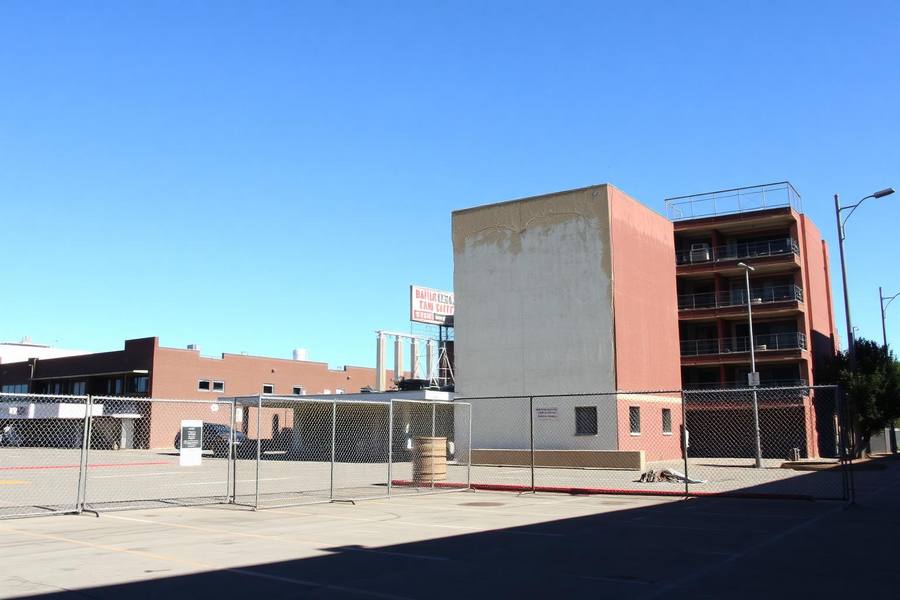
Jon Jerde's maze of clashing colors and mismatched levels was genuinely influential architecture and beloved by a generation of San Diegans. Most of it has been stripped for an office conversion.
We use cookies for essential site functions and, with your permission, for analytics and advertising. California residents can opt out of the sale or sharing of personal information at any time. See our Privacy Policy, Cookie Policy, and Do Not Sell or Share My Personal Information.
The buildings, parks and hangouts locals still name — and what stands on their sites now.
Last updated
San Diego has a habit of demolishing the things it later misses. The clearest recent example is Horton Plaza, the candy-colored 1985 postmodern mall that revived downtown and was then gutted for an office campus; before that it was Qualcomm/Jack Murphy Stadium, imploded in 2021 and replaced by Snapdragon Stadium, and much of the original Gaslamp streetscape, saved only after decades of proposals to level it. Some losses were restored instead: the Belmont Park Giant Dipper was left to rot for years before a 1990 rescue, and Balboa Park's exposition buildings were repeatedly slated for demolition. This page is the running list of what's gone, what replaced it, and the handful of places where you can still see a piece of the original.
| Landmark | Gone | On the site today |
|---|---|---|
| Horton Plaza mall | Gutted 2020s | Campus office redevelopment |
| Qualcomm / Jack Murphy Stadium | Imploded 2021 | Snapdragon Stadium and SDSU Mission Valley |
| The Plunge's original building | Rebuilt | Belmont Park pool, modernized |
| San Diego Sports Arena era | Redevelopment approved | Midway District plans |
| Old Chargers era | Team left 2017 | Snapdragon hosts Aztecs and Wave |
| Original waterfront canneries | Mid-century | Seaport Village / Embarcadero |
Rates and availability change daily, so we link the guide rather than quote a price. Each page compares walkable, short-drive and budget options with parking and resort fees called out.
Downtown · 1985–2020s
Jon Jerde's maze of clashing colors and mismatched levels was genuinely influential architecture and beloved by a generation of San Diegans. Most of it has been stripped for an office conversion.
Mission Valley · 1967–2021
Home to the Chargers, Padres, two Super Bowls and a World Series. Imploded in 2021; the SDSU campus and Snapdragon Stadium now occupy the site.
Midway District · 1966–
Still standing at the time of writing, but slated for replacement in the Midway redevelopment. Half the county has a concert memory in it.
The near-misses are the more interesting half of the story.
Mission Beach · 1925
The wooden coaster sat derelict and vandalized for over a decade and was nearly demolished before a nonprofit restoration reopened it in 1990.
Downtown · 1970s fight
Urban renewal plans called for clearing the Victorian blocks entirely. Preservationists won, which is why downtown has a historic core at all.
Balboa Park · Repeatedly
Built as temporary structures in 1915 and slated for removal at least three separate times before being rebuilt in permanent materials.
Embarcadero · 1863
The world's oldest active sailing ship spent years neglected on the waterfront before volunteers restored her to sailing condition.
Some losses are far enough back that they survive only in postcards, street names and the occasional plaque nobody reads.
Downtown · 1914–2006
Downtown's redevelopment era cleared most of the pre-war midrise fabric between Broadway and Ash. The 1914 Hotel San Diego came down in 2006 for a federal courthouse annex, taking with it one of the last intact examples of the city's early commercial architecture.
Mission Beach · 1925 original
The Plunge is still there, but not the building John D. Spreckels put up. The saltwater pool was once the biggest on the West Coast, with a full bathhouse and dance pavilion attached. The modern rebuild kept the footprint and lost the atmosphere.
Embarcadero and Point Loma · 1910s–1980s
For most of the twentieth century the harbor smelled like fish because it was a working port with a dozen canneries and the largest tuna fleet in the world. Seaport Village, the convention center and the hotel row sit on that ground now.
Citywide · Ended 1949
San Diego had an extensive streetcar network that reached from downtown out to La Jolla and East County. It was dismantled after the war in favor of buses; the Trolley, opened in 1981, is a partial re-creation of routes the city already had.
Various · Mid-century
Neon-era motel signs, drive-in theaters on Midway and the big fiberglass roadside figures that once marked the highways have almost entirely disappeared. A handful of restored signs survive in El Cajon Boulevard's sign district.
If you want the physical remnants rather than the archive photos, these are the places that kept something.
Balboa Park
The regional photo archive plus rotating exhibits built out of it. Staff will pull images of a specific address or building if you ask ahead, which is the fastest way to see what stood on your block.
Old Town and Golden Hill
SOHO runs the Whaley House and several restored Victorians and is the group most responsible for the buildings that survived the urban renewal decades. Their tours are the best narrated version of these fights.
North Park to City Heights
Restored mid-century neon from motels and diners that are otherwise long gone, put back up along the boulevard. Best seen after dark on a slow drive east from Park Boulevard.
Central Library, downtown
City directories, Sanborn fire insurance maps and newspaper microfilm — the tools for figuring out exactly what was on a site and when it came down. Free and open to anyone.
Mission Valley
Pieces of the old stadium, including sections of seating and signage, were salvaged and reused or sold off. Fans who bought seats have them in garages across the county.
A combination of fast postwar growth, redevelopment agency funding that favored clearance over rehabilitation, and a preservation ordinance that arrived later than in comparable cities. The Gaslamp fight in the 1970s is the turning point where that pattern started to break.
The adobes in Old Town, including the Casa de Estudillo dating to 1827, are the oldest standing structures. The Mission San Diego de Alcalá site is older still, though the current church is a reconstruction of an earlier building.
Yes. Sanborn maps and city directories at the Central Library's California Room cover most of the city back to the late 1800s, and the San Diego History Center holds the photo archive for the same period.
The network was dismantled in 1949 as the city shifted to buses, a pattern repeated across American cities. The modern Trolley, opened in 1981, retraced some of the same corridors decades later.
The 1985 postmodern shopping center declined as retail moved online, and it was sold and largely demolished internally for conversion into an office and tech campus. A few architectural elements were retained.
It was imploded in 2021 after 54 years in Mission Valley. Snapdragon Stadium and SDSU's Mission Valley campus were built on the site.
Yes, the 1925 wooden coaster at Belmont Park is the original structure, extensively restored after years of neglect and reopened in 1990.
The San Diego History Center in Balboa Park holds the main regional photo archive, and the public library's California Room has extensive local collections.
The Sandi Spots Newsletter
New beach finds, hidden taco shops, weekend events, and seasonal guides — once a week from a local. No spam, ever.
One email a week. Unsubscribe anytime.
Published by the Sandi Spots Editorial team at Sleep Coast LLC. Guides combine local perspective and source research. Check the individual guide for firsthand observations and follow official links to confirm current details.