Typical per-person cost
Roughly $18-$40 per guest for street food, burgers, or pizza, and $35-$65 per guest for elevated or multi-course truck service — treat these as approximate ranges that vary by menu and season.
We use cookies for essential site functions and, with your permission, for analytics and advertising. California residents can opt out of the sale or sharing of personal information at any time. See our Privacy Policy, Cookie Policy, and Do Not Sell or Share My Personal Information.
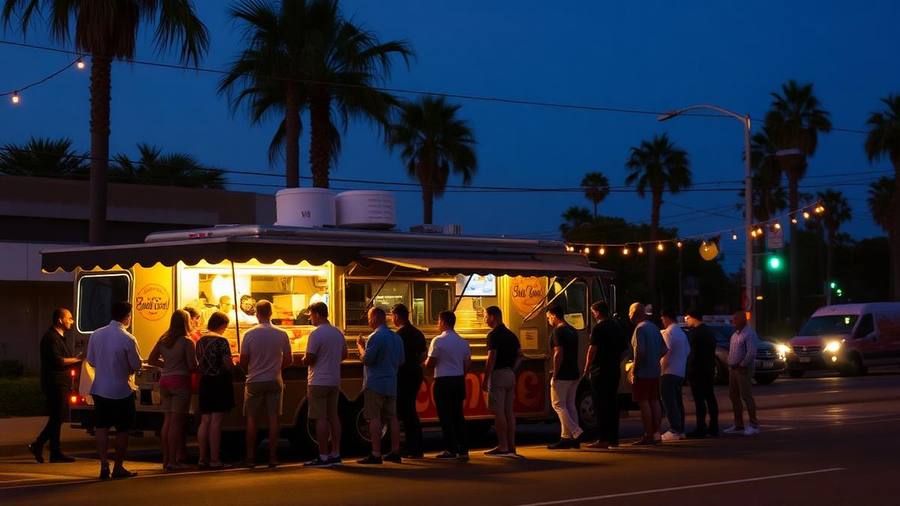
Per-guest pricing, minimums, permits, and the parking questions that sink bookings.
Last updated
Food truck catering in San Diego typically costs $18 to $40 per guest for a taco, burger, or pizza truck, and $35 to $65 per guest for elevated or multi-course truck service. Most trucks set a minimum of $1,200 to $3,500 depending on the day and season, and charge a travel or setup fee of $75 to $300 if you're outside their normal service radius. A single truck realistically serves about 100 to 150 guests per hour once the line is running, so a 200-person event either needs two trucks or a two-hour service window. Trucks operating in San Diego County must carry a valid county health permit and display it, and the host generally needs the property owner's permission plus, for public property, a right-of-way or special event permit. Practical logistics matter more than the menu: confirm a level parking spot roughly 30 feet long with overhead clearance, ask whether the truck needs shore power or runs its own generator, and give them a load-in time at least 60 to 90 minutes before service.
| Style | Per guest | Typical minimum |
|---|---|---|
| Tacos / street food | $18-$30 | $1,200-$2,000 |
| Burgers / BBQ | $22-$35 | $1,500-$2,500 |
| Wood-fired pizza | $20-$34 | $1,400-$2,500 |
| Elevated / chef-driven | $35-$65 | $2,500-$5,000 |
| Dessert / coffee truck | $8-$16 | $600-$1,200 |
| Travel & setup fee | $75-$300 | Beyond service radius |
Rates and availability change daily, so we link the guide rather than quote a price. Each page compares walkable, short-drive and budget options with parking and resort fees called out.
Roughly $18-$40 per guest for street food, burgers, or pizza, and $35-$65 per guest for elevated or multi-course truck service — treat these as approximate ranges that vary by menu and season.
Most trucks set a minimum spend of $1,200-$3,500 rather than a strict headcount; a small gathering under about 40-50 guests often still pays the truck's minimum.
A standard booking usually covers a 2 to 3 hour service window, including setup and breakdown time on either side — confirm the exact window in the quote.
Most San Diego trucks quote a free or low-cost radius of roughly 15-20 miles from their home base, with a $75-$300 travel fee beyond that.
Expect to pay a deposit of roughly 20-50% to hold the date, with the balance due before or on the day of the event — get the cancellation policy in writing.
Typical minimum guests: 40-60. Per-person: $18-$30. Best for casual backyard parties and office events where speed matters most.
Typical minimum guests: 40-70. Per-person: $22-$35. Best for family reunions and daytime events with a crowd that wants something filling.
Typical minimum guests: 40-60. Per-person: $20-$34. Best for birthday parties and rehearsal dinners where a live-cooking visual adds energy.
Typical minimum guests: 30-50. Per-person: $35-$65. Best for weddings and corporate events that still want a food-truck feel with a higher-end menu.
Typical minimum guests: 40-80. Per-person: $8-$16. Best for pairing with a main truck, or as a standalone treat for an afternoon event.
Most trucks need a level 25- to 35-foot spot with about 12 feet of overhead clearance and room to open a service window on the passenger side.
Some trucks run a built-in generator; others need a dedicated 30- or 50-amp shore hookup. Generators are loud — place the truck away from the toast.
One truck serves 100 to 150 guests per hour. Two service windows or a second truck cuts a 30-minute line in half.
Give the truck 60 to 90 minutes before service to park, level, and heat up. Late arrival on a tight street is the most common failure.
Confirm who takes the waste. Reputable operators haul out their own grease and trash; ask, don't assume.
Coastal wind affects awnings and open flames. Have a backup service position or a canopy plan for exposed sites.
Every mobile food facility operating in the county needs a current health permit displayed on the truck. Ask for a photo before you book.
For a backyard or business lot, written permission from the property owner is usually enough. HOAs sometimes have their own rules.
Parking a truck on a city street, in a park, or at a beach for a private event requires a special event or right-of-way permit — apply weeks ahead.
Ask for a COI with $1M general liability and auto coverage. Venues typically require being named as additional insured.
Food trucks don't serve alcohol. Pair with a licensed mobile bartender and handle the ABC side independently.
Cocktail-hour passed bites don't work from a truck. Trucks shine for casual, come-and-go service windows.
Two or three proteins plus a vegetarian option keeps service fast. Long menus slow the line badly.
Gluten-free, vegan, and allergy handling vary widely. Get specifics in writing rather than a verbal 'we can do that.'
A three-person crew serves dramatically faster than two. Some operators add a runner for an extra fee — often worth it.
A truck can make great food and still run private events badly. Ask for two references from similar-size private bookings.
Typically $18 to $40 per guest for street food, burgers, or pizza, with a minimum of $1,200 to $3,500 depending on the truck, day, and season.
Roughly 100 to 150 per hour with a focused menu and a full crew. Plan two trucks or a longer window above 200 guests.
On private property with the owner's permission, usually no city permit is needed. On a public street, park, or beach, you'll need a special event or right-of-way permit.
It depends. Many carry their own generator; others need a 30- or 50-amp hookup. Ask early — this determines where the truck can park.
No. Alcohol requires a separate licensed bar service or an ABC permit held by the host or caterer.
Four to eight weeks for most dates, and three months or more for peak-season Saturdays and holiday-party season in December.
Trucks generally don't set a hard headcount minimum — they set a dollar minimum, typically $1,200-$3,500. A smaller gathering can still book a truck, it just pays the minimum spend regardless of guest count.
Some trucks run entirely on their own generator and water tank and need nothing from the site; others expect a 30- or 50-amp shore hookup. Ask before you book, since it affects where the truck can park.
On private property with the owner's or venue's permission, usually no city permit is required. Booking a truck on a public street, in a park, or on the beach typically requires a special event or right-of-way permit applied for in advance.
One truck can typically serve about 100-150 guests per hour once the line is moving, so a single truck can often handle 100 guests in a roughly 60- to 90-minute window. For a shorter window or a bigger crowd, plan on two trucks.
Where San Diego couples actually book, by budget and vibe.
Private rooms, rooftops, and warehouses for milestone parties.
Event, portrait, and brand shooters across the county.
Licensed bar service to pair with the truck.
The trucks locals actually chase down.
The Sandi Spots Newsletter
New beach finds, hidden taco shops, weekend events, and seasonal guides — once a week from a local. No spam, ever.
One email a week. Unsubscribe anytime.
Published by the Sandi Spots Editorial team at Sleep Coast LLC. Guides combine local perspective and source research. Check the individual guide for firsthand observations and follow official links to confirm current details.