Sandi Spots
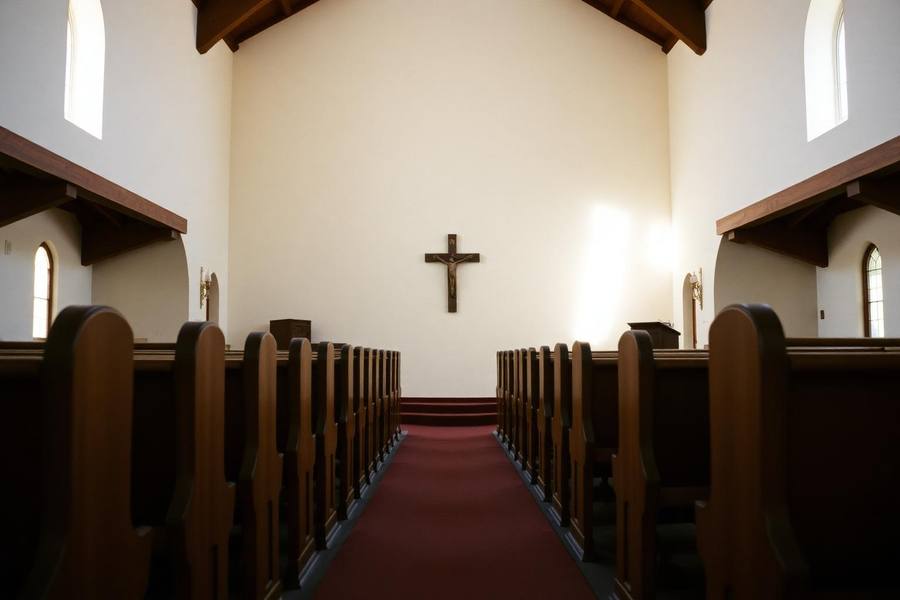
    Quiet mission-style church interior in San Diego with wooden pews and light through arched windows

    Faith Communities in San Diego

    How to find a congregation after a move, and what the religious landscape here actually looks like.

    Last updated

    Quick answer

    San Diego's religious landscape is broad: a large Catholic presence rooted in the region's Spanish mission history and its Latino communities, a wide range of Protestant traditions from historic mainline congregations downtown and in North Park to large nondenominational churches in North County and East County, an established Jewish community concentrated in La Jolla, UTC, and Carmel Valley, mosques and Islamic centers serving communities in City Heights and El Cajon, Buddhist temples tied to Vietnamese and Japanese communities in the central neighborhoods, Hindu and Sikh temples in the northern and eastern suburbs, and a notably large secular and unaffiliated population. Practically: most congregations list service times on their website, visitors are not expected to give or register, and the standard advice is to try three places before deciding. Denominational directories are the most reliable way to find a specific tradition; searching by neighborhood surfaces the largest congregations first, which may not be the best fit.

    Traditions and where communities tend to cluster

    TraditionNotes on the local landscape
    CatholicDeeply established countywide, tied to the mission history; many parishes offer Spanish-language Mass
    Mainline ProtestantHistoric congregations in the urban core — downtown, Hillcrest, North Park, Point Loma
    Evangelical / nondenominationalLarge multi-site churches, strongest in North County and East County
    JewishReform, Conservative, Orthodox, and Chabad; concentrated in La Jolla, UTC, and Carmel Valley
    MuslimIslamic centers serving diverse communities, notably in City Heights and El Cajon
    BuddhistVietnamese, Japanese, and Western practice centers across the central neighborhoods
    Hindu & SikhTemples and gurdwaras serving North County and inland suburbs
    Unitarian, interfaith, secularActive humanist, UU, and interfaith communities for those wanting community without doctrine

    How to find a congregation after moving

    Start with your tradition's directory, not a map search

    Denominational and movement websites — diocesan parish finders, synagogue movement directories, Islamic center listings — give you accurate, current congregations. A generic map search ranks by size and reviews, which tells you nothing about fit.

    Watch a service online first

    Most congregations livestream or archive services. Fifteen minutes of video tells you the music style, the length, the formality, and the age mix before you spend a Sunday morning.

    Visit three times before deciding

    First visits are unrepresentative — a guest speaker, a holiday, a slow week. Standard advice from clergy of every tradition is to go back a second and third time before judging.

    Go to the mid-week thing, not just the weekend service

    Community is built in small groups, classes, choirs, and volunteer teams. If you only attend the main service, you'll stay a stranger in a large congregation for years.

    Ask about newcomer paths

    Most places have a specific on-ramp: a newcomer lunch, a membership class, a coffee with clergy. Ask at the welcome table — it's the difference between attending and belonging.

    Size changes the experience

    A 2,000-person church and a 60-person congregation are entirely different products. Large ones offer programming for every age and easy anonymity; small ones offer being known immediately and needing you to show up.

    What to expect as a visitor

    Dress is casual here

    San Diego is among the more casual religious cultures in the country. Jeans are normal at most Christian services. Traditions with modesty expectations — mosques, some synagogues and temples — are the exception; check the congregation's visitor page.

    You're not expected to give

    Offering plates and donation boxes pass; visitors passing them along is completely normal and nobody is watching.

    Participation is optional

    Standing, singing, communion, and rituals with membership requirements — it's fine to sit, observe, and stay seated. If unsure, follow the row in front of you or ask a greeter beforehand.

    Language options

    San Diego has extensive Spanish-language services, plus congregations serving Vietnamese, Tagalog, Korean, Arabic, Farsi, Somali, and Chaldean communities — El Cajon has one of the largest Chaldean Christian populations in the country.

    Military families are everywhere

    With this many active-duty families, most congregations are used to people arriving and leaving on orders and have deliberate ways to fold newcomers in fast. Say you just moved — it's the most normal sentence in San Diego.

    Beyond weekly services

    Preschools and youth programs

    Many congregations run preschools, day camps, and youth groups that are open to non-members and are a major reason families connect to a community.

    Food and social services

    Congregations of every tradition operate food pantries, refugee resettlement support, recovery meetings, and homeless services — these are also entry points for volunteering.

    Historic sites worth visiting

    Mission Basilica San Diego de Alcalá in Mission Valley, California's first mission, and Mission San Luis Rey in Oceanside are working parishes and historic sites open to visitors of any background.

    Meditation and non-religious practice

    Insight meditation groups, Zen centers, and secular mindfulness communities meet across the county and welcome drop-ins with no belief requirement.

    A note on this page

    • • This is a practical orientation to the religious landscape for people new to San Diego, not an endorsement of any tradition or congregation.
    • • Service times and programs change, especially around holidays. Confirm on the congregation's own website before your first visit.
    • • Many communities publish visitor guides explaining what happens in a service — for anyone visiting a tradition unfamiliar to them, that page is worth five minutes.
    • • If you're seeking community rather than belief, Unitarian Universalist congregations, humanist groups, and interfaith organizations here are active and explicit about welcoming that.

    Frequently asked

    How do I find a church in San Diego after moving?

    Start with your denomination's own parish or congregation finder rather than a map search, watch a livestreamed service to judge style before visiting, and plan to attend three times before deciding. Then join a mid-week group or volunteer team — that's where community actually forms, especially in larger congregations.

    What religions are represented in San Diego?

    San Diego has a large Catholic presence tied to its mission history and Latino communities, a full range of Protestant traditions, an established Jewish community centered in La Jolla and Carmel Valley, Muslim communities with Islamic centers in City Heights and El Cajon, Buddhist temples serving Vietnamese and Japanese communities, Hindu and Sikh temples in the suburbs, and a large secular population.

    Are there Spanish-language church services in San Diego?

    Yes, extensively. Many Catholic parishes across the county offer Spanish-language Mass, and Protestant congregations throughout the South Bay, City Heights, and North County hold Spanish services. Congregations also serve Vietnamese, Tagalog, Korean, Arabic, Chaldean, and other language communities.

    What should I wear to church in San Diego?

    Casual. San Diego congregations are among the more relaxed in the country and jeans are normal at most Christian services. Mosques, some synagogues, and certain temples have modesty expectations — head covering, covered shoulders and knees — so check the congregation's visitor information first.

    Where is the oldest church in San Diego?

    Mission Basilica San Diego de Alcalá in Mission Valley, founded in 1769, was the first of the California missions. It remains an active parish and is open to visitors. Mission San Luis Rey in Oceanside is another historic mission church still in use.

    Are there non-religious community groups in San Diego?

    Yes. Unitarian Universalist congregations, humanist and secular groups, interfaith organizations, and secular meditation communities all meet regularly across the county and are explicit about welcoming people who want community and service without doctrine.

    Keep reading

    The Sandi Spots Newsletter

    San Diego, in your inbox.

    New beach finds, hidden taco shops, weekend events, and seasonal guides — once a week from a local. No spam, ever.

    One email a week. Unsubscribe anytime.

    About this guide

    Written and fact-checked by the Sandi Spots Editorial team — San Diego residents publishing under Sleep Coast LLC. Every place we recommend has been visited in person or verified against an official source, and no business can pay for inclusion or a higher ranking. Last updated .

    Local, first-hand. Reported on the ground in San Diego County.
    Kept current. Prices, hours, and closures reviewed on a rolling basis.
    Independent. Affiliate links never influence rankings.

    Editorial policy · About us · Suggest a correction